Plant Overview
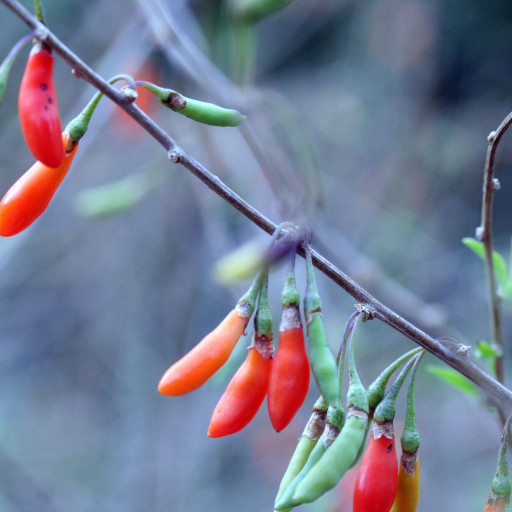
Known as the "Red Diamond" in its native Asia, Lycium chinense—the Chinese Wolfberry—is more than just a garden shrub; it is an ancient symbol of longevity and vitality. While often overshadowed by its cousin Lycium barbarum in commercial farming, this species is prized for its tender leaves used in savory soups and its slightly sweeter, smaller berries. It is a sprawling, resilient "superfood" plant that brings a touch of Himalayan mystique to your backyard.
🔍 How to Identify
- 🌿 Leaf Shape: Features bright green, lance-shaped or oval leaves that are often wider and more succulent than those of the common Goji.
- 💜 Summer Blooms: Produces charming, trumpet-shaped flowers in shades of lavender and royal purple that attract bees and butterflies throughout the summer.
- 🏮 Jewel-Like Fruit: In late summer and fall, the branches are heavy with small, oblong berries that ripen from green to a brilliant, glossy orange-red.
- 🛡️ Growth Habit: A deciduous, multi-stemmed shrub with arching, vine-like branches that occasionally sport small, protective thorns.
🏡 In Your Garden
- ✂️ The Rambler: This plant is a vigorous grower and can become "leggy" or messy if left to its own devices. It thrives best when grown against a trellis or pruned heavily to maintain a manageable, bushy shape.
- ☀️ Sun Seeker: While it is incredibly hardy and can survive poor soil and drought, it requires full sun to produce a high yield of berries.
- 💧 Drainage is Key: It possesses a deep taproot that hates "wet feet." Ensure your soil is well-draining, as standing water can lead to root rot very quickly.
⚠️ Safety & Toxicity
- ✅ Status: Generally safe for human consumption (berries and young leaves), but it belongs to the Nightshade family.
- 🐾 Pet Warning: While the ripe berries are a superfood for us, the leaves and stems contain small amounts of solanine. Keep an eye on curious dogs or cats who might chew on the foliage, as it can cause mild digestive upset.
- 💊 Health Note: If you are harvesting for consumption, be aware that Goji berries can interact with certain blood-thinning medications. Always consult a professional before adding them to a medicinal routine.
✨ Fun Fact
Legend tells of a Chinese herbalist named Li Ching-Yuen who supposedly lived to be 256 years old. When asked for his secret, he credited his longevity to a daily soup made from Goji berries and medicinal mushrooms! While modern science can't verify the 200-year claim, the plant remains a cornerstone of traditional longevity tonics.

Detailed Care Instructions
To grow Lycium Chinense (also known as Chinese Wolfberry or Goji Berry), follow these steps:
- Choose the right location: Lycium Chinense prefers full sun exposure, so select a spot in your garden that receives at least 6-8 hours of direct sunlight per day.
- Prepare the soil: Ensure the soil is well-draining and slightly acidic with a pH ranging from 6.0 to 8.0. If the soil is clayey or compacted, add organic matter like compost or well-rotted manure to improve drainage and fertility.
- Plant the seeds or seedlings: Lycium Chinense can be grown from seeds or purchased as seedlings. If starting from seeds, sow them in pots or containers filled with seed starting mix, 1/4 inch deep. Keep the soil moist and warm (around 70°F) until germination, which usually takes around 2-4 weeks. Transplant the seedlings outdoors once they are around 6-8 inches tall.
- Watering: Lycium Chinense prefers consistent moisture, especially during its early growth stages. Water the plants regularly, keeping the soil moist but not waterlogged. Reduce watering once the plants are established.
- Mulching and Weeding: Apply a layer of organic mulch around the base of the plants to help retain moisture, suppress weed growth, and provide some insulation during extreme temperatures.
- Pruning: Prune Lycium Chinense plants in early spring to remove any dead or damaged branches and to maintain their shape and size. This will also encourage the growth of new branches and more fruit production.
- Fertilization: Apply a balanced, slow-release fertilizer in early spring or use a liquid fertilizer every 4-6 weeks during the growing season to provide necessary nutrients.
- Pollination: Chinese Wolfberry plants are primarily self-fertilizing, but having multiple plants in close proximity can increase fruit production. You can also assist with pollination by gently shaking the plants or using a small paintbrush to transfer pollen between flowers.
- Pest and disease control: Lycium Chinense is generally resistant to pests and diseases. However, you might encounter occasional issues with aphids or spider mites. In such cases, use organic pest control methods or insecticidal soap to manage the infestation.
- Harvesting: Chinese Wolfberry fruits are typically ready for harvest in late summer to fall. They should be fully red or orange and slightly soft. Carefully pick the ripe berries and enjoy them fresh or use them in recipes, smoothies, or teas.
By following these steps, you can successfully grow Lycium Chinense plants and enjoy a bountiful harvest of nutritious goji berries.

Place in a bright room that is sun drenched almost all day. Or directly in a south-facing window.

To water this plant, you should first check the moisture level of the soil around it. Stick your finger about an inch into the soil and see if it feels dry. If it does, it's time to water the plant.
When watering, make sure to water deeply and thoroughly to encourage deep root growth. Use a watering can or hose with a gentle flow of water to avoid damaging the plant or washing away soil.
It's important to not overwater the plant as this can lead to root rot and other issues. Wait until the top inch or so of soil is dry before watering again.
During hot and dry periods, the plant may need more frequent watering. It's also a good idea to mulch around the plant to help retain moisture in the soil.
Overall, the key to watering this plant is to monitor the moisture level of the soil and adjust watering accordingly.
To fertilize the plant, use a balanced fertilizer with equal ratios of nitrogen, phosphorus, and potassium. Apply the fertilizer to the soil around the plant, evenly spreading it at a rate of 1/4 to 1/2 cup per plant. Water the plant thoroughly after fertilizing. Repeat fertilization every two to three months during the growing season. Avoid over-fertilizing, as this can damage the roots and foliage of the plant.
Lycium Chinense plant thrives best in well-draining soil that is a mixture of sand, loam, and organic matter. It requires a pH range of 6.0 to 8.0 and prefers slightly alkaline soil. The soil should be rich in nutrients and must not be too compacted. A good mix can be made by combining equal parts of garden soil, coarse sand, and peat moss. This will provide adequate drainage and moisture retention, ensuring the plant's healthy growth. It is essential to avoid using heavy clay soils or soils that are too sandy, as they may not support the plant's growth. Additionally, the soil should be amended regularly with compost or other organic matter to enhance its fertility.
Lycium Chinense can be propagated through two methods, i.e., seeds and stem cuttings.
Method 1: Propagation through Seeds
- Collect fresh seeds from the mature Lycium Chinense plant during the fall season.
- Clean the seeds from the collected berries, removing any pulp attached to them.
- Soak the seeds in running water for 24 hours.
- Place the seeds in a plastic bag with a moist paper towel and store it in the fridge for six weeks.
- After six weeks, sow the seeds in a seedling tray or pot filled with well-draining soil.
- Cover the seeds lightly with soil, mist them with water, and cover them with a clear plastic sheet to retain moisture.
- Place the seedlings in bright but filtered sunlight.
- Once the seedlings have grown to a considerable size, they can be transplanted into a larger pot and gradually moved to the outdoors in a sunny location.
Method 2: Propagation through Stem Cuttings
- Collect mature and healthy stems from the Lycium Chinense plant during spring or early summer.
- Cut the stems into 6-8 inch sections.
- Remove the lower leaves from the sections, leaving just two leaves at the top.
- Dip the cut ends of the stems into a rooting hormone powder.
- Plant the cuttings in a well-draining soil mixture, ensuring that only the bottom few inches of the stem are submerged in the soil.
- Water the cuttings and place them in a bright location that receives indirect sunlight.
- Cover the cuttings with a clear plastic cover to retain moisture.
- Once the roots have developed, which will take around 4-6 weeks, the young Lycium Chinense can be transplanted into a larger pot or outdoors in a sunny location.








