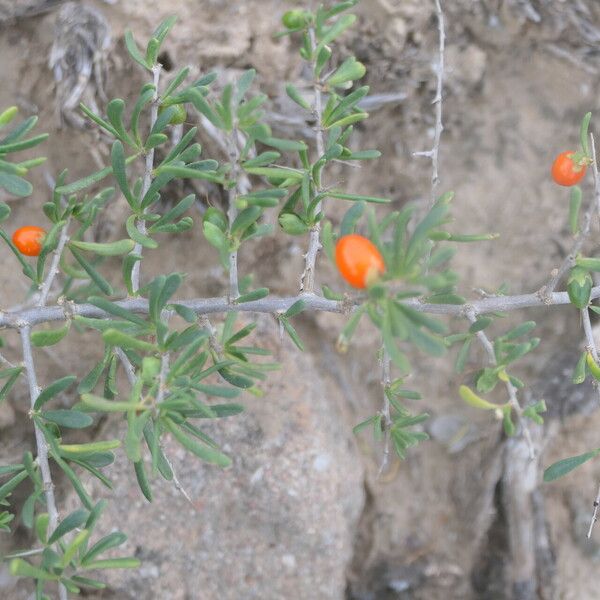
Plant Overview
🌿 The Hardy Guardian of the Karoo
Known as the "African Wolfberry" or the "Water-finder," Lycium cinereum is a resilient shrub that bridges the gap between a rugged desert survivor and a delicate fruit-bearer. A cousin to the world-famous Goji berry, this plant is often found standing its ground in the arid landscapes of Southern Africa. It is a master of adaptation, transforming from a dusty, dormant thicket into a lush, green oasis the moment a drop of rain hits the soil.
🔍 How to Identify
- 🍃 Paddle-Shaped Foliage: The leaves are small, grayish-green, and somewhat fleshy. They often grow in tight clusters along the stems, a clever adaptation designed to minimize water loss.
- ⚔️ Protective Spines: The branches are heavily armed with sharp, woody thorns. These spines act as a natural "keep out" sign, protecting the plant from hungry herbivores.
- 🌸 Jewel-Like Blooms: It produces tiny, star-to-bell-shaped flowers that range from pale white to soft lilac. These are followed by small, succulent berries that ripen into a brilliant red or orange.
🏡 In Your Garden
- 🌵 The "Water-Finder" Strategy: In its native habitat, this plant is an indicator of underground moisture. In a garden setting, this means it is incredibly drought-tolerant but will "wake up" and grow aggressively if given a regular drink. It thrives in poor, sandy, or salty soils where other plants might wither.
- 🐦 A Wildlife Fortress: Because of its dense, thorny structure, it is a premier choice for "habitat gardening." Small birds love to nest deep within its branches, using the thorns as a natural barbed-wire fence to keep cats and larger predators away.
⚠️ Safety & Toxicity
- 🐾 Potential Irritant: While many Lycium species produce edible berries (like Goji), wild species like Lycium cinereum should be approached with caution. The leaves and unripe fruits contain alkaloids common to the Nightshade family.
- 👶 Physical Hazard: The primary safety concern for children and pets is the thorns. They are stiff and sharp enough to puncture skin easily, so it is best planted away from walkways or play areas.
✨ Fun Fact
- ✨ Biological Divining Rod: In the vast, dry Karoo region, traditional travelers and farmers would look for the bright green clusters of Lycium cinereum as a sign that water was near the surface, effectively using the plant as a natural map to hidden springs.

Detailed Care Instructions

The presence of a dry surface layer of soil does not indicate that the plant requires water. Instead, stick your finger 1-2" (3-5 cm) deep in the soil to feel dampness or moisture content. If the soil seems dry, it's time to water your greens. If the soil is still moist, however, it is better not to water your plant and instead wait a day or two. Overwatering or waterlogging raises the risk of root rot. So if the soil takes longer than a week to dry, check the light conditions because it's likely that the plant isn't getting enough light. It's fine if the upper layer of soil is dry between waterings, but the deeper soil layer should always have some moisture.







