Plant Overview
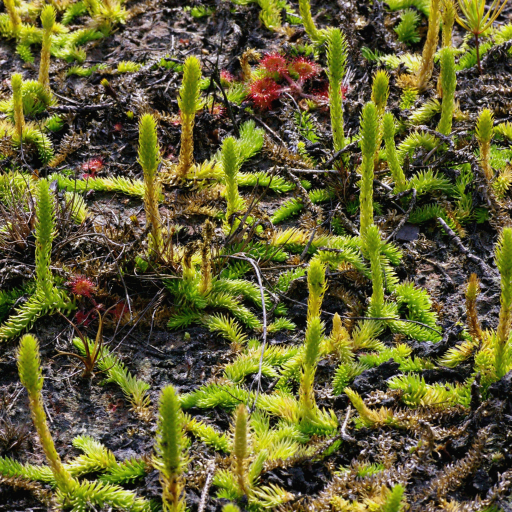
Often called the Bog Clubmoss, this tiny green survivor is a true living fossil, resembling a miniature pine forest from the Carboniferous era. It thrives where most plants drown, hugging the edges of acidic bogs and sun-drenched marshes. While it may look like a soft moss, it is actually a primitive vascular plant that reproduces through ancient spores rather than modern flowers or seeds.
🔍 How to Identify
- 🌿 Creeping Stems: The main body of the plant runs flat against the ground, rooting at intervals and forming a dense, needle-like carpet that turns brown and dies back in winter.
- 🕯️ Fertile Spikes: During late summer, it sends up distinct vertical, yellowish-green "cones" (strobili) that look like tiny, upright candles rising from the bog.
- 🍃 Curved Microphylls: The tiny, scale-like leaves are soft to the touch and usually curve upward and inward toward the stem, giving it a slightly "bristly" appearance.
🏡 In Your Garden
- 💧 Soggy Requirements: This is an "obligate wetland" species. It requires constant moisture and thrives in acidic, nutrient-poor, sandy, or peaty soil where other plants struggle to grow.
- ☀️ The Sunshine Niche: Unlike many of its forest-dwelling cousins, Bog Clubmoss craves open, sunny spots. It is often one of the first plants to colonize "disturbed" wet earth, such as the tracks left by a vehicle in a damp meadow.
- 🌱 Difficult Cultivation: It is rarely sold as a garden plant because it relies on a complex relationship with soil fungi (mycorrhizae) to survive. It is best enjoyed in its natural habitat rather than being transplanted.
⚠️ Safety & Toxicity
- 🐾 Mildly Toxic: Like many members of the Lycopodiaceae family, it contains alkaloids that can be toxic if ingested in large quantities.
- 👶 Keep Away from Mouths: While it is perfectly safe to touch, it should be kept away from curious pets or children who might try to nibble on the "miniature trees," as it can cause digestive upset or nausea.
✨ Fun Fact
The spores of clubmosses are naturally coated in a fine oil that makes them highly flammable. In the 19th century, "Lycopodium powder" was used by early photographers as the original flash powder to create the bright burst of light needed for portraits!

Detailed Care Instructions
To grow Lycopodiella Inundata, also known as bog clubmoss, follow these steps:
- Obtain seeds or spores: Lycopodiella Inundata typically reproduces via spores. You can collect spores from mature plants or purchase them from a reputable supplier. Alternatively, you can try propagating the plant from cuttings or rhizome divisions.
- Prepare a suitable growing environment: Bog clubmoss thrives in wet and acidic conditions. You will need a container or a garden spot where you can recreate these conditions. Ensure the soil is well-draining and acidic with a pH between 4.5 and 6.0. You can adjust the pH using sphagnum peat moss or pine needles.
- Sow the seeds or spores: Sow the spores or seeds on the soil surface and lightly press them in. Alternatively, if using spores, you can sprinkle them evenly over the surface without covering them. Keep in mind that Lycopodiella Inundata requires light to germinate.
- Maintain optimal growing conditions: Place the container or garden spot in a location that receives partial or filtered sunlight. Ensure the soil remains consistently moist but not waterlogged. Water the plant regularly, especially during dry spells, but avoid overwatering. Additionally, provide a high level of humidity by misting the plant or placing a humidity dome over it.
- Weed and monitor: Regularly remove any competing weeds that may grow around the plant to avoid overcrowding. Check for pests or diseases and take appropriate action if necessary. Lycopodiella Inundata is generally resistant to most pests and diseases.
- Patience and time: Bog clubmoss is a slow-growing plant, so be patient in waiting for it to establish and grow. It may take several months or even years for the plant to reach maturity.
Remember to do thorough research on the specific care needs of Lycopodiella Inundata, as environmental conditions and care requirements can vary slightly depending on your location and climate.

Place in a bright room that is sun drenched almost all day. Or directly in a south-facing window.

Lycopodiella Inundata is a plant that typically thrives in wet environments. When it comes to watering this type of plant, it is essential to ensure that it is constantly receiving a sufficient amount of water. It is important not to let the soil dry out, as this can cause the plant to wilt and ultimately die.
To water Lycopodiella Inundata, start by observing the soil. Typically, you will want to water the plant when the soil feels dry to the touch. When you determine that it is time to water your plant, you should give it a deep watering, making sure that the water penetrates the soil deeply.
It is also important to ensure that the plant is not sitting in standing water, as this can lead to root rot and other issues. If the plant is situated in a tray or other container, make sure to empty any excess water out of the container after watering.
The frequency of watering will depend on the humidity of the environment and the size of the plant. Under normal conditions, consistent watering every few days should suffice. However, if the plant is situated in a drier environment, it may require more frequent watering.
Overall, providing consistent watering and avoiding drying out the soil is essential for the growth and success of Lycopodiella Inundata.
To fertilize this plant, use a balanced fertilizer with equal amounts of nitrogen, phosphorus, and potassium. Apply the fertilizer every two weeks during the growing season, which is typically from spring to early fall. Dilute the fertilizer according to the instructions on the package and apply it to the soil around the base of the plant, avoiding direct contact with the leaves. Be sure to water the plant thoroughly before and after fertilizing to avoid burning the roots.
The ideal soil for Lycopodiella Inundata is one that is consistently wet and acidic. It should be nutrient-poor and moderately compacted in order to mimic the plant's natural habitat. A mixture of peat moss and sand can create these conditions, while also providing good drainage. The soil should be well-aerated to prevent waterlogging and the accumulation of harmful substances. Adding a layer of organic matter on the soil surface can help retain moisture and provide nutrients over time. It is important to avoid using soils that are high in nutrients, as this can cause the plant to grow too quickly and become weak and susceptible to disease. Overall, the soil should be tailored to the specific needs of Lycopodiella Inundata in order to ensure its health and longevity.
To propagate this plant, first gather spores from mature sporangia, which are small structures found on the underside of fronds. Spread the spores on moist soil or peat moss and cover lightly with a plastic or glass cover to maintain high humidity. Keep the soil moist and place in a bright, but not direct sunlit location.
Within a few weeks, tiny green gametophyte plants will grow from the spores. Once these are large enough to handle, they can be separated and transplanted into individual pots or planted directly into a suitable growing location. Keep the plants moist and in a shaded location until they become established.
Alternatively, mature plants can be divided in the spring to create new plants. Gently separate the rhizomes and plant each segment into a suitable location, watering and keeping moist until established.








