Plant Overview
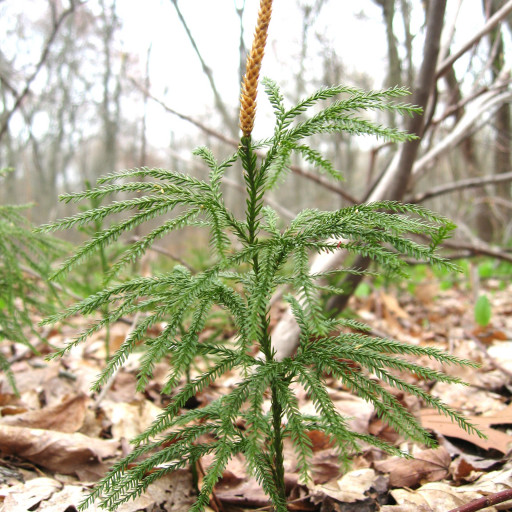
Stepping into a forest where Lycopodium obscurum grows feels like discovering a miniature prehistoric jungle. Often called "Princess Pine" or "Ground Pine," this charming evergreen isn't a pine or a moss at all, but a "fern ally." It is a living fossil, representing a lineage of plants that once grew as tall as skyscrapers millions of years ago, now evolved into a tiny, tree-like treasure of the woodland floor.
🔍 How to Identify
- 🌲 Tree-like Form: It looks remarkably like a tiny conifer tree, typically growing 6 to 12 inches tall with a distinct "trunk" and spreading branches.
- 🍃 Prickly Leaves: The branches are covered in tiny, needle-like green leaves (microphylls) that are soft to the touch rather than sharp.
- 🕯️ Spore Cones: In late summer, it produces yellowish, candle-like spikes at the tips of its branches called strobili, which hold the plant’s reproductive spores.
🏡 In Your Garden
- 🍄 The Fungal Connection: Unlike most garden plants, Princess Pine is incredibly difficult to transplant. It relies on a complex, invisible relationship with underground mycorrhizal fungi to survive; if you move the plant without its specific fungal partner, it will likely perish.
- 💧 Woodland Preferences: In the wild, it thrives in dappled shade and moist, acidic soil. It is a slow grower, often spreading through underground runners (rhizomes) to create a lush, green carpet over many years.
⚠️ Safety & Toxicity
- 🐾 Mildly Toxic: While not considered deadly, the plant contains alkaloids that can cause digestive upset if ingested by curious pets or small children.
- 🔥 Highly Flammable Spores: The yellow powder (spores) released from the cones is extremely high in oil content. While the green plant is safe, the dry spores are a fire hazard if collected in large quantities.
- 🧤 Skin Sensitivity: Some gardeners report mild skin irritation after handling the foliage extensively; wearing gloves is a good precaution for sensitive skin.
✨ Fun Fact
Before the invention of the electric flash, photographers and magicians used "Lycopodium powder"—the dried spores of this plant—to create bright, controlled explosions. Because the spores are so fine and oily, they burn almost instantly when dispersed into a flame, creating the classic "poof" of light seen in early theater!

Detailed Care Instructions
| Humidity | High |
| Lighting | Shade |
| Toxicity | Poisonous |
| Difficulty | Easy |
| Hardiness Zones | 3 - 7 |
Growing Lycopodium obscurum, also known as ground cedar or tree clubmoss, can be a successful and rewarding gardening experience. Here are some steps to help you grow this plant:
- Choose the right location: Lycopodium obscurum prefers partial to full shade, as it is commonly found growing on the forest floor. Select a location in your garden that receives filtered sunlight or dappled shade throughout the day.
- Prepare the soil: The plant thrives in well-draining soil that is rich in organic matter. Working compost into the soil before planting will help improve its fertility and drainage.
- Obtain the plant: You can purchase Lycopodium obscurum plants from local nurseries or online suppliers. Alternatively, you can try to source spores or propagules from established plants, as they can be challenging to find commercially.
- Planting: Dig a hole slightly larger than the plant's root ball. Gently place the plant in the hole and fill it with soil, ensuring the top of the root ball is level with the surrounding soil. Water the plant thoroughly after planting to help settle the soil.
- Watering: Maintain consistent moisture levels by watering regularly. However, avoid overwatering as this plant prefers slightly moist soil rather than constantly wet conditions. A layer of mulch around the base of the plant can help conserve moisture.
- Avoid direct sunlight: Lycopodium obscurum prefers shady conditions, so if your garden receives intense direct sunlight during part of the day, consider providing it with some protection by using shade cloth or strategically placing it beneath taller plants.
- Fertilizing: Lycopodium obscurum generally does not require heavy fertilization, as it can thrive in nutrient-poor environments. However, applying a balanced organic fertilizer once or twice during the growing season can help promote healthy growth.
- Controlling weeds: Keep the area around the Lycopodium obscurum plant free from weeds or other competing vegetation to prevent them from shading or overcrowding the plant.
- Regular monitoring: Keep a close eye on the plant for any signs of pests or diseases. Promptly address any issues to protect the plant's health.
- Patience: Growing Lycopodium obscurum from planting to maturity can take several years. Be patient and provide consistent care to give the plant time to establish and flourish in your garden.
Remember that Lycopodium obscurum is a native plant in many regions, so it's essential to check local regulations and avoid harvesting from the wild without proper permission or permits.
To water this plant, make sure to use distilled water or rainwater as tap water can harm this plant's delicate roots. Use a watering can or sprayer to gently water the plant's soil, being careful not to splash water onto the leaves. Allow the soil to dry out slightly before watering again, as this plant prefers to dry out between waterings. Avoid overwatering, as this can lead to root rot and other problems. It is recommended to mist the plant regularly to maintain the humidity level around the plant.
To fertilize the Lycopodium Obscurum plant, you can follow these simple instructions:
- Choose a balanced liquid fertilizer with equal amounts of nitrogen, phosphorus, and potassium. Make sure it is suitable for houseplants or ferns.
- Dilute the fertilizer according to the instructions provided on the packaging. Usually, a ratio of 1:2 or 1:4 (fertilizer: water) is recommended.
- Use a watering can or spray bottle to apply the diluted fertilizer to the soil around the base of the plant.
- Be careful not to over-fertilize, as this can cause harm to the plant. It is better to apply less fertilizer more frequently than providing a heavy dose all at once.
- During the growing season, fertilize the plant every two to four weeks to promote healthy growth.
- If the plant shows signs of nutrient deficiency (e.g., pale leaves or slow growth), consider increasing the frequency of fertilization but use a weaker concentration.
- Always water the plant before applying fertilizer to prevent burning the roots.
- Monitor the plant's response to the fertilizer, and adjust the frequency or concentration as needed.
- Regularly clean the foliage of the plant to prevent dust build-up and improve nutrient absorption.
- Lastly, follow any specific instructions provided by the supplier or refer to a gardening expert for further guidance.
Lycopodium obscurum is a species of plant that prefers a soil type that is acidic, well-draining, and fairly moist. A soil mixture that contains a high percentage of organic matter, such as peat or sphagnum moss, is ideal for this plant. It is important to ensure that the soil is not allowed to dry out completely, as this can be detrimental to the plant's health. The soil should also be free of any salts or minerals that can be harmful to the plant. A pH range between 5.0 and 6.5 is recommended for optimal growth.
To propagate Lycopodium obscurum, you can follow these steps:
- Begin by selecting a healthy and mature Lycopodium obscurum plant for propagation. Look for a plant that is free from pests, diseases, and any signs of decline.
- Prepare a suitable propagation medium, which could be a mix of peat moss and perlite or a well-draining soil mix. Fill a small pot or container with this medium.
- Take a stem cutting from the selected Lycopodium obscurum plant. Ensure that the cutting is at least 4-6 inches long and includes several nodes. Nodes are the points on the stem where leaves or roots emerge.
- Remove the lower leaves from the cutting, leaving only a few leaves at the top.
- Dip the cut end of the stem cutting into a rooting hormone powder or gel. This helps to stimulate root growth and improve the chances of successful propagation.
- Make a small hole in the propagation medium and gently insert the cutting into it. Ensure that at least one or two nodes are buried in the medium.
- Water the cutting thoroughly but avoid overwatering. The propagation medium should be consistently moist, but not waterlogged.
- Place the pot or container in a warm and humid environment, ideally at a temperature around 70-75°F (21-24°C). You can create a mini greenhouse effect by covering the pot with a plastic bag or using a propagation tray with a clear lid.
- Provide indirect, bright light to the cutting. Avoid exposing it to direct sunlight, as it can cause excessive drying or burning.
- Monitor the cutting regularly and mist it with water to maintain humidity levels. Also, check the moisture level in the medium and water as needed to ensure it remains consistently moist.
- After a few weeks, you should start to see signs of new growth, indicating that the cutting has successfully rooted. At this stage, you can gradually acclimate the plant to lower humidity levels and increase the amount of light it receives.
- Once the rooted cutting has developed a strong root system and new growth, it can be transplanted into a larger pot or garden bed with suitable growing conditions for Lycopodium obscurum. Ensure that the soil is well-draining and provide regular watering to keep the plant healthy and thriving.
By following these steps, you should be able to propagate Lycopodium obscurum successfully and enjoy the beauty of this plant in your garden or indoor space.








