Plant Overview
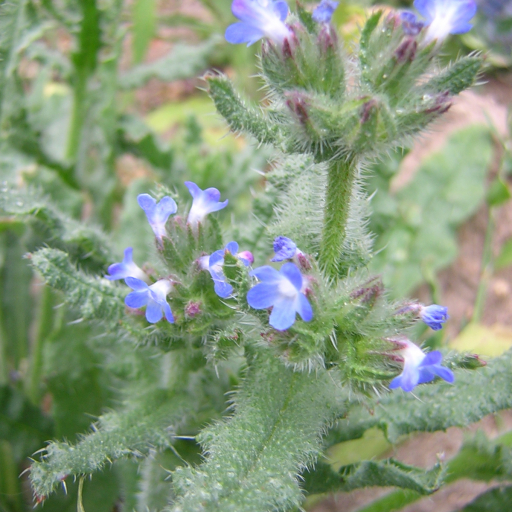
Often called "Small Bugloss," Lycopsis arvensis is a quirky, humble member of the Borage family that looks like it’s wearing a coat of prickly armor. Its name "Lycopsis" translates from Greek to "wolf’s face," a nod to the slightly irregular, gaping shape of its tiny blue flowers. While it often pops up in sandy fields or disturbed soils, its survival strategy involves a specialized "kink" in its flower tube that only specific pollinators can navigate.
🔍 How to Identify
- 🌵 The Bristles: The stems and leaves are densely covered in stiff, white hairs that sit on distinctive, wart-like swollen bases, giving the plant a rough, sandpaper-texture.
- 🌀 The Flower Kink: Look closely at the small, sky-blue flowers; unlike many of its relatives, the floral tube is uniquely bent or "S-curved" in the middle.
- 🌊 Wavy Leaves: The leaves are long, narrow, and lance-shaped with noticeably wavy or "crinkled" edges that help distinguish it from common Borage or Comfrey.
🏡 In Your Garden
- 🏜️ Soil Indicator: This plant is a specialist of "poor" ground. If you find it volunteering in your garden, it is a strong indicator that your soil is light, sandy, or slightly acidic.
- 🌾 The Pioneer Spirit: As an annual, it lives fast and dies young. It relies on disturbed earth to germinate, making it a common sight in the edges of vegetable patches or recently tilled flower beds where it provides a quick pop of blue for local bees.
⚠️ Safety & Toxicity
- 🚫 Low Toxicity Risk: While not traditionally "poisonous" like Hemlock, it contains pyrrolizidine alkaloids common to the Borage family, which can cause liver issues if ingested in large quantities by livestock or pets.
- 🧤 Skin Irritation: The stiff, silica-rich bristles are the primary concern for humans. They can cause mechanical skin irritation or a prickly rash, so it is best to wear gloves when weeding it out.
✨ Fun Fact
🐝 The Bee Filter: The strange "kink" in the flower tube isn't a mistake—it’s a security feature! This bend ensures that only bees with the correct tongue length and strength can reach the nectar, effectively filtering out "nectar thieves" who would otherwise steal the reward without pollinating the plant.

Detailed Care Instructions
To grow Lycopsis arvensis, also known as corn gromwell or field gromwell, follow these steps:
- Choose a suitable location: Lycopsis arvensis prefers full sun to partial shade. Find a spot in your garden that receives at least 6 hours of direct sunlight per day.
- Prepare the soil: The plant thrives in well-draining soil with a slightly alkaline pH. If your soil is heavy or clay-like, amend it by adding organic matter such as compost or well-rotted manure.
- Sow the seeds: Lycopsis arvensis can be directly sown outdoors in spring or autumn. Lightly rake the soil to create a fine seedbed. Sprinkle the seeds over the area and lightly press them into the soil. Aim for a spacing of around 12 inches between plants.
- Watering: Keep the soil consistently moist until the seeds germinate, which usually takes about 2-3 weeks. After that, you can reduce the frequency of watering, as Lycopsis arvensis is fairly drought-tolerant.
- Thinning: Once the seedlings are around 2 inches tall, thin them out to provide adequate space for growth. Remove the weaker or excess seedlings, leaving the healthiest ones with enough room to mature.
- Maintenance: Lycopsis arvensis is a low-maintenance plant, but regular weeding and occasional watering during dry spells are recommended. Mulching around the plants can help retain moisture and suppress weed growth.
- Monitoring: While Lycopsis arvensis is generally resistant to pests and diseases, keep an eye out for any signs of trouble such as aphids or powdery mildew. If necessary, use organic pesticides or fungicides to control the issues.
- Harvesting: Lycopsis arvensis produces blue flowers in late spring to early summer. Enjoy the beautiful blooms during this time. After flowering, the plant may produce seed pods that can be collected if desired.
By following these steps, you can successfully grow Lycopsis arvensis in your garden. Enjoy its lovely blue flowers and unique foliage!

Place in a bright room that is sun drenched almost all day. Or directly in a south-facing window.

To water this plant, you should start by checking the moisture level of the soil around the base of the plant. Insert your finger into the soil up to the second knuckle - if the soil feels dry at this depth, it is time to water the plant.
When watering, use a watering can or hose to gently water the soil around the base of the plant, being careful not to get water on the foliage or disturbed soil. Water until the soil is damp but not saturated, and then allow the plant time to absorb the water.
When watering, be sure to avoid getting water on the leaves of the plant, as this can encourage the growth of fungi and other diseases. Additionally, be sure to only water when necessary, as this plant prefers well-draining soil and can be susceptible to root rot if overwatered.
To properly fertilize this plant, it is recommended to apply an all-purpose fertilizer once a month during the growing season, which is typically from spring to early fall. Use a balanced fertilizer, such as a 10-10-10 or 20-20-20, and follow the instructions on the packaging for how much to apply based on the size of your plant. Avoid over-fertilizing, as this can harm the plant and lead to nutrient burn or death. Additionally, be sure to water the plant well before and after fertilizing to help the nutrients absorb into the soil and the roots.
For Lycopsis Arvensis plants, it is important to use well-draining soil that is rich in organic matter. The soil should have a slightly acidic to neutral pH level (around 6.0-7.0). Avoid using heavy or compacted soils as they can restrict the root growth and water uptake. Additionally, the soil should be moist but not waterlogged, as these plants do not tolerate waterlogged conditions well. Organic fertilizers can be added to the soil to promote healthy growth and flowering of the plant. Overall, using the right soil is essential for the optimal growth and development of Lycopsis Arvensis plants.
To propagate this plant, you will need to harvest seeds from a mature plant. Look for seed heads that are dry and brown, and gently shake them to release the seeds. Alternatively, you can wait until the plant has naturally dispersed its seeds, and collect them from the ground.
Once you have your seeds, sow them in a well-draining soil mixture and cover lightly with soil. Water the soil and keep it moist until germination occurs, which can take 1-2 weeks.
Once the seedlings have grown large enough, transplant them to their permanent location in your garden or in a pot. Be sure to water them regularly and give them enough sunlight to thrive. With proper care, your propagated Lycopsis Arvensis plants should grow into mature specimens and begin producing their own seeds.








