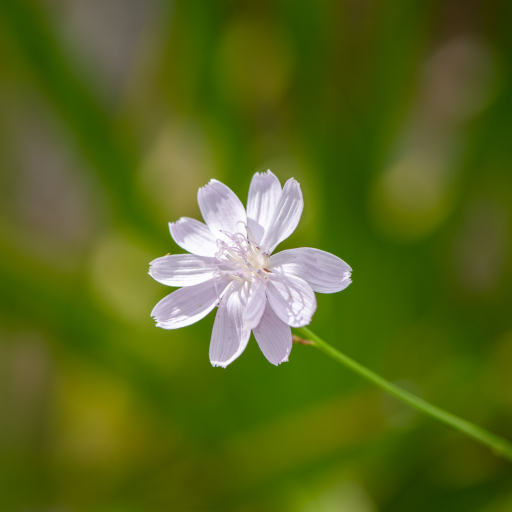
Plant Overview
Often called the Rose-rush or Flowering Straw, Lygodesmia aphylla is a master of disguise in the sandy scrublands of the southeastern United States. For most of the year, it looks like nothing more than a bundle of wiry, leafless green sticks, but it surprises hikers with delicate, papery blooms that seem to float in mid-air. It is the ultimate minimalist plant, having evolved to shed its leaves to survive in harsh, sunny environments.
🔍 How to Identify
- 🌸 The Bloom: Large, solitary flowers ranging from pale lavender to rose-pink. Each "petal" (ray floret) has a distinctively notched, squared-off tip that looks like it was trimmed with pinking shears.
- 🎋 The Stems: Slender, rigid, and rush-like. These stems are the primary photosynthetic organs, as the plant has essentially traded leaves for green "straws" to prevent water loss.
- 🍃 The "Missing" Leaves: If you look closely at the base, you might see tiny, scale-like remnants, but for all intents and purposes, the plant appears entirely leafless.
🏡 In Your Garden
- 🏜️ Drainage is King: This plant thrives in "starvation" conditions—think deep, dry sand and full, punishing sun. It will likely struggle or rot in heavy, nutrient-rich garden soil or wet clay.
- 🔥 Fire Follower: In the wild, this species is a "fire-prolific" bloomer. It uses the nutrients from ash and the sudden lack of competition after a brushfire to send up its most spectacular displays.
- 🦋 Pollinator Magnet: Despite its skeletal look, the flowers are a high-value target for native bees and butterflies who navigate the scrub looking for nectar.
⚠️ Safety & Toxicity
- 🥛 Mild Irritant: Like its relatives in the chicory family, the stems contain a white, milky latex sap when broken.
- 🚫 Skin Sensitivity: While not considered highly toxic, the milky sap can cause mild skin irritation or "dermatitis" for sensitive individuals. It is best to wear gloves if you are pruning or handling broken stems.
✨ Fun Fact
- 🏷️ The Name Game: Its scientific name is a literal description of its appearance; Lygodesmia comes from the Greek for "flexible bundle," and aphylla translates directly to "without leaves."

Detailed Care Instructions

Place in a bright room that is sun drenched almost all day. Or directly in a south-facing window.

Some plants require more regular watering than others, which should be done every few days. It's critical to maintain the soil moist all of the time. The water requirements of the same plant placed in pots with varying sizes will differ. Because the water in the smaller pot evaporates faster than the water in the larger pot, it will require more watering. Regardless of pot size, the surface should constantly be maintained moist.








