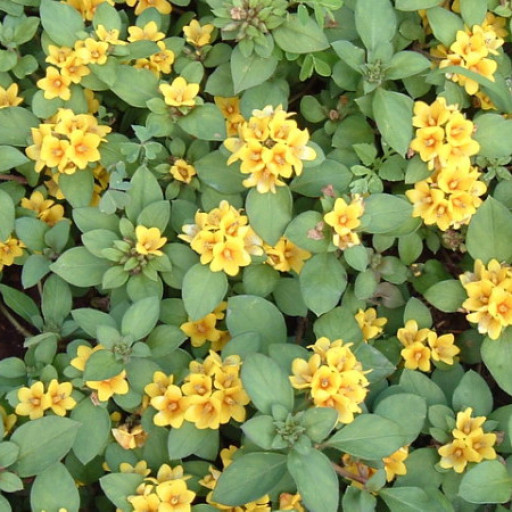
Plant Overview
Often called the "Golden Globes" or "Dense-flowered Loosestrife," Lysimachia congestiflora is a vibrant, low-growing perennial that turns garden borders into a carpet of sunshine. Native to the damp woodland edges of China, this plant is a favorite for its ability to spill elegantly over the sides of hanging baskets or fill in gaps between taller shrubs. Its dense, mat-forming habit makes it a "living mulch" that keeps soil cool and suppresses weeds.
🔍 How to Identify
- 🟡 The Blooms: Small, cup-shaped flowers appear in tight, crowded clusters (hence the name congestiflora). Each golden-yellow petal features a distinct burgundy or reddish-orange "eye" at the center.
- 🍃 The Foliage: The leaves are typically dark green, oval-shaped, and grow in opposite pairs. Some popular cultivars, like 'Midnight Sun,' feature deep chocolate or purple-tinted foliage that creates a stunning contrast with the yellow flowers.
- 🌱 Growth Habit: This is a prostrate, trailing plant. Its stems creep along the ground and can root at the nodes where they touch the soil, creating a thick, lush mound about 6 inches tall.
🏡 In Your Garden
- 💧 Thirst for Moisture: Unlike many groundcovers that prefer dry soil, this plant is a "water-lover." It originates from stream banks and damp forests, so it performs best in soil that stays consistently moist. If it wilts, a quick drink usually perks it right back up.
- ⛅ Light Play: While it can handle full sun in cooler climates, it truly thrives in partial shade. In scorching summer heat, a bit of afternoon shade prevents the leaves from bleaching or scorching.
- ✂️ Containment: While it is a vigorous grower, it is far less invasive than its cousin, the Creeping Jenny (Lysimachia nummularia). It stays in a relatively polite mound, though you can easily trim the edges if it wanders too far.
⚠️ Safety & Toxicity
- ✅ Pet & Human Safe: Lysimachia congestiflora is generally considered non-toxic to dogs, cats, and humans. It is a "worry-free" choice for households with curious pets or toddlers.
- 🌿 Skin Sensitivity: While not poisonous, the sap of some Lysimachia species can cause very mild skin irritation in particularly sensitive individuals. Wearing gloves while pruning is a good practice if you have reactive skin.
✨ Fun Fact
The genus name Lysimachia is steeped in ancient legend. It is named after King Lysimachus of Sicily, who allegedly discovered that waving a piece of Loosestrife in front of a charging, stressed-out bull would instantly calm the animal down!

Detailed Care Instructions
| Humidity | Normal |
| Lighting | Full Sun |
| Difficulty | Medium |
| Hibernation | Cold Period |
| Temperature | 15°C - 25°C |
| Hardiness Zones | 7 - 9 |
To grow Lysimachia congestiflora, also known as Creeping Jenny or Moneywort, follow these steps:
- Choose the right location: Lysimachia congestiflora prefers a partially shaded to full sun area. Ensure the soil is well-draining, rich in organic matter, and slightly acidic.
- Planting method: Dig a hole slightly wider and deeper than the plant's root ball. Gently remove the plant from its container and place it in the hole, ensuring the top of the root ball is level with the soil surface. Backfill with soil and lightly tamp it down around the root ball to eliminate air pockets.
- Watering: After planting, thoroughly water the plant to settle the soil around the roots. Then, water regularly to keep the soil consistently moist, especially during hot and dry periods. Avoid overwatering, as Lysimachia congestiflora prefers moist but not soggy soil.
- Mulching: Apply a layer of organic mulch around the plant, such as wood chips or shredded bark, to help retain moisture and suppress weed growth.
- Fertilizing: Lysimachia congestiflora generally does not require heavy fertilization. However, you can apply a balanced, slow-release fertilizer in early spring to promote healthy growth.
- Pruning: Regularly trim back any overgrown or leggy stems to maintain a compact and tidy appearance. This will also encourage new growth and prevent the plant from becoming invasive.
- Propagation: Lysimachia congestiflora can be propagated through division in spring or early summer. Dig up the plant, divide the root ball into smaller sections, and replant them in suitable locations.
- Pest and disease control: This plant is generally resistant to pests and diseases. However, occasional issues such as aphids or powdery mildew can occur. Monitor your plants regularly and take appropriate measures if any problems arise.
By following these steps, you can successfully grow Lysimachia congestiflora and enjoy its beautiful and vigorous trailing foliage in your garden.

Place in a bright room that is sun drenched almost all day. Or directly in a south-facing window.

1. Observe the soil moisture: Before watering your plant, always check the soil moisture level. This can be done by sticking your finger or a moisture meter a few inches into the soil. If the soil feels dry, it's time to water.
2. Water deeply: Once you determine that your plant needs watering, give it a deep watering. This means watering until the soil is evenly moist and water is draining from the bottom of the pot or container. This helps to ensure that water reaches the roots and encourages deep root growth.
3. Avoid overwatering: While it's important to water your plant regularly, it's also important to avoid overwatering. Lysimachia Congestiflora plants don't like to sit in water, so make sure to drain any excess water from the saucer or container after watering.
4. Water consistently: Lysimachia Congestiflora plants prefer consistent moisture, so avoid letting the soil completely dry out between waterings. However, be careful not to water too frequently, as this can lead to root rot. In general, it's best to water once or twice a week, depending on weather conditions and the size of the container.
5. Consider using a layer of mulch: Adding a layer of mulch around the base of your plant can help to retain moisture in the soil. This can be especially helpful during hot, dry weather or if you live in a particularly arid climate.
6. Use room temperature water: When watering your Lysimachia Congestiflora plant, be sure to use room temperature water. Cold water can shock the roots and hot water can damage the foliage. Let your watering can sit out for a few hours to reach room temperature before using it to water your plant.
- Choose a well-draining soil mix that is rich in organic material.
- Plant the Lysimachia Congestiflora plant in a location that receives partial to full sunlight and has good air circulation.
- Water the plant regularly, keeping the soil evenly moist but not waterlogged.
- Feed the plant with a balanced fertilizer every 2 to 4 weeks during the growing season (spring through summer).
- Apply the fertilizer according to package instructions, being careful not to over-fertilize as this can damage the plant.
- If the plant is growing in a container, be sure to flush the soil with water periodically to prevent the buildup of fertilizer salts.
- Monitor the plant closely for signs of nutrient deficiency or excess, such as yellowing leaves or stunted growth, and adjust your fertilization regimen accordingly.
The ideal soil for growing this plant should be well-draining, moderately fertile and moist. It should be a mix of loam, sand, and peat moss, which will help to ensure the optimal growing conditions for the plant. The pH level of the soil should be slightly acidic to neutral, ideally in the range of 5.0 to 7.5. Adding organic matter to the soil will also improve its fertility, as well as its ability to retain moisture and nutrients. A layer of mulch around the plant can help to conserve moisture and improve soil texture. When planting this plant, ensure that the soil is well-drained and the drainage hole is deep enough and wide enough to allow good root growth. Fertilizing the soil with a slow-release balanced fertilizer during the growing season can also improve plant growth and appearance.
To propagate this plant, take stem cuttings from healthy parent plants. Make sure each cutting contains at least one node, which is where new roots will emerge. Remove the lower leaves from the stem cutting, leaving only the top few leaves. Dip the cut end of the stem in rooting hormone powder, and plant it in moist, well-draining soil. Place the cutting in a location with bright, indirect light and keep the soil consistently moist. It may take several weeks or months for roots to develop, at which point the new plant can be acclimated to more light and eventually transplanted into a larger container or the ground.
Common pests of the dense-flowered loosestrife include Spider mites, fungus gnats, aphids, whiteflies. Make a habit of checking your dense-flowered loosestrife frequently for pests so that any infestations can be caught and managed early.








