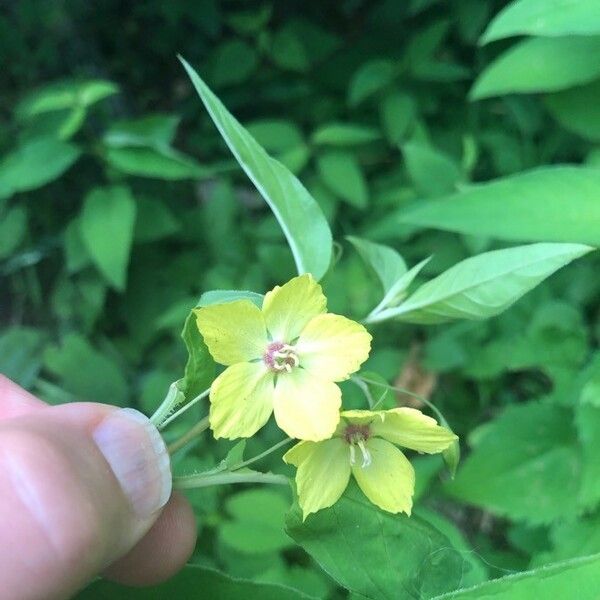
Plant Overview
Often called the Lance-leaved Loosestrife, this golden-bloomed perennial is a radiant star of North American prairies and wet meadows. Unlike its aggressive European cousin (the Purple Loosestrife), this native species is a polite garden guest that provides a vital splash of sunshine to damp landscapes. It is a favorite for those looking to create a "wild" aesthetic while supporting specialized local pollinators.
🔍 How to Identify
- 🌿 The Foliage: True to its name, the leaves are "lanceolate"—meaning they are long, narrow, and shaped like the head of a spear. They typically grow in opposite pairs along the stem.
- 🌼 The Flowers: The blooms are nodding, five-petaled yellow stars. If you look closely at the center, you’ll see a delicate reddish-orange ring that acts as a "bullseye" for visiting insects.
- 📏 Growth Habit: It usually stands about 1 to 2 feet tall, featuring smooth, upright stems that may branch out near the top to display multiple clusters of flowers.
🏡 In Your Garden
- 💧 Moisture Lover: This plant is a "hydrophile," meaning it craves water. It is the perfect candidate for rain gardens, the edges of ponds, or those low-lying spots in your yard where the grass stays soggy after a storm.
- 🌱 Rhizome Runner: It spreads through underground runners called rhizomes. While it isn't "invasive" in the ecological sense, it will happily colonize an area over time, making it an excellent native groundcover for filling large gaps.
- ☀️ Light Balance: While it enjoys full sun, it is surprisingly tolerant of light shade. In hotter climates, a little afternoon shade helps keep its delicate yellow petals from scorched edges.
⚠️ Safety & Toxicity
- ✅ Safe Status: Lysimachia lanceolata is generally considered non-toxic and safe for residential gardens.
- 🐾 Pets & Kids: There are no known records of this plant being poisonous to cats, dogs, or humans. However, as with any ornamental plant, it’s best to discourage curious toddlers or pets from grazing on the foliage to avoid minor tummy upsets.
✨ Fun Fact
This plant doesn't just offer nectar; it produces a special floral oil. It has a "best friend" relationship with the Macropis bee, a rare specialist that collects this oil to waterproof its underwater nests and feed its larvae!

Detailed Care Instructions
To successfully grow Lysimachia lanceolata plant, follow these steps:
- Choose a suitable location: Lysimachia lanceolata prefers partial shade to full sun. Select a site that receives at least 4-6 hours of direct sunlight per day.
- Prepare the soil: The plant thrives in moist, well-draining soil. Add organic matter such as compost or well-rotted manure to improve the soil's fertility and drainage.
- Planting: Dig a hole slightly larger than the plant's root ball. Place the plant in the hole, ensuring that the crown is at the same level as the surrounding soil. Fill the hole with soil, firming it gently around the plant.
- Watering: Immediately after planting, water the plant thoroughly and keep the soil consistently moist. However, avoid overwatering, as it can lead to root rot.
- Mulching: Apply a layer of organic mulch, such as wood chips or straw, around the base of the plant to conserve moisture and suppress weed growth.
- Fertilizing: Lysimachia lanceolata doesn't require heavy fertilization. However, you can apply a balanced slow-release fertilizer in early spring to provide nutrients.
- Pruning: Trim back the plant after flowering to encourage bushier growth and remove any dead or damaged stems. This will also prevent the plant from becoming invasive.
- Propagation: The plant can be propagated through division. Dig up a mature clump in early spring or fall, separate it into smaller sections, and replant them in suitable locations.
- Pest and disease control: Lysimachia lanceolata is generally resistant to most pests and diseases. However, keeping the plant well-watered and providing adequate spacing between plants helps prevent issues.
- Regular maintenance: Regularly monitor the plant for any signs of damage or pests. Ensure the plant has proper air circulation and adequate space to grow.

Place in a bright room that is sun drenched almost all day. Or directly in a south-facing window.

To properly water Lysimachia lanceolata, it is essential to understand its specific needs. Here are the guidelines for watering this plant:
1. Consider the watering frequency: Lysimachia lanceolata prefers consistently moist soil. Aim to water it regularly to keep the soil evenly moist, not waterlogged or completely dry. Avoid letting the soil completely dry out between waterings.
2. Observe the soil moisture: Before watering, check the moisture level of the soil. Insert your finger about an inch into the soil to assess if it feels dry or wet. If it feels dry, it is an indication that the plant needs watering.
3. Watering technique: When watering, focus on the base of the plant rather than spraying the foliage. This helps ensure the roots receive sufficient moisture. Slowly pour water onto the soil until it starts to seep out from the bottom drainage holes, ensuring thorough saturation.
4. Consider the water quality: Lysimachia lanceolata thrives best in slightly acidic to neutral soil pH. If the water in your area is highly alkaline, you may need to adjust the pH by adding organic matter or using filtered water to prevent water quality issues.
5. Mulching benefits: Applying a layer of organic mulch around the base of the plant helps retain moisture in the soil. This reduces the frequency of watering while promoting healthy root growth.
6. Weather conditions: Pay attention to the weather and adjust the watering accordingly. During hot and dry periods, check the plant more frequently and increase the amount of water if needed. In contrast, reduce watering during cooler or rainy periods to prevent waterlogging.
Remember, while these guidelines provide general advice, it is crucial to observe the specific needs of your Lysimachia lanceolata and adjust watering accordingly. Factors like pot size, humidity levels, and environmental conditions can influence the watering requirements of the plant.
To fertilize the Lysimachia Lanceolata plant, follow these instructions:
- Choose a water-soluble balanced fertilizer with equal amounts of nitrogen, phosphorus, and potassium (N-P-K). Look for a formulation like 10-10-10 or 20-20-20.
- Dilute the fertilizer according to the package instructions. Usually, a ratio of 1 tablespoon of fertilizer per gallon of water is sufficient.
- Water the plant thoroughly before fertilizing to ensure the soil is moist.
- Pour the diluted fertilizer solution around the base of the plant, avoiding direct contact with the foliage.
- Apply the fertilizer every 4-6 weeks during the growing season, typically from spring to early fall.
- Be cautious not to over-fertilize, as it may lead to excessive foliage growth and reduced flower production.
- Monitor the plant's response to the fertilizer. If the foliage starts turning yellow or shows signs of burning, reduce the frequency of fertilization or dilute the solution further.
- After applying the fertilizer, water the plant lightly to help nutrients seep into the soil and prevent potential fertilizer burn.
- Remember to follow the specific instructions provided with the fertilizer product you choose, as recommendations may slightly vary among different brands.
When it comes to selecting the ideal soil for Lysimachia Lanceolata, it is important to consider several factors. The soil should possess specific characteristics in order to promote optimal growth and health for the plant.
Firstly, Lysimachia Lanceolata prefers a soil that is well-draining. This means that the soil should not hold excessive moisture, as it can lead to root rot and other fungal diseases. It is advisable to avoid heavy clay soils or those that become waterlogged easily.
Additionally, the soil should have a good balance between water retention and aeration. It should be able to retain enough moisture to sustain the plant between waterings, while also allowing excess water to drain away and prevent the roots from becoming overly saturated.
Lysimachia Lanceolata thrives in a slightly acidic to neutral soil pH range. A pH level between 6 and 7 is generally recommended for this plant. It is best to avoid extremely acidic or alkaline soils, as they can hinder nutrient absorption and overall growth.
The soil should also be rich in organic matter, such as compost or well-rotted manure. Organic matter not only improves soil structure but also enhances its ability to retain moisture and nutrients. Adding organic matter helps create a favorable environment for the plant's roots to establish and grow.
Furthermore, Lysimachia Lanceolata appreciates a nutrient-rich soil. Therefore, incorporating a balanced slow-release fertilizer during planting or regularly adding organic fertilizers can help provide essential nutrients for healthy growth and flowering.
In summary, Lysimachia Lanceolata thrives in a well-draining soil with a balanced moisture level, slightly acidic to neutral pH, and rich in organic matter. Following these guidelines will contribute to the plant's overall health and performance.
Step 1: Prepare the Propagation Area
Choose a location for propagation that provides partial shade or filtered sunlight. If indoors, consider using a bright area near a window. Prepare the area by removing any weeds or unwanted plants.
Step 2: Select Healthy Parent Plants
Identify healthy Lysimachia lanceolata plants with vibrant foliage and strong stems. These plants will serve as parent plants for propagation.
Step 3: Gather Propagation Materials
Collect the necessary materials, including clean and sharp pruning shears, sterilized containers or pots, well-draining potting soil or seed-starting mix, and a misting bottle or plastic wrap.
Step 4: Take Stem Cuttings
Using the pruning shears, select a healthy stem from the parent plant. Ideally, choose a stem that is 4-6 inches long and has several nodes or leaf joints. Make a clean diagonal cut just below a node.
Step 5: Prepare Cuttings for Planting
Remove any leaves from the lower half of the stem, leaving a few leaves at the top intact. This encourages energy to be directed toward root growth. If desired, you can dip the cut end of the stem in a rooting hormone to boost rooting success.
Step 6: Plant the Cuttings
Fill the containers or pots with well-draining potting soil or seed-starting mix. Create a small hole with your finger or a pencil and gently place the stem cutting into the hole, ensuring that at least one or two nodes are buried in the soil. Firmly press the soil around the cutting to secure it in place.
Step 7: Provide Optimal Growing Conditions
Place the containers or pots in a partially shaded or filtered sunlight location. Water the cuttings thoroughly, ensuring the soil is evenly moist but not waterlogged. Mist the cuttings regularly or cover them with plastic wrap to maintain humidity.
Step 8: Maintain Proper Care
Check the soil moisture regularly and provide water as needed to prevent drying out. Avoid overwatering, as it may lead to root rot. Monitor the cuttings for signs of growth, such as new leaves or roots.
Step 9: Transplant the Propagated Plants
Once the cuttings have developed a healthy root system, usually after 6-8 weeks, they can be transplanted into larger pots or directly into the garden. Ensure that the new planting location offers similar growing conditions (partial shade to filtered sunlight and well-draining soil).
Step 10: Continue Care and Enjoy
Maintain regular care of the propagated plants, including watering, fertilizing, and providing adequate sunlight. Monitor the plants for any signs of pests or diseases and take appropriate action if needed. With proper care, the propagated Lysimachia lanceolata plants will thrive and provide beauty to your garden.








