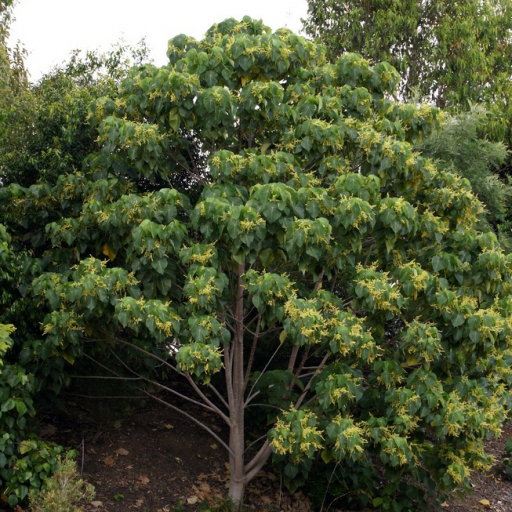
Plant Overview
Known as the Parasol Leaf Tree or Elephant’s Ear, Macaranga tanarius is a striking tropical pioneer. In the wild, it acts as nature’s first responder, quickly colonizing cleared land to provide a protective canopy for slower-growing species. Its massive, shield-like leaves have earned it a reputation as one of the most architectural "weed" trees in the tropical world.
🔍 How to Identify
- 🍃 Umbrella Leaves: The leaves are "peltate," meaning the stem attaches to the center of the leaf rather than the edge, making each leaf look like a green parasol.
- 📏 Impressive Scale: The heart-shaped leaves can grow exceptionally large, often reaching 30 to 60 centimeters in diameter with prominent, radiating veins.
- 🌼 Bracted Blooms: It produces small, yellowish-green flowers that lack petals and are tucked behind fringed, leaf-like bracts that look like tiny ruffled skirts.
🏡 In Your Garden
- 🏗️ Rapid Growth: This tree is built for speed, not necessarily for longevity. It is excellent for creating a "quick screen" or instant shade, but be aware that its wood is relatively soft and can be brittle in high winds.
- 💧 Thirsty Pioneer: It thrives in disturbed soils and loves moisture. While it is incredibly hardy, it performs best in spots where it can get deep waterings during dry spells to maintain those lush, oversized leaves.
⚠️ Safety & Toxicity
- ✅ Low Risk: Macaranga tanarius is generally considered non-toxic to humans and common household pets.
- 🧤 Sticky Sap: If you prune the tree, you may notice a clear or reddish sap. While not dangerous, it is very sticky and can occasionally cause mild skin irritation for people with sensitive skin; wearing gloves is recommended.
✨ Fun Fact
In the Philippines, the bark and leaves of the Parasol Leaf Tree are traditionally used in the fermentation process of basi, a popular local wine made from sugarcane!

Detailed Care Instructions
To grow Macaranga Tanarius (also known as the Leopard Tree), follow these steps:
- Climate: Ensure you have the right climate conditions for the plant. Macaranga Tanarius thrives in tropical or subtropical regions with temperatures ranging between 68-86°F (20-30°C). It's best to grow it outdoors in regions that do not experience frost.
- Soil: Choose well-draining soil for the plant. Macaranga Tanarius prefers slightly acidic to neutral soil with a pH range of 5.5-7.0. Amend the soil with organic matter, like compost, to improve its fertility and moisture retention.
- Sunlight: Provide the plant with bright indirect sunlight. Place it in a location that receives partial shade, as direct sunlight can burn the leaves.
- Watering: Keep the soil consistently moist but not waterlogged. Water the plant regularly, especially during dry periods, to prevent the soil from drying out completely. However, make sure you don't overwater and cause root rot.
- Fertilization: Feed the Macaranga Tanarius plant with a balanced fertilizer every 6-8 weeks during the growing season (spring and summer). Follow the instructions on the fertilizer packaging for proper application.
- Pruning: Trim any dead, damaged, or diseased parts of the plant to maintain its health and shape. Regular pruning also helps control its size and promote bushier growth.
- Propagation: You can propagate Macaranga Tanarius through stem cuttings. Take a 4-6 inch (10-15 cm) cutting from a healthy plant, dip the cut end in rooting hormone, and plant it in a well-draining potting mix. Place the cutting in a warm and humid environment until new roots develop.
- Pests and diseases: Monitor the plant for common pests like aphids, mites, and scale insects. Use organic insecticidal sprays or wash the affected parts with soapy water to control them. Macaranga Tanarius is generally disease-resistant but can occasionally suffer from fungal issues under overly wet conditions. Ensure good ventilation and avoid overwatering to prevent fungal infections.
By following these steps, you can successfully grow Macaranga Tanarius in your garden or as a potted plant indoors, provided you provide it with the right conditions and care.

Place in a bright room that is sun drenched almost all day. Or directly in a south-facing window.

To water this plant, it is important to ensure that the soil is moist but not waterlogged. It is recommended to water it once a week during the growing season, and to reduce watering during the winter months. When watering, make sure to water the soil directly at the base of the plant and avoid getting water on the leaves. You can use a watering can or a hose with a gentle stream of water. Check the soil regularly to ensure it is not too dry or too wet, as this can lead to root rot or other issues. If the soil feels dry, water the plant thoroughly until the water starts to drain through the bottom of the pot. If the soil feels damp, wait a few days before watering again. It is important to also provide good drainage for the plant, as it does not tolerate waterlogged soil.
To fertilize this plant, use a balanced fertilizer with an equal ratio of nitrogen, phosphorus, and potassium. Apply the fertilizer every two weeks during the growing season, which is typically spring and summer. Mix the fertilizer according to the package instructions and apply it to the soil around the base of the plant, making sure not to get any on the leaves. Water the plant after fertilizing to help the nutrients penetrate the soil. Avoid fertilizing during the dormant season, which is usually winter, as the plant is not actively growing during this time.
For Macaranga Tanarius plant, it is recommended to use well-draining soil that is rich in nutrients. The soil should have a pH level between 5.5 and 7.5. It is important to avoid using heavy clay soil or soil that is too compacted, as this can lead to poor drainage and root rot. Organic matter can be added to the soil to improve its nutrient content and structure. Additionally, the soil should be kept moist but not waterlogged, as excessive moisture can also lead to root rot.
Macaranga Tanarius can be propagated through cuttings. Take a healthy stem from the plant, about 6 inches long, and remove any leaves from the lower 2 inches. Dip the cut end in rooting hormone and plant it in a pot filled with well-draining soil. Water the cutting and keep it in a warm, humid location with bright, filtered light. In about 4-6 weeks, roots should start to form and the cutting can be transplanted into a larger pot or outdoors if the climate is suitable. It is important to keep the soil evenly moist during the propagation process.








