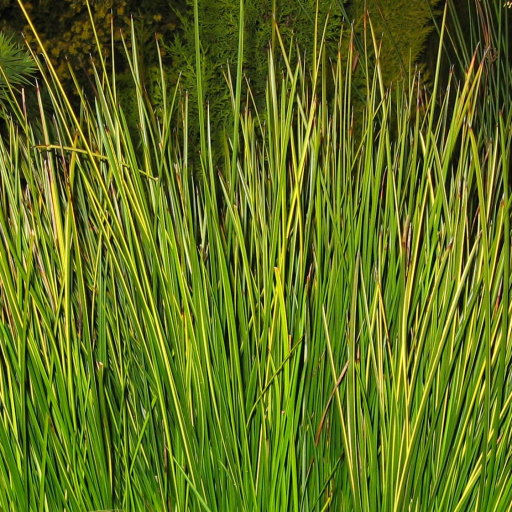
Plant Overview
Known as the Soft Twig-rush or Rusty Sedge, this elegant wetland specialist adds a striking architectural touch to any water feature. Native to the marshlands of Australia, New Zealand, and parts of Southeast Asia, it is beloved by naturalistic gardeners for its vertical lines and "burnt" orange seed heads that seem to glow during the golden hour. It’s a plant that thrives where others drown, turning soggy patches into shimmering displays of texture.
🔍 How to Identify
- 🌿 The Foliage: The leaves are tall, stiff, and a cool grey-green. Unlike many flat-leaved grasses, these are "biconvex," meaning they are slightly swollen and oval-shaped if you were to look at a cross-section.
- 🍂 The Seed Heads: The plant gets its name rubiginosa (meaning rusty) from the dense, branching clusters of reddish-brown nutlets that appear at the top of the stems.
- 🌱 Growth Habit: It grows in dense, upright tufts. If you dig slightly beneath the surface, you’ll find thick, creeping rhizomes (underground stems) that allow it to spread and colonize muddy banks.
🏡 In Your Garden
- 💧 Wet Feet Only: This is a "marginal" plant, meaning it is most at home with its roots submerged in shallow water or in soil that stays permanently wet. It’s the perfect solution for that one spot in the yard where water always puddles.
- 🌏 Erosion Expert: Because of its vigorous underground root system, it acts as a natural engineer. It is often used in restoration projects to stabilize pond edges and prevent soil from washing away during heavy rain.
- ☀️ Sun Seeker: While it can tolerate a bit of "dappled" light, it needs full sun to produce those iconic rusty seed heads. In too much shade, the plant may become floppy and lose its structural integrity.
⚠️ Safety & Toxicity
- ✅ Safe Status: The Soft Twig-rush is considered non-toxic to humans, dogs, and cats. It is a very safe choice for family gardens and public parks.
- ✂️ Physical Caution: Although the name says "soft," the leaves are quite tough. Like many sedges, the edges can be slightly abrasive. It’s a good idea to wear gardening gloves when pruning or dividing the clumps to avoid minor "grass cuts."
✨ Fun Fact
In the wild, Machaerina thickets serve as a vital "nursery" and hidden highway for secretive wetland birds. In Australia, the endangered Australasian Bittern relies on these dense, rusty reeds for camouflage and nesting!

Detailed Care Instructions
To grow Machaerina Rubiginosa, also known as rusty sedge or Australian umbrella sedge, you can follow these steps:
- Select a suitable planting location: Machaerina Rubiginosa prefers a sunny to partially shaded location that receives at least 6 hours of sunlight per day. Ensure that the soil is consistently moist but well-draining.
- Prepare the soil: Before planting, loosen the soil with a garden fork or tiller to a depth of around 6-8 inches. Remove any weeds, rocks, or debris from the planting area. You can improve the soil quality by adding organic matter like compost or peat moss.
- Planting: Dig a hole that is slightly wider and deeper than the root ball of the plant. Gently place the plant into the hole, making sure it sits at the same depth as it was in its container. Backfill the hole with soil and gently firm it around the plant to eliminate any air pockets. Water thoroughly after planting.
- Watering: Keep the soil consistently moist but not waterlogged. Check the moisture level regularly and water when the top inch of soil feels dry. During warmer months, you may need to water more frequently to prevent the plant from drying out.
- Fertilization: Feed the Machaerina Rubiginosa plant with a balanced, slow-release fertilizer in spring and summer. Follow the instructions on the fertilizer packaging for the appropriate amount to use. Avoid over-fertilizing, as it can lead to excessive foliage growth and weak stems.
- Pruning: Remove any dead or damaged foliage as needed to maintain the plant's aesthetics. Oftentimes, Machaerina Rubiginosa does not require significant pruning.
- Winter care: In colder regions, provide winter protection by applying a thick layer of mulch around the plant in late fall. The mulch helps insulate the root system and protect it from freezing temperatures.
- Propagation: Machaerina Rubiginosa can be propagated through seeds or by dividing clumps. Division is typically done in early spring or fall by separating the clumps and replanting them. Sow seeds in a seed tray filled with moist soil and keep it in a warm, brightly lit area until germination occurs.
Remember to consult local gardening resources or nursery experts for specific advice tailored to your climate and growing conditions.

When it comes to watering this plant, the most important thing to remember is to keep the soil consistently moist but not waterlogged. Be sure to use a well-draining soil mix that allows excess water to drain away from the roots.
Watering frequency will depend on several factors including the size of the pot, the humidity level, and the temperature of the environment. Generally speaking, this plant prefers to be watered more frequently during the hotter months and less frequently during the cooler months.
To determine if it's time to water your plant, simply stick your finger into the soil about an inch deep. If the soil feels dry at that depth, it's time to water. Use a watering can or hose to thoroughly saturate the soil until water drains out of the bottom of the pot.
Be sure to empty any excess water that accumulates in the saucer underneath the pot to prevent the roots from becoming waterlogged. Remember, overwatering can be just as harmful as underwatering, so it's important to find the right balance.
To fertilize this plant, apply a balanced fertilizer with equal amounts of nitrogen, phosphorus, and potassium every two to three weeks during the growing season. Make sure to dilute the fertilizer in water and apply it directly to the soil around the plant's base, avoiding contact with the foliage. Reduce fertilization during the plant's dormant period, but continue to provide adequate water. Monitor the plant's growth and adjust fertilization as needed.
When planting Machaerina Rubiginosa, it is important to use soil that is properly drained and has a neutral pH balance. The soil should be nutrient-rich and contain organic matter, such as compost or peat moss, to promote healthy growth. The plant prefers moist soil but does not tolerate standing water or overly wet conditions. The soil should also be porous, allowing for air circulation around the roots. It is recommended to amend the soil with sand or perlite to improve drainage. Overall, the soil used for Machaerina Rubiginosa should be well-draining, rich in nutrients, and have a neutral pH balance.
To propagate this plant, start by taking stem cuttings that are 5-6 inches long and have at least 2-3 nodes on them. Make sure the cutting is taken from a healthy and mature plant. Next, remove the lower leaves and nodes from the cutting, leaving only a few leaves on the upper section.
Then, dip the cut end of the stem in rooting hormone powder and plant it in a pot with well-draining soil. Make sure the soil is moist but not waterlogged. Cover the pot with a plastic bag to increase humidity and place it in a bright and warm location, but out of direct sunlight.
Check the cutting for roots after a few weeks. Once they have developed, remove the plastic bag and begin to gradually acclimate the plant to lower humidity levels. You can then transplant the new plant to a larger pot or outdoors in a suitable location.
Remember to keep the soil moist but not waterlogged and provide the plant with adequate sunlight and nutrients to ensure healthy growth.








