Plant Overview
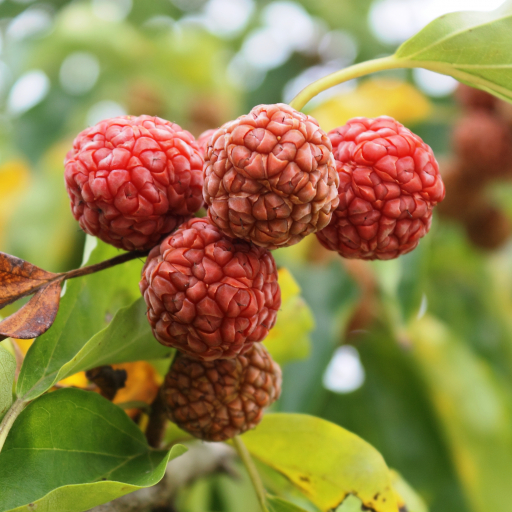
Often called the Mandarin Melon Berry, Cudrang, or Silkworm Thorn, this unique tree is a rare gem from East Asia. A distant cousin to both the Mulberry and the rugged Osage Orange, it produces striking, bumpy red fruits that taste like a creamy fusion of melon, fig, and persimmon. Historically, its leaves served as a "plan B" for silkworms in China when mulberry leaves were in short supply.
🔍 How to Identify
- 🍃 Leaf Shape: Young plants feature distinct three-lobed leaves (hence the name tricuspidata), while mature growth often transitions to simpler, teardrop-shaped leaves.
- 🔴 The Fruit: Round, neon-red berries with a "bumpy" texture that resembles a small brain or an oversized raspberry, typically 1–2 inches in diameter.
- 🗡️ Thorny Stems: The branches are armed with sharp, stiff thorns, particularly on younger wood, which can make harvesting a bit of a challenge.
🏡 In Your Garden
- 🌳 Growth Nuance: This is a slow-growing, deciduous tree that is remarkably cold-hardy and pest-resistant. However, it is "dioecious," meaning you usually need both a male and a female tree to get fruit, though some grafted cultivars are now self-fertile.
- 🥣 Harvest Patience: You must wait until the fruit is soft and almost ready to fall off the branch before eating. If picked too early, the fruit contains a sticky, milky sap that leaves a dry, astringent feeling in the mouth.
⚠️ Safety & Toxicity
- ✅ Status: Generally safe and edible.
- 🩹 Physical Hazards: The primary danger comes from the sharp thorns, which can easily puncture skin. Like its relatives, the tree contains a milky white latex sap; while not strictly toxic, it can cause mild skin irritation for people with latex allergies or sensitive skin.
✨ Fun Fact
In ancient China, the wood of this tree was so dense and flexible that it was the preferred material for crafting high-quality archer's bows, much like its North American relative, the Osage Orange, was used by the Osage Nation.

Detailed Care Instructions
To grow a Maclura tricuspidata plant, also known as Osage orange or hedge apple, you can follow these steps:
- Choose a suitable location: Maclura tricuspidata plants prefer full sun and well-draining soil. Make sure the spot you choose gets at least 6 hours of direct sunlight each day.
- Prepare the soil: Ensure the soil is fertile and well-draining. Amend the soil with organic matter, such as compost, to improve its nutrient content and drainage.
- Propagation: Maclura tricuspidata can be propagated from seeds or cuttings. If using seeds, soak them in water for 24 hours before planting to improve germination rates. If using cuttings, take 6 to 8-inch stem cuttings, remove the lower leaves, and dip the cut end in rooting hormone before planting.
- Planting: Dig a hole slightly larger than the root ball or cutting and place it in the hole. Backfill the hole with soil, firming it gently around the plant. Leave a slight depression around the plant to hold water during watering.
- Watering: Initially, water the plant thoroughly after planting to settle the soil and promote root establishment. Afterward, water the plant deeply but infrequently, allowing the soil to dry between waterings to avoid overwatering.
- Mulching: Apply a layer of organic mulch around the base of the plant to help conserve moisture, suppress weeds, and regulate soil temperature. Maintain a gap between the mulch and the plant stem to prevent rot.
- Fertilizing: Maclura tricuspidata does not typically require frequent fertilization. However, you can apply a balanced slow-release fertilizer in early spring to provide nutrients for healthy growth.
- Pruning: Prune the plant in late winter or early spring to remove any dead, damaged, or crossing branches. This will help maintain a healthy and well-shaped plant.
- Pests and diseases: Maclura tricuspidata is relatively resistant to pests and diseases. However, keep an eye out for common garden pests like aphids, scale insects, or mites. If necessary, use appropriate organic or chemical control methods to manage pest infestations.
- Harvesting the fruit: If you are growing this plant for its fruit, be aware that it typically takes several years for the tree to produce fruit. The fruit can be harvested in autumn when it turns a vibrant green color and has a pleasant aroma. The fruit can be left to dry or used for various crafts and decorations.
Remember to research specific care requirements for Maclura tricuspidata to adapt to your particular growing zone and climate.
Maclura Tricuspidata plant requires watering at regular intervals to maintain healthy growth. It is essential to water the plant deeply, ensuring that the water reaches its roots. The best time to water is in the early morning or late afternoon when the sun is not too harsh.
Before watering, make sure to check the soil moisture level by inserting your finger or a wooden stick into the soil. If the soil feels dry to touch or the stick comes out clean, it's time to water the plant.
To avoid waterlogging, ensure that the soil is well-drained and not water-retentive. You can achieve this by adding perlite or sand to the soil mix before planting. Also, make sure there are drainage holes at the bottom of the pot/container to allow excess water to drain out.
When watering, pour water slowly around the base of the plant until the soil is thoroughly moistened. Ensure that the water does not hit the plant's leaves or flowers, as this can cause them to burn in the sunlight.
During the hot summer days, you may need to water the plant more frequently, as it may require more water to maintain its hydration levels. Conversely, in colder months, you can reduce watering to once or twice a week, depending on the moisture level of the soil.
Overall, consistent watering is essential for the health and vitality of your Maclura Tricuspidata plant. Always keep a keen eye on the plant's soil moisture level, and adjust the frequency and amount of water accordingly.
To fertilize this plant, use a balanced fertilizer with equal amounts of nitrogen, phosphorus, and potassium. Apply the fertilizer in early spring before the plant begins to grow. Follow the instructions on the fertilizer package for the proper amount to use. Avoid applying too much fertilizer as it can damage the plant. Water the plant thoroughly after fertilizing.
Maclura tricuspidata is a plant that prefers well-draining soil with moderate fertility. It thrives in soil that is slightly acidic to neutral, with a pH range of 6.0-7.0. The soil should be loamy, with a good amount of organic matter to provide nutrients and improve soil structure. It can tolerate slightly sandy or clay soils but may struggle in soils that are too heavy or compacted. It is important to avoid waterlogged soils, as this can lead to root rot and other issues. Adding a layer of mulch around the plant can help to retain moisture and improve soil health. Regular fertilization can also help to ensure the plant receives the nutrients it needs to thrive.
Maclura Tricuspidata is a deciduous plant species that belongs to the family Moraceae. It can be propagated by both seed and vegetative methods.
Propagation by seed -
- Harvest the fruits when they are fully ripe and the seed has turned brown.
- Wash the seeds and allow them to dry for a day.
- Soak the seeds in water for 24 hours to soften the seed coat.
- Sow the seeds in a well-draining soil mix, covering them with about ¼ inch of soil.
- Water the soil gently and keep it moist until the seedlings emerge.
- Transplant the seedlings to larger containers as they grow and develop.
Vegetative propagation - - Select a healthy and mature stem piece that has at least two to three nodes.
- Remove the leaves and make a slice at the bottom of the stem.
- Dip the stem in rooting hormone powder to enhance rooting.
- Fill a pot with well-draining soil mix and make a hole in the center with a stick.
- Place the stem cutting in the hole and firm the soil around it.
- Water the cutting and keep it in a warm and humid environment.
- Rooting should commence within 2 to 3 weeks.
- Once the roots are established, transplant the rooted cutting to a larger container.








