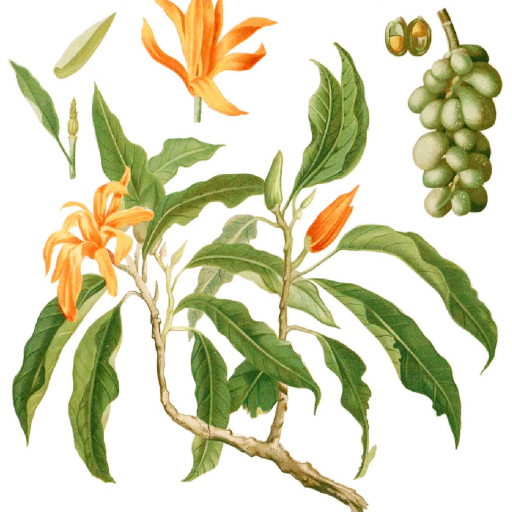
Plant Overview
Often called the "Joy Perfume Tree," the Magnolia Champaca is a botanical masterpiece famous for its intoxicating, creamy scent. Native to the lush forests of Southeast Asia and the Himalayas, it is deeply woven into the spiritual fabric of India and Bali, where its blossoms are used in temple offerings and traditional hair adornments. This evergreen beauty doesn't just provide shade; it fills the entire garden with a fragrance that inspired one of the world's most expensive perfumes.
🔍 How to Identify
- 🌼 The Flowers: Slender, star-shaped blossoms ranging from creamy yellow to a vibrant, deep orange. They have a waxy texture and appear tucked into the leaf axils.
- 🍃 The Foliage: Long, lance-shaped leaves that are bright green and glossy. They can grow up to 10 inches long and feature prominent, elegant veins.
- 🌳 The Silhouette: A tall, upright tree with a stately, narrow crown. In its natural habitat, it can reach impressive heights, though it stays more manageable in home gardens.
🏡 In Your Garden
- 🌱 Root Sensitivity: This tree is notorious for its "stay-put" attitude. It possesses a sensitive taproot and absolutely hates being moved once planted, so choose its forever home carefully.
- ☀️ Climate Needs: While it loves the sun, young trees appreciate a bit of dappled shade during the harshest afternoon hours. It thrives in humid environments and rich, slightly acidic soil.
- 💧 Feeding Rituals: To produce those legendary flowers, the Champaca is a "heavy feeder." It thrives when given consistent organic mulch and regular fertilization during the growing season.
⚠️ Safety & Toxicity
- ✅ Status: Generally considered non-toxic.
- 🐶 Details: There are no known toxic effects for cats, dogs, or humans. However, the scent is incredibly potent—in enclosed spaces, the intense aroma might be overwhelming for those with sensitive respiratory systems or allergies.
✨ Fun Fact
The Magnolia Champaca is the primary ingredient in "Joy," once marketed as the world's most expensive perfume. It takes thousands of these golden blossoms to produce just one ounce of the precious essential oil!

Detailed Care Instructions
| Lighting | Full Sun |
| Hardiness Zones | 7A - 10B |
To grow a Magnolia champaca plant, you can follow these steps:
- Choose a suitable location: Magnolia champaca prefers full sun to partial shade. Select a spot in your garden that receives at least 4-6 hours of direct sunlight per day.
- Prepare the soil: Magnolia champaca thrives in well-draining, fertile soil. Ensure that the soil is rich in organic matter and loamy in texture. If your soil is heavy clay or sandy, amend it with organic compost to improve its quality.
- Planting: Dig a hole twice as wide and deep as the root ball of your Magnolia champaca plant. Place the plant into the hole, ensuring that the top of the root ball is level with or slightly above the soil surface. Backfill the hole with soil, gently firming it around the plant to eliminate any air pockets.
- Watering: Water the plant thoroughly after planting to settle the soil and promote root establishment. Maintain a regular watering schedule, ensuring that the soil remains evenly moist but not waterlogged. Avoid overwatering, as it can lead to root rot.
- Mulching: Apply a layer of organic mulch, such as wood chips or bark, around the base of the plant. Mulching helps retain moisture in the soil, suppresses weeds, and provides insulation to the roots.
- Fertilizing: Feed your Magnolia champaca plant with a balanced slow-release fertilizer in spring and early summer according to the manufacturer's instructions. This will provide the necessary nutrients for healthy growth.
- Pruning: Prune your Magnolia champaca plant during its dormant season, which is typically in late winter or early spring. Remove any dead, diseased, or damaged branches. Pruning also helps shape the plant and encourages better airflow and light penetration.
- Protection from frost: If you live in a colder climate where frost occurs, provide protection to your Magnolia champaca plant during winter. Wrap the trunk with burlap or cover the plant with a frost blanket to prevent damage from freezing temperatures.
- Pest and disease control: Monitor your plant regularly for any signs of pests or diseases. Common pests that can affect Magnolia champaca include aphids, scales, and mealybugs. Treat the infested plant with appropriate insecticides or organic pest control methods.
- Patience: Magnolia champaca is a slow-growing plant and may take several years to reach full maturity and start blooming. Be patient and provide the necessary care and conditions to encourage growth.
Remember to check the specific requirements of the Magnolia champaca variety you have, as some variations may have slightly different needs.

Place in a window with dappled sun or a spot in the middle of a room. Or directly in a window facing west or east.

To properly water this plant, it is recommended to first check the soil moisture level by inserting a finger about an inch deep into the soil. If the soil feels dry to the touch, it is time to water the plant. It is important to use room temperature or lukewarm water when watering, as cold water can shock the plant's root system.
Water the plant slowly and evenly, making sure the water reaches all areas of the potting soil. Avoid overwatering, as it can lead to root rot and other plant diseases. It is best to allow the soil to slightly dry out before watering again.
During the winter months, the plant's water requirements may decrease as it enters a dormant stage. Make sure to adjust watering frequency accordingly and avoid watering in the evening to prevent fungal growth.
Overall, it is important to closely monitor the soil moisture level and adjust the watering schedule as needed to ensure the plant thrives and remains healthy.
For best results, fertilize your Magnolia plant in early spring before new growth begins. Use a slow-release granular fertilizer with a balanced N-P-K ratio applied at a rate of 1 pound per inch of trunk diameter. Spread the fertilizer evenly around the base of the plant, taking care not to let it touch the trunk. Water the plant thoroughly after fertilizing to help the nutrients penetrate the soil. Avoid fertilizing after mid-summer, as this can encourage new growth that won't have time to harden off before winter.
The ideal soil for the Magnolia Champaca plant should be well-draining and rich in organic matter. It should have a pH level between 5.5 and 7.5. The soil should also be able to retain moisture but not get waterlogged. A mix of sand, loam, and humus is ideal for this plant. It is important to avoid using heavy clay soil or soil that is too acidic as this can stress the plant and cause it to wilt or drop its leaves. Adding compost or aged manure to the soil can improve its fertility and nutrient content. Regular fertilization during the growing season can also help keep the plant healthy and encourage robust growth.
Magnolia Champaca is a flowering plant that can be propagated through several methods. One of the most common methods of propagation is through stem cuttings. To propagate a Magnolia Champaca plant, select a healthy stem with a length of 6 to 8 inches and remove it from the parent plant using a sharp knife or shears.
Next, remove the leaves from the lower half of the stem and make a 45-degree angle cut at the base of the stem. Dip the cut end into a rooting hormone powder and plant it into a well-draining potting mix. Cover the cutting with a plastic bag or a plastic wrap to create a humid environment. Place the pot in a bright, indirect light area and keep the soil moist but not waterlogged.
Check the cutting regularly for any signs of growth, such as new leaves or roots. This process may take several weeks or even months depending on the plant's growth rate. Once the plant has established roots and growth, transplant it into a larger pot or directly into a garden bed.
Another method of propagation is through seeds. Collect mature seeds from the parent plant and sow them in a well-draining potting mix. Keep the soil moist and place the pot in a bright, indirect light area. The seeds should germinate within a few weeks, and once the plants have developed, they can be transplanted into a more permanent location.
Overall, Magnolia Champaca can be propagated through stem cuttings or seeds, and both methods can be successful with proper care and attention.








