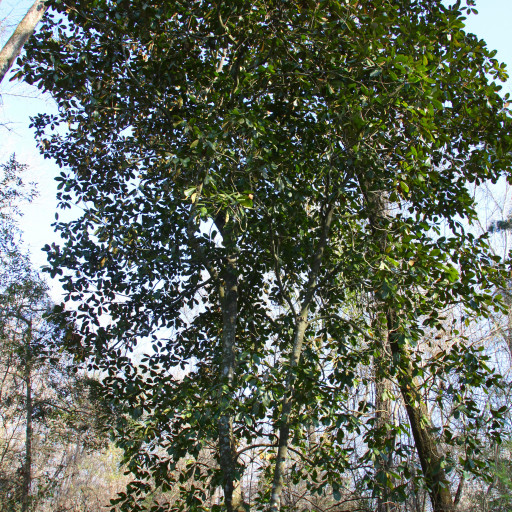
Plant Overview
Often called the "Bull Bay" or simply the "Southern Magnolia," this evergreen titan is a living symbol of elegance and endurance. Its massive, creamy white blossoms emit a heavy, lemony fragrance that can perfume an entire neighborhood on a warm summer evening. As one of the oldest flowering tree species on Earth, it carries a prehistoric grace that has survived for millions of years.
🔍 How to Identify
- 🍃 Foliage: The leaves are thick, leathery, and dark green with a high-gloss sheen. Flip a leaf over, and you’ll often find a beautiful "indumentum"—a soft, rusty-brown fuzz that feels like velvet.
- 🌸 The Bloom: Giant, bowl-shaped flowers that can reach up to 12 inches across. They feature 6 to 12 thick, waxy petals that start pure white and slowly fade to a warm cream as they age.
- 🧪 Seed Pods: In late summer and fall, the tree produces woody, cone-like fruit. As they mature, bright red, berry-like seeds pop out and hang by thin, silky threads, attracting various birds.
🏡 In Your Garden
- 🌳 The "Space Hog": These trees are majestic but demand room to breathe. They cast a very deep, year-round shade, which makes it nearly impossible for grass to grow beneath them. Many enthusiasts prefer to leave the lower branches intact, allowing them to sweep the ground in a natural "skirt."
- 🧱 Root Sensitivity: The Southern Magnolia has a wide-reaching but surprisingly shallow root system. It is notoriously difficult to transplant once established because it hates having its roots disturbed. Pick its "forever home" carefully from the start.
- 🍂 Evergreen Litter: Don't be fooled by the "evergreen" label—they drop their thick, plastic-like leaves throughout the year. Because these leaves are slow to decompose, they can create quite a bit of garden debris, but they make excellent, long-lasting natural mulch.
⚠️ Safety & Toxicity
- ✅ Safe Profile: The Magnolia grandiflora is generally considered non-toxic to humans, cats, dogs, and horses.
- 👄 Texture Warning: While not poisonous, the leathery leaves and hard seed pods can be a choking hazard for curious pets or toddlers. The flowers are technically edible (often pickled in some cultures), but they have a very strong, peppery flavor that isn't for everyone.
✨ Fun Fact
Magnolias are so ancient that they evolved before bees even existed! Because of this, their flowers are biologically engineered to be pollinated by beetles. The petals are extra thick and tough to withstand the clumsy crawling and chewing of beetle mandibles without being easily damaged.

Detailed Care Instructions
| Color | White, Cream |
| Soil Ph | Acid, Neutral, Alkaline |
| Humidity | Normal |
| Lighting | Part Sun |
| Soil Type | Moist, Well-Drained |
| Bloom Time | Spring, Summer |
| Difficulty | Medium |
| Plant Type | Perennial, Tree |
| Mature Size | 60 To 80 Feet |
| Native Area | Southeastern U.s. |
| Temperature | 5°C - 30°C |
| Sun Exposure | Full Sun To Part Shade |
| Hardiness Zones | 6-10 |
To grow a Magnolia Grandiflora plant, also known as Southern Magnolia, you can follow these steps:
- Choose the right location: Magnolia Grandiflora thrives in full sun or partial shade. Select a spot that receives at least six hours of direct sunlight per day. It also prefers well-drained soil with a slightly acidic to neutral pH level.
- Prepare the soil: Ensure the soil is loose, well-draining, and rich in organic matter. If your soil is heavy or compacted, consider adding compost or other organic matter to improve its texture and fertility.
- Planting: The best time to plant a Magnolia Grandiflora is in early spring or fall. Dig a hole about twice as wide and deep as the rootball of the tree. Place the tree in the hole, making sure it is level with or slightly above the surrounding soil. Fill in the hole with the soil, firming it gently around the rootball.
- Watering: Keep the soil consistently moist, especially during the first year after planting. Deep watering once a week should be enough to establish a strong root system. However, be careful not to overwater as Magnolias do not tolerate waterlogged soil.
- Mulching: Apply a layer of organic mulch, such as wood chips or straw, around the base of the tree. This will help retain moisture, regulate soil temperature, and suppress weed growth. Leave a gap around the trunk to avoid moisture buildup.
- Pruning: Magnolia Grandiflora generally requires minimal pruning. However, you can prune it lightly in late winter or early spring to shape the tree and remove any dead or diseased branches. Avoid extensive pruning as it may disrupt bloom production.
- Fertilizing: Fertilize the tree in early spring with a slow-release, balanced fertilizer specifically designed for trees and shrubs. Follow the package instructions for the correct dosage based on the size and age of your Magnolia.
- Protection from winter frost: If you live in an area with cold winters and frost, consider protecting your young Magnolia Grandiflora with a burlap cover or wrapping the tree trunk with a protective material to prevent winter damage.
- Patience: Magnolia Grandiflora is a slow-growing tree, especially in its early years. Be patient and provide consistent care, and it will reward you with beautiful, large, white fragrant flowers in the summer.
Remember to research specific care requirements for your climate and consult local gardening experts for any additional tips or recommendations.

Place in a window with dappled sun or a spot in the middle of a room. Or directly in a window facing west or east.

One way to water this plant is to deeply soak the soil around the plant, making sure that the water reaches the roots. This can be done by slowly pouring water at the base of the plant, or by using a drip irrigation system. It's important to avoid getting water on the leaves or flowers, as this can cause damage or disease. Watering should be done regularly, but not excessively, as this can lead to waterlogged soil and root rot. In hot or dry weather, the plant may require more frequent watering, while in cooler or rainy weather, less water may be needed. Checking the soil moisture level regularly can help determine when to water. It's also important to ensure that the plant is growing in well-draining soil, as this will help prevent waterlogged conditions.
To fertilize this plant, apply a balanced fertilizer, such as a 10-10-10, in early spring before new growth begins. Use a slow-release fertilizer or apply liquid fertilizer every two weeks during the growing season. Be careful not to over-fertilize, as this can lead to salt buildup in the soil and damage to the plant. Water the fertilizer in thoroughly after application.
When selecting soil for the Magnolia Grandiflora plant, it is important to choose a soil that is fertile and well-draining. It should be rich in organic matter and have a slightly acidic pH between 5.5 and 6.5. Avoid using heavy clay soils or soils that are too sandy and do not hold moisture well. The plant prefers loamy soil that is crumbly but compact and retains moisture. Adding compost or aged manure to the soil before planting can improve soil quality and help the plant thrive. It is also important to choose a soil that provides good drainage to prevent waterlogged soil, which can cause root rot and other plant diseases.
Magnolia Grandiflora is a plant that can be propagated by several methods such as seed propagation, cuttings propagation, and grafting. One of the most common methods of propagation is through cutting. During the cutting propagation, a cutting is taken from a parent plant and planted in suitable soil conditions.
To propagate Magnolia Grandiflora via cutting, first, one needs to select a healthy parent plant. The plant should be free of pests, diseases, and any other environmental stressors. After selecting mom plant, cutting should be made by cutting a branch of approximately 10 to 15 cm in length. The cutting should be made from mature branches and should have a minimum of one and a maximum of three leaves. The cutting should also have a node or a growing point, which will form roots and shoots.
After cutting and removing any lower leaves, the cutting should be placed in a suitable rooting medium that drains well and is moist. Some preferred mediums are perlite, vermiculite, and peat moss. To provide humidity to the cutting, one can place a plastic bag over the cuttings or place them in a propagator.
The cutting should be kept in semi-shade or full shade, and it should be watered regularly to avoid drying out. After a few weeks, the cutting will start to develop roots, and it is time to transplant it into a more permanent pot or the garden. The new plant should be placed in a well-draining, well-fertilized, and lightly shaded soil to encourage root growth.
Propagation of Magnolia Grandiflora via cutting is a simple and easy way to grow new plants and continue the beautiful legacy of this stunning plant.
Common pests of the southern magnolia include Scale insect, aphids, thrips, larvae. Make a habit of checking your southern magnolia frequently for pests so that any infestations can be caught and managed early.








