Plant Overview
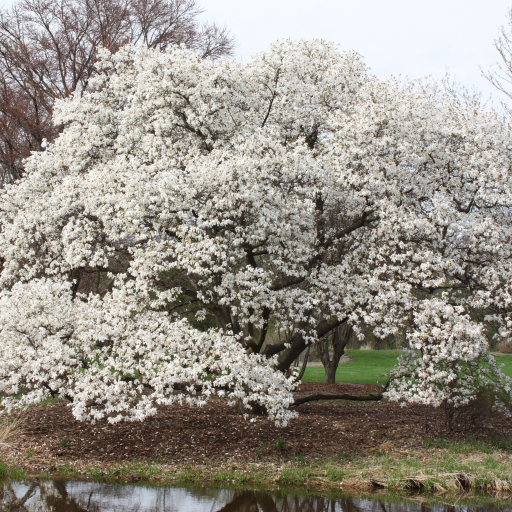
Known as the Kobus Magnolia or the Northern Japanese Magnolia, this elegant tree is a true herald of spring. In its native Japan, its early blooming was historically used by farmers to predict the timing of the rice-planting season. It is a slow-growing but majestic specimen that transforms from a narrow, upright sapling into a wide, cloud-like canopy of white over several decades.
🔍 How to Identify
- 🌸 The Blooms: Large, star-shaped white flowers appear on bare branches before the leaves emerge. Each flower usually has six petals, often featuring a very faint, delicate pink blush at the base.
- 🍃 The Foliage: The leaves are "obovate," meaning they are shaped like a teardrop with the wider end at the tip. They are a rich, dark green and have a slightly fuzzy underside when young.
- 🪵 The Bark: The bark is smooth and silver-grey, reminiscent of a beech tree. A key identification trick is to scratch a young twig; it will release a pleasant, spicy, and citrus-like fragrance.
🏡 In Your Garden
- ⏳ Exercise Patience: This species is famous for its "slow start." If grown from a sapling, it may take 10 to 15 years to produce its first flower. Once it reaches maturity, however, it becomes one of the most prolific bloomers in the Magnolia family.
- 🛡️ Sheltered Placement: While the tree itself is very cold-hardy, the early spring blossoms are fragile. A sudden late frost can turn the beautiful white petals brown overnight, so it is best to plant it in a spot protected from harsh, drying winds.
- 🪴 Root Sensitivity: Magnolias have unique, fleshy roots that sit close to the soil surface. They absolutely loathe being moved once planted and can be sensitive to heavy foot traffic or deep digging around their base.
⚠️ Safety & Toxicity
- ✅ Non-Toxic: The Magnolia Kobus is considered non-toxic to humans, as well as common household pets like dogs and cats.
- 👟 Slippery Surfaces: While the plant isn't poisonous, the large, thick petals can become quite slippery on pavement or sidewalks after a rainstorm once they begin to drop.
✨ Fun Fact
🐝 The Beetle Connection: Magnolias are among the most ancient flowering plants on Earth, appearing before bees even evolved! Because of this, the Kobus Magnolia is designed to be pollinated by beetles; its flowers are structurally "tough" and leathery to prevent the beetles' heavy mandibles from damaging them.

Detailed Care Instructions
| Color | White |
| Soil Ph | 5.6 To 7.5 |
| Humidity | Normal |
| Lighting | Full Sun |
| Soil Type | Rich, Well-Drained Loam |
| Bloom Time | Early Spring |
| Difficulty | Medium |
| Plant Type | Deciduous Flowering Tree |
| Hibernation | Cold Period |
| Mature Size | 25 To 30 Tall |
| Native Area | Japan |
| Sun Exposure | Full Sun To Part Shade |
| Hardiness Zones | 5-8 |
To grow Magnolia kobus plants, you can follow these steps:
- Choose a suitable planting location: Magnolia kobus prefers a sunny or partially shaded area with well-draining soil. The soil should be rich in organic matter and slightly acidic to neutral pH.
- Prepare the soil: Loosen the soil and remove any weeds or debris from the planting area. Amend the soil with compost or well-rotted manure to improve its nutrient content.
- Select a healthy plant: Purchase a healthy Magnolia kobus plant from a reputable nursery or garden center. Look for a plant with strong stems, healthy leaves, and no signs of disease or pests.
- Dig a hole: Dig a hole that is slightly larger than the root ball of the Magnolia kobus plant. Make sure the hole is deep enough for the roots to fit comfortably.
- Plant the Magnolia kobus: Place the plant in the hole, ensuring that the top of the root ball is level with or slightly above the soil surface. Backfill the hole with soil, firming it gently around the roots to remove any air pockets.
- Water the plant: After planting, water the Magnolia kobus thoroughly to settle the soil and provide moisture to the roots. Water regularly, especially during dry periods, but avoid overwatering.
- Mulch the base: Apply a layer of organic mulch, such as wood chips or bark, around the base of the plant. Mulching helps retain moisture, suppress weeds, and regulate soil temperature.
- Prune if necessary: Prune the Magnolia kobus plant in late winter or early spring, before new growth begins. Remove any dead, damaged, or crossing branches to improve airflow and maintain a healthy shape.
- Fertilize occasionally: Magnolia kobus generally does not require much fertilization. However, you can apply a slow-release, balanced fertilizer in early spring to promote healthy growth.
- Monitor for pests and diseases: Regularly inspect the plant for signs of pests, such as aphids or scale insects, and diseases like powdery mildew. Treat any issues promptly with appropriate organic or chemical controls.
- Provide proper care: Magnolia kobus plants are relatively low-maintenance. They appreciate regular watering, especially during hot and dry periods. Additionally, protect the plant from strong winds or extreme temperature fluctuations.
With proper care and attention, your Magnolia kobus plant should grow well and provide beautiful flowers in springtime.

Place in a window with dappled sun or a spot in the middle of a room. Or directly in a window facing west or east.

To water this plant, it is important to pay attention to the soil moisture level. Watering should be done when the top layer of soil feels dry to the touch. Slowly watering the plant until the soil is moist but not waterlogged is important to avoid root rot. It is also recommended to water deeply once a week instead of lightly watering more frequently, as this encourages deeper root growth. During periods of drought or high temperatures, the plant may require more frequent watering. It is important to avoid getting water on the leaves or flowers, as this can lead to fungal infections.
To fertilize this plant, apply a balanced, slow-release fertilizer in early spring before new growth appears. Use a fertilizer with a ratio of 10-10-10 or 12-12-12, and follow the recommended application rates on the packaging. Spread the fertilizer evenly around the base of the plant, taking care not to get any on the foliage or stems. Water the plant thoroughly after fertilizing to help the nutrients reach the roots. Avoid fertilizing in late fall or winter, as this can encourage new growth that may be damaged by cold temperatures.
Magnolia Kobus is a plant that requires a well-draining soil with good fertility. It is recommended to use a soil mix that is rich in organic matter and has a pH in the range of 5.5 to 6.5. This type of soil retains moisture while still allowing for adequate drainage and has plenty of nutrients that the plant can access easily. It is also important to ensure that the soil is not compacted and that there are no standing water issues, as this can lead to root rot and other plant diseases. Adding compost, peat moss, or perlite to the soil can help to improve its structure and drainage.
To propagate the Magnolia Kobus plant, one can take semi-hardwood cuttings from the plant during the summer months. The cuttings should be approximately 6 inches in length and should be taken from the tips of the stems. Once the cuttings are taken, they should be immediately dipped in rooting hormone and planted in a propagating mix. The mix should be kept moist and the cuttings should be placed in a warm, bright location. After several weeks, the cuttings should begin to show new growth, indicating that they have successfully rooted. At this point, they can be transplanted into individual pots or directly into the ground.








