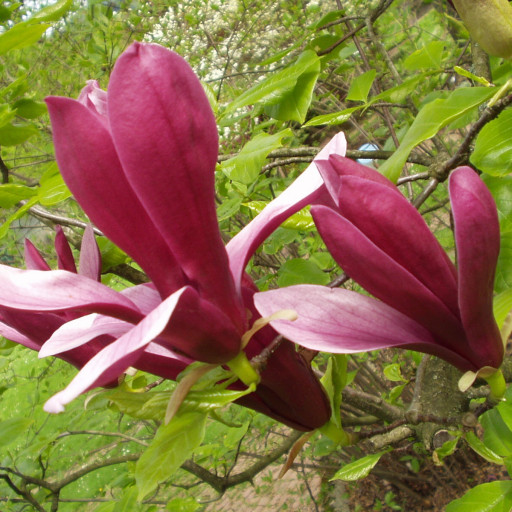
Plant Overview
Known as the "Lily Magnolia" or the "Mulan Magnolia," this stunning deciduous shrub is a springtime showstopper. Unlike its giant evergreen cousins, this species stays compact and produces elegant, goblet-shaped flowers that look like purple lilies resting on bare branches. In its native China, it has been cultivated for centuries as a symbol of purity and noble character.
🔍 How to Identify
- 🌸 The Bloom: Look for upright, 4-inch flowers with a deep reddish-purple exterior and a contrasting creamy-white or pale pink interior.
- 🍃 The Foliage: Large, elliptical, dark green leaves that are slightly fuzzy on the underside; they typically emerge just as the flowers begin to fade.
- 🌳 Growth Habit: A multi-stemmed, rounded shrub that usually reaches 8 to 12 feet in height, making it much more "garden-sized" than other magnolias.
🏡 In Your Garden
- 🌱 Root Sensitivity: This plant has fleshy, shallow roots that hate being disturbed. Once you plant it, avoid digging around the base or trying to transplant it, as it may go into shock.
- 🍰 Soil Nuance: It craves "acidic cake"—moist, rich, well-draining soil with a low pH. If your soil is too alkaline, the leaves will turn yellow (chlorosis), signaling it can't "breathe" properly.
- ✂️ Pruning Caution: Only prune immediately after flowering. Since it sets its buds for the following year in the summer, late pruning means you'll be cutting off next year's "fireworks" show.
⚠️ Safety & Toxicity
- ✅ Safe Status: The Lily Magnolia is considered non-toxic to humans, dogs, cats, and horses.
- 👐 Skin Sensitivity: While not poisonous, some gardeners with sensitive skin may experience mild irritation from the sap or the fine hairs on the leaf undersides.
✨ Fun Fact
The Magnolia liliiflora is one of the "parents" of the world-famous Saucer Magnolia (Magnolia x soulangeana). It was also named "Mulan Magnolia" in honor of the legendary Chinese warrior Hua Mulan, whose name literally translates to "Wood Orchid" or "Magnolia."

Detailed Care Instructions
| Lighting | Full Sun |
| Hardiness Zones | 6A - 9B |
To grow a Magnolia Liliiflora plant, also known as the Mulan magnolia or purple magnolia, you can follow these steps:
- Location: Choose a suitable location for your Magnolia Liliiflora plant. It should be planted in an area that receives partial to full sunlight.
- Soil: Ensure that the soil is well-draining and rich in organic matter. Prepare the soil by loosening it and removing any weeds or debris.
- Planting: Dig a hole that is slightly larger than the root ball of the plant. Place the Magnolia Liliiflora plant into the hole, making sure it is at the same depth as it was in the nursery container. Backfill the hole with soil and gently firm it around the base of the plant.
- Watering: Water the plant thoroughly after planting and keep the soil consistently moist but not oversaturated. Ensure that the plant receives adequate water during dry spells, especially in the first year.
- Mulching: Apply a layer of organic mulch, such as wood chips or bark, around the base of the plant. This will help conserve moisture, suppress weed growth, and regulate the temperature of the soil.
- Pruning: Prune your Magnolia Liliiflora plant in early spring before new growth begins. This will help maintain its shape and promote healthy growth. Remove any dead or damaged branches, as well as any crossing or crowded branches.
- Fertilization: Feed your plant with a slow-release balanced fertilizer in early spring. Follow the instructions on the fertilizer packaging for the correct dosage.
- Protection: Mulan magnolias are generally hardy plants, but during harsh winters, you may need to protect them from freezing temperatures or strong winds. Applying a layer of mulch around the base and covering the plant with burlap or other protective materials can help in such situations.
- Propagation: If you want to grow more Magnolia Liliiflora plants, you can propagate them through seeds, stem cuttings, or layering. Seeds need to be scarified and stratified before planting, while stem cuttings and layering involve taking a section of the plant and encouraging root growth.
By following these steps, you can successfully grow a Magnolia Liliiflora plant and enjoy its beautiful purple flowers.

Place in a bright room that is sun drenched almost all day. Or directly in a south-facing window.

To properly water this plant, you should first assess the soil's moisture level by sticking your finger a few inches into the ground near the plant's base. If the soil feels dry, it's time to water. When watering, make sure to give the plant a deep soak rather than just a light sprinkle. You want the water to reach the roots, which may be several inches down. However, be careful not to overwater as that can lead to root rot. Aim to water the plant once a week or so, depending on environmental factors like temperature and humidity. Additionally, it's important to avoid watering the leaves as this can lead to disease. Instead, aim to water at the base of the plant.
To fertilize this plant, use a slow-release fertilizer that is high in phosphorus and potassium and low in nitrogen. Apply the fertilizer in early spring before new growth begins. Spread the fertilizer around the base of the plant, avoiding direct contact with the stems. Water the plant thoroughly after fertilizing. Repeat fertilization in early summer to encourage healthy growth and blooming. Avoid over-fertilization as it can damage the plant.
When growing plants such as Magnolia Liliiflora, it is important to choose the right type of soil to ensure they thrive. This plant prefers a well-draining soil that is slightly acidic in nature. The soil should be free of any clay or other heavy materials that prevent proper drainage. Additionally, adding organic matter to the soil can help nourish the plant and promote healthy growth. As with any plant, it is important to monitor the soil moisture and adjust watering accordingly to ensure the plant does not become waterlogged or too dry.
There are several methods to propagate Magnolia Liliiflora plant. One method is through seeds. Collect the fruit when it is ripe and remove the seeds. Clean the seeds and soak them in water for 24 to 48 hours. Sow the seeds in a potting mix and keep them in a warm, moist place. Seeds will start to germinate in about 21 to 28 days.
Another method is through stem cuttings. Take a 4 to 6-inch stem cutting with several leaves from the parent plant. Remove the bottom leaves and dip the cutting in rooting hormone powder. Insert the stem cutting into a potting mix, water it, and cover it with a plastic bag. Keep the cutting in a shaded area and water it regularly. The cutting will grow roots in about a month.
You can also propagate Magnolia Liliiflora plant through layering. Bend a low-hanging branch to the ground and make a shallow cut on the underside of the stem. Cover the stem with soil, leaving the tip of the cutting exposed. Water the layering regularly and wait for roots to form. Once roots have formed, cut the layering from the parent plant and plant it in a potting mix.
Common pests of the lily magnolia include Scale insect, aphids, thrips, larvae. Make a habit of checking your lily magnolia frequently for pests so that any infestations can be caught and managed early.








