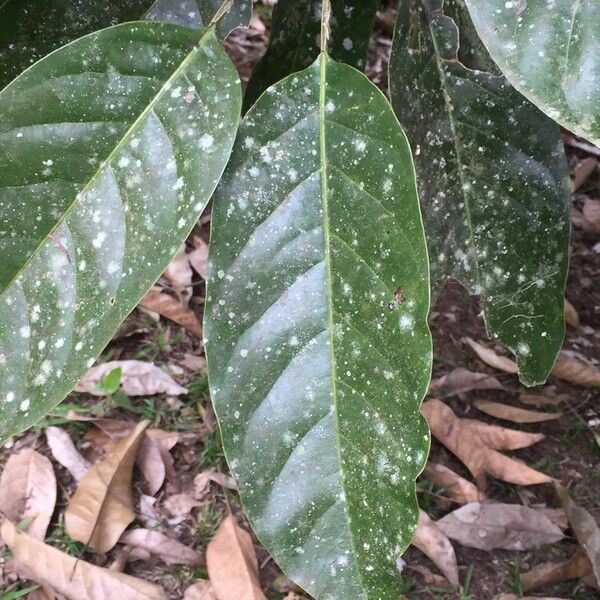
Plant Overview
Known to the Aztecs as Yoloxóchitl, or the "Heart Flower," the Magnolia mexicana is an ancient botanical treasure that carries the scent of history. This majestic evergreen isn’t just a tree; it was once a sacred symbol of royalty and medicine in pre-Hispanic Mexico. Its massive, ivory-white blooms are famous for their heavy, intoxicating perfume that can fill an entire courtyard on a warm evening.
🔍 How to Identify
- 🤍 The Blooms: Large, cup-shaped flowers with thick, waxy petals that start creamy white and may age to a soft parchment color.
- 🍃 The Foliage: Oversized, elliptical leaves with a leathery texture and a glossy, deep-green finish that stays vibrant year-round.
- 🍎 The Fruit: Unique, woody, cone-like structures that split open to reveal strikingly bright red seeds dangling by thin, silk-like threads.
🏡 In Your Garden
- 🌳 Growth Habit: This is a tree that demands space and patience. It develops a thick, straight trunk and a broad, rounded canopy, making it a spectacular "specimen" tree for large landscapes.
- ⛰️ Soil & Moisture: Coming from the humid cloud forests and tropical highlands, it thrives in rich, slightly acidic soil. It is particularly sensitive to "wet feet," so while it loves moisture, the soil must drain quickly to prevent root stress.
⚠️ Safety & Toxicity
- 🛡️ General Status: Non-toxic and generally safe for gardens with pets and children.
- 🫀 Medicinal Context: While historically used in traditional Mexican medicine to treat heart conditions (hence the name "Heart Flower"), you should never ingest any part of the plant without professional medical guidance, as concentrated compounds can have physiological effects.
✨ Fun Fact
The Magnolia mexicana is considered a "primitive" flowering plant. Because it evolved before bees even existed, its flowers are structurally designed to be pollinated by beetles, featuring tough petals that can withstand a beetle’s clumsy crawling and chewing!

Detailed Care Instructions
To grow Magnolia Mexicana plant, follow these steps:
- Climate: Determine if your climate is suitable for growing Magnolia Mexicana. It thrives in warm to temperate climates with temperatures between 15-30°C (59-86°F). It can tolerate light frost, but not extreme cold.
- Soil: Magnolia Mexicana prefers well-draining, fertile soil. Prepare the soil by adding organic matter such as compost or aged manure to improve its fertility and drainage.
- Sunlight: Choose a location for planting where the tree will receive full to partial sun. Avoid planting in areas that are shaded for long periods of time.
- Planting: Dig a hole about twice as wide and as deep as the plant's root ball. Place the tree in the hole, making sure the top of the root ball is level with or slightly above the soil surface. Backfill the hole with the reserved soil, gently firming it around the roots.
- Watering: Water the newly planted tree thoroughly to settle the soil, then continue to water regularly. Magnolia Mexicana likes moist but not waterlogged soil. Water deeply once or twice a week, depending on the rainfall and temperature.
- Mulching: Apply a layer of organic mulch around the base of the tree to help retain moisture, suppress weed growth, and regulate soil temperature.
- Fertilizer: Fertilize the tree in early spring with a balanced slow-release fertilizer. Follow the manufacturer's instructions for application rates. Avoid applying excessive nitrogen, as it can promote foliage growth at the expense of flowers.
- Pruning: Prune the tree sparingly, only to remove dead or damaged branches. Magnolia Mexicana has a natural and attractive growth habit, so excessive pruning is not required.
- Pests and diseases: Monitor the tree regularly for pests such as scale insects, aphids, or caterpillars. Treat any infestations promptly using appropriate insecticides or by handpicking the insects. Watch for leaf spot diseases and treat with fungicides if necessary.
- Patience: Magnolia Mexicana can take several years to reach full maturity and start flowering. Be patient and provide the plant with proper care, and you will eventually enjoy its beautiful blossoms.
Remember to consult local gardening resources or nurseries for more specific guidance tailored to your region's climate and soil conditions.
To water the Magnolia Mexicana plant, you should follow these guidelines:
- Check the soil moisture: Before watering, ensure that the top 2-3 inches of soil are dry. Insert your finger into the soil to determine if it feels dry.
- Choose the right time: Water the plant in the early morning or late afternoon when the temperature is cooler. This helps to minimize evaporation and allows the plant to absorb water more effectively.
- Use a watering can or hose with a gentle spray nozzle: A gentle flow of water prevents excessive soil erosion and ensures even distribution of water to the plant's root zone.
- Apply water at the base of the plant: Direct the water towards the soil around the base of the Magnolia Mexicana plant. Avoid wetting the leaves or flowers excessively, as this can lead to fungal diseases and other issues.
- Water deeply and slowly: Apply water slowly to allow it to penetrate the soil deeply. This encourages the plant's roots to grow deeper for better anchorage and water uptake.
- Avoid overwatering: While it is essential to keep the soil moist, ensure you do not overwater the plant. Overwatering can lead to root rot and other problems. Allow the top inch of soil to dry out slightly between watering sessions.
- Adjust watering frequency: During hot summer months or periods of dry weather, the Magnolia Mexicana plant may require more frequent watering. Monitor the soil moisture regularly and adjust your watering schedule accordingly.
- Mulch the soil: Apply a layer of organic mulch, such as wood chips or bark, around the base of the plant. Mulch helps to retain moisture in the soil, reduces weed growth, and regulates soil temperature.
- Observe plant response: Watch for signs of over or under watering, such as wilted leaves, yellowing foliage, or waterlogged soil. Adjust your watering routine if necessary to ensure the plant's health.
It's crucial to note that the specific needs of the Magnolia Mexicana plant may vary depending on factors like climate, soil conditions, and individual plant health. Always observe the plant closely and adjust your watering practices accordingly.
To fertilize the Magnolia Mexicana plant, you can follow these instructions:
- Choose a slow-release fertilizer specifically formulated for flowering plants. Select one that has a balanced ratio of nitrogen (N), phosphorous (P), and potassium (K). For example, a 10-10-10 NPK ratio is suitable for Magnolia Mexicana.
- Read the label instructions carefully to determine the appropriate amount of fertilizer to use. Keep in mind that it's better to err on the side of caution and slightly under-fertilize rather than over-fertilize the plant.
- Apply the fertilizer evenly around the base of the plant, spreading it in a circle extending beyond the drip line (the outer edge of the canopy).
- Avoid allowing the fertilizer to come into direct contact with the trunk or leaves of the plant, as it may cause burning or damage.
- Gently work the fertilizer into the topsoil using a small garden shovel or your hands, being careful not to disturb the plant's roots.
- Water the plant thoroughly after applying the fertilizer. This helps to activate the nutrients and ensure they reach the roots.
- Repeat the fertilization process annually, preferably in early spring before the growing season begins. However, always follow the specific fertilizer's instructions, as some may recommend different application schedules.
The ideal soil for Magnolia Mexicana plants should have specific characteristics to support their growth and health. It is recommended to use a well-draining, loamy soil that is rich in organic matter. This type of soil allows proper air circulation and moisture retention, preventing root rot.
The pH level of the soil should be slightly acidic to neutral, ranging from 5.5 to 7.0, to ensure optimal nutrient absorption. This can be achieved by amending the soil with organic matter like compost or peat moss.
The soil should also be fertile, providing essential nutrients for the plant's development. Adding a slow-release, balanced fertilizer during the planting process can contribute to the initial establishment and ongoing nourishment of the Magnolia Mexicana.
Additionally, it is crucial to avoid using heavy clay soils or sandy soils. Clay soils tend to hold excess water, leading to waterlogged conditions, while sandy soils typically drain too quickly, making it challenging for the plant to retain sufficient moisture.
To summarize, a well-draining, loamy soil with good moisture retention, slightly acidic to neutral pH, and enriched with organic matter is recommended for the successful cultivation of Magnolia Mexicana plants.
Propagation of Magnolia Mexicana can be done through various methods including seed propagation, layering, and softwood or semi-hardwood cuttings.
- Seed Propagation:
Obtain fresh seeds from a mature Magnolia Mexicana plant. Soak the seeds in warm water overnight to soften the hard seed coat. The next day, plant the seeds in trays or pots filled with a well-draining soil mixture, ensuring they are covered with a thin layer of soil. Maintain a consistently moist environment by misting with water regularly. Provide a warm and bright location but avoid direct sunlight. Germination may take several weeks to a few months.
- Layering:
Identify a healthy side branch of the Magnolia Mexicana plant with flexible stems close to the ground. Make a small incision or scrape the bark of the selected branch's underside. Apply a rooting hormone to the scraped area. Bury the treated portion of the branch into the soil, leaving the tip exposed. Secure the branch in place with a U-shaped wire or heavy stones. Keep the soil consistently moist and provide partial shade. After a few months, the branch will develop roots. Once rooted, it can be detached from the parent plant and transplanted.
- Softwood or Semi-hardwood Cuttings:
Select a healthy side shoot from the Magnolia Mexicana plant, ensuring it is relatively young and green. Cut a 4-6 inch section of the shoot just below a leaf node. Remove the lower leaves, leaving only a few leaves at the tip. Dip the cut end in a rooting hormone to stimulate root development. Insert the cutting into a well-draining soil mixture or a propagation medium such as perlite or vermiculite. Mist the cutting with water and cover it with a clear plastic bag or place it in a propagator to create a humid environment. Provide bright, indirect light and maintain consistently moist soil. Roots should develop within a few weeks, and once well-established, the cutting can be transplanted.
Overall, propagation of Magnolia Mexicana requires patience, proper care, and attention to provide the best chances for successful propagation.








