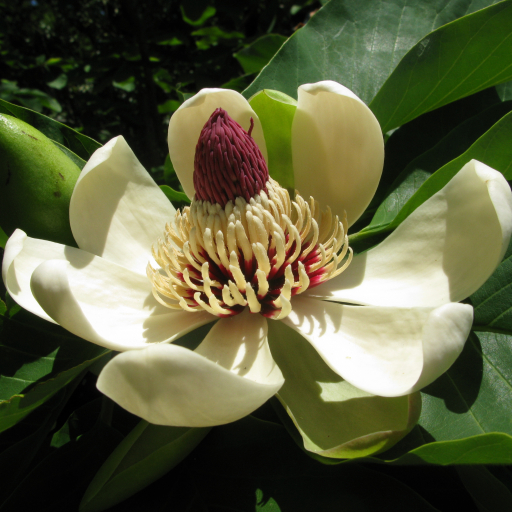
Plant Overview
Often called the "King of Magnolias" in its native Japan, the Magnolia obovata is a spectacle of prehistoric proportions. Known for its massive, architectural foliage and intoxicating scent, it creates a lush, tropical atmosphere even in temperate climates. It has been a cornerstone of Japanese forest culture for centuries, valued equally for its beauty and its versatile wood.
🔍 How to Identify
- 🍃 Giant Foliage: The leaves are the showstopper—massive, obovate (teardrop-shaped), and reaching up to 18 inches in length. They often grow in dramatic "umbrellas" at the tips of the branches.
- 🌸 Moon-Like Blooms: In early summer, it produces large, creamy-white, cup-shaped flowers. They don't just look elegant; they emit a powerful, fruity fragrance reminiscent of ripe melons or heavy spice.
- 🍎 Rosy Seed Pods: After the petals fall, the tree develops striking, cone-like fruit clusters that turn a vivid purplish-red, eventually splitting to reveal bright scarlet seeds.
🏡 In Your Garden
- 🌳 The Need for Space: This isn't a tree for a small courtyard. It requires a vast, open area to accommodate its broad, spreading canopy and reach its full, majestic height.
- 🌬️ Wind Protection: Because the leaves are so large, they act like sails. High winds can easily tatter the foliage, so it’s best to plant it in a sheltered spot where it can maintain its pristine appearance.
- 💧 Thirsty Roots: It prefers rich, acidic, and consistently moist soil. It is particularly sensitive to drought, so mulching the base is essential to keep the root zone cool and hydrated.
⚠️ Safety & Toxicity
- ✅ Generally Safe: The Magnolia obovata is not considered toxic to humans, dogs, or cats.
- 🧤 Garden Maintenance: While not poisonous, the fallen leaves are thick and leathery. They decompose slowly and can become quite slippery on garden paths when wet, so keep walkways clear during the autumn drop.
✨ Fun Fact
In Japan, the massive leaves are known as "Hoba." They are so tough and heat-resistant that they are traditionally used as "natural plates" or wrappers for grilling food over an open flame—a famous regional dish called Hoba Miso involves cooking sweet miso and vegetables directly on top of a dried Magnolia leaf!

Detailed Care Instructions
To grow Magnolia Obovata, also known as Japanese magnolia or kobus magnolia, you can follow these steps:
- Choose the right location: Magnolia Obovata prefers a location with full sun or partial shade. It also prefers well-draining soil that is slightly acidic.
- Prepare the soil: Before planting, amend the soil with organic matter, such as compost or well-rotted manure. This will improve fertility and drainage.
- Plant the tree: Dig a hole that is the same depth as the nursery container or root ball and two to three times wider. Place the tree in the hole, making sure the crown is level with the surrounding soil. Backfill the hole with soil, firming it gently around the roots.
- Watering: Provide regular watering during the first few years to establish proper root development. Keep the soil consistently moist, but not waterlogged.
- Mulching: Apply a layer of organic mulch, such as wood chips or shredded bark, around the tree. This will help to retain moisture, control weeds, and regulate soil temperature.
- Pruning: Prune the tree in late winter or early spring before new growth starts. Remove dead or damaged branches and shape the tree as desired. Avoid heavy pruning as it can reduce flowering.
- Fertilizing: Magnolia Obovata generally doesn't require much fertilizer. However, you can apply a slow-release, balanced fertilizer in early spring to encourage healthy growth.
- Protect from extreme cold: In colder climates, protect the tree from freezing temperatures by covering it or using frost blankets.
- Monitor for pests and diseases: Keep an eye out for common pests like scale insects or aphids. Treat any infestation promptly with appropriate insecticides or insecticidal soaps. Watch for signs of diseases like leaf spot or powdery mildew, and take measures to control them if necessary.
- Enjoy the blossoms: Magnolia Obovata typically blooms in late winter to early spring. Be patient and enjoy the beautiful flowers that can range from white to light pink.
Remember that cultivating any plant requires ongoing care and attention. Regular maintenance and suitable growing conditions will help your Magnolia Obovata thrive and grow into a beautiful tree.

Place in a window with dappled sun or a spot in the middle of a room. Or directly in a window facing west or east.

Magnolia Obovata is a plant that requires adequate watering to thrive. When watering the plant, it's important to avoid over-watering or under-watering as this can have negative impacts on its growth. Hence, the following are tips to water Magnolia Obovata plant:
1. Check the soil: Before watering the plant, it's important to check the soil moisture level. This can be done by inserting a finger into the soil and feeling for dampness. If the soil feels dry to touch, it's time to water the plant.
2. Watering frequency: Magnolia Obovata requires frequent watering during its growing season, which is usually from early spring to late summer. During this period, you should water the plant at least once every week.
3. Water amount: When watering Magnolia Obovata, you should ensure the soil is moist but not waterlogged. It's important to allow the water to penetrate deep into the soil rather than just the surface.
4. Watering method: The ideal way to water Magnolia Obovata is by using a watering can or a garden hose with a soft spray nozzle. The water should be directed at the base of the plant, and the foliage should be avoided to prevent rotting.
5. Water during dry spells: During extended periods of dry weather, it's important to water the Magnolia Obovata plant more frequently to avoid drought stress.
In summary, watering Magnolia Obovata plant requires checking the soil moisture level, watering frequently, using the right amount of water, using the appropriate watering method, and ensuring to water during dry spells.
For best results, fertilize this plant during the early spring before new growth emerges and again in midsummer. Use a balanced fertilizer with equal parts nitrogen, phosphorus, and potassium. Dilute the fertilizer with water according to the package instructions and apply it to the soil around the base of the plant. Water the plant deeply after fertilizing to help the nutrients reach the roots. Avoid fertilizing in the fall or winter when the plant is dormant.
Magnolia Obovata is a flowering plant that prefers well-draining soil with a pH level between 5.5 and 6.5. It thrives in loamy and slightly acidic soil that is rich in organic matter. The soil should also retain moisture while allowing excess water to drain away. It is recommended to avoid using heavy clay soil as it can become waterlogged and harm the roots of the plant. In general, the soil used for Magnolia Obovata should be a balanced mix of organic matter, sand, and loam. Adding compost or peat moss can help improve the soil structure and provide essential nutrients to the plant.
To propagate this plant, you can take softwood cuttings in the late spring or early summer. Choose a healthy stem that is not flowering and cut it to a length of 4-6 inches. Remove the lower leaves from the stem and dip the cut end into rooting hormone powder. Place the cutting in a pot with moist, well-draining soil and cover it with plastic to create a humidity dome. Keep the soil moist and the cutting in a warm, bright area with indirect sunlight. After about 2-3 weeks, roots should begin to form. Once the cutting has established roots, you can transplant it into a larger pot or into the ground.








