Plant Overview
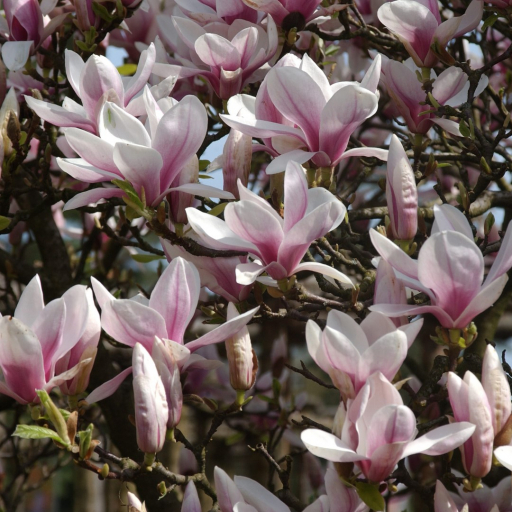
Often called the "Saucer Magnolia" or "Tulip Magnolia," this stunning tree is the undisputed queen of the early spring garden. It was born from a romantic 19th-century experiment when Étienne Soulange-Bodin, a retired French cavalry officer, crossed two Chinese species. The result is a dramatic showstopper that smothers its bare, silver-grey branches in massive, cup-shaped blooms before its leaves even think about waking up.
🔍 How to Identify
- 🌸 The Bloom: Large, goblet-shaped flowers that can reach up to 10 inches across. They typically feature a gradient of color, often creamy white on the inside and deep pink or purplish-magenta at the base.
- 🍂 Early Display: Unlike many trees, the flowers appear on completely leafless branches in late winter or early spring, creating a "floating flower" effect.
- 🍃 The Foliage: Once the flowers fade, large, leathery, oval-shaped leaves emerge. They are a deep, matte green that provides excellent shade throughout the summer.
🏡 In Your Garden
- 🌬️ The Frost Trap: While the tree itself is quite hardy, the flower buds are very sensitive to late spring frosts. A single freezing night can turn a sea of pink petals into brown mush, so it is best planted in a sheltered spot away from cold wind tunnels.
- 🌱 Don't Dig Here: Magnolias have unique, fleshy, shallow root systems. They absolutely hate being moved once established and can suffer if you do heavy digging or planting directly under their canopy.
- ☀️ Acidic Leanings: This tree prefers slightly acidic, well-drained soil. If your soil is too alkaline, the leaves may turn a sickly yellow (chlorosis), signaling it needs a bit of organic mulch or sulfur.
⚠️ Safety & Toxicity
- 🐾 Pet Friendly: Great news for pet owners—the Saucer Magnolia is considered non-toxic to dogs, cats, and horses.
- 👶 Kid Safe: There are no known toxic properties in the bark, leaves, or flowers. However, the large fallen petals can become surprisingly slippery on garden paths after a rainstorm.
✨ Fun Fact
Magnolias are among the most ancient flowering plants on Earth, with fossils dating back 20 million years. Because they evolved before bees even existed, their flowers are structurally "tough" and thick, designed specifically to be pollinated by heavy-footed beetles!

Detailed Care Instructions
| Color | Pinkish-White |
| Soil Ph | Slightly Acidic |
| Soil Type | Moist, Well-Drained Soil |
| Bloom Time | Spring |
| Plant Type | Flowering Tree |
| Mature Size | 20 To 25 Feet Tall And Wide |
| Native Area | Parent Species Are From China |
| Sun Exposure | Full Sun To Part Shade |
| Hardiness Zones | 4-9 |
To successfully grow Magnolia x soulangeana, also known as saucer magnolia or tulip magnolia, follow these steps:
- Choose the right location: Select a site that receives full sun to partial shade. The soil should be well-draining and fertile. Ensure the planting area has enough space for the mature size of the plant, as saucer magnolias can grow up to 20-25 feet tall and wide.
- Planting: Dig a hole that is twice as wide and as deep as the root ball of the plant. Gently loosen the roots before placing it in the hole. Backfill the hole with soil, making sure that the top of the root ball is level or slightly above ground level to allow for settling. Avoid planting too deep, as it can cause root rot.
- Watering: Newly planted magnolias need regular watering, especially during the first year. Water deeply and thoroughly, keeping the soil consistently moist but not waterlogged. During dry periods, increase watering frequency. Once established, the plant is fairly drought-tolerant but will benefit from occasional deep watering.
- Mulching: Apply a layer of organic mulch, such as wood chips or bark, around the base of the tree. Mulch helps retain moisture, prevents weed growth, and moderates soil temperature. Keep the mulch a few inches away from the trunk to avoid rotting.
- Fertilization: In early spring, apply a slow-release, balanced fertilizer formulated for shrubs or trees. Follow the manufacturer's instructions regarding dosage and application method. Avoid fertilizing too close to winter, as it may lead to late-season growth that is susceptible to frost damage.
- Pruning: Minimal pruning is necessary for saucer magnolias. Generally, it's advisable to only remove dead, damaged, or diseased branches. Prune in late winter or early spring before new growth begins.
- Pest and disease control: Saucer magnolias are generally resistant to pests and diseases. However, occasional problems may include aphids, scale insects, or fungal diseases like powdery mildew and leaf spot. Regular monitoring, maintaining good air circulation, and appropriate watering practices can help prevent infestations or infections.
- Patience: Magnolia x soulangeana may take a few years to flower after planting. Be patient and provide proper care, and you will be rewarded with the stunning display of large, fragrant flowers in early spring.
Remember to check your local climate and specific growing conditions to ensure optimal success with your Magnolia x soulangeana plant.

Place in a bright room that is sun drenched almost all day. Or directly in a south-facing window.

Watering Magnolia × Soulangeana plants requires a gentle yet thorough approach. This plant prefers consistently moist soil, but not waterlogged conditions. Ensure that the soil around the plant is evenly moist, but not sodden.
The watering schedule should vary depending on the climate and season. In warmer weather, the plant may require more frequent watering, while in cooler weather, it can be watered less often. The soil should never be allowed to dry out completely, as the plant's roots are sensitive to this.
When watering, it is essential to avoid wetting the foliage or flowers, as this can encourage the development of fungal diseases. Water the plant's soil directly, ensuring that the water reaches the roots. Use a watering can or hose with a gentle spray to apply water slowly and evenly.
Mulching around the base of the plant can help to retain moisture in the soil, preventing it from drying out too quickly. Avoid applying too much water at once, as this can lead to waterlogging and suffocate the roots. Regular, light watering is key to keeping Magnolia × Soulangeana healthy and thriving.
- Begin fertilizing in early spring, before new growth occurs.
- Use a slow-release, granular fertilizer specifically formulated for acid-loving plants.
- Apply fertilizer evenly around the base of the plant, taking care not to let it touch the trunk or stems.
- Water the plant deeply after fertilizing to ensure that the nutrients reach the roots.
- Repeat fertilization every 4-6 weeks during the growing season, up until early fall.
- Avoid fertilizing during the winter months or when the plant is dormant.
- Monitor the plant's response to the fertilizer and adjust the frequency or amount of application if necessary.
- Always follow the manufacturer's instructions for the specific fertilizer being used.
The ideal soil type for Magnolia × Soulangeana is a rich, well-draining soil that is slightly acidic. It is important to avoid heavy clay soils, which can retain too much water and cause root rot. The soil should be moist, but not waterlogged, as the plant can be sensitive to both drought and excess moisture. Organic matter such as compost or leaf mold can be added to the soil to improve its overall quality, as well as a slow-release fertilizer specifically formulated for acid-loving plants. It is also important to mulch around the base of the plant to help retain soil moisture and suppress weed growth.
One way to propagate this plant is through hardwood cuttings. Collect cuttings from the parent plant in late fall after the leaves have dropped, and choose healthy 8-10 inch long stems that are firm and free of disease or damage. Cut the stems just below a node, and remove all leaves except for a few at the top. Dip the cut end in rooting hormone powder, and insert the cutting in a container filled with moistened potting mix. Cover the container with plastic to create a mini greenhouse, and place it in a bright, warm location out of direct sunlight. Mist the cutting regularly to keep the soil moist and the humidity high. After several weeks, the cutting should develop roots and new growth. Once the plant is established, it can be transplanted to a larger container or into the ground in the spring.
Common pests of the chinese magnolia include Scale insect, aphids, thrips, larvae. Make a habit of checking your chinese magnolia frequently for pests so that any infestations can be caught and managed early.








