Plant Overview
Known as the "Wiesener's Magnolia," this rare and exquisite hybrid is a masterpiece of Japanese horticulture. It is a cross between the Japanese Big-leaf Magnolia (M. obovata) and the Oyama Magnolia (M. sieboldii), combining the best traits of both. Gardeners prize it most for its legendary fragrance, which many claim is the most powerful and enchanting in the entire Magnolia genus.
🔍 How to Identify
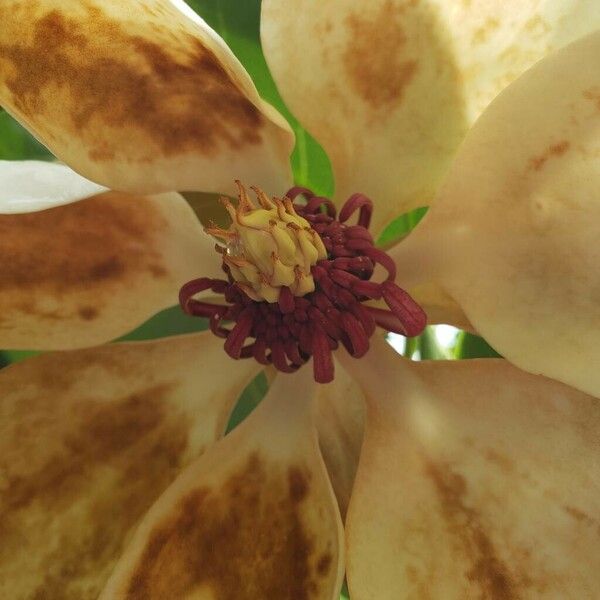
- 🌸 The Bloom: Large, upward-facing, saucer-shaped flowers that are creamy-white with a thick, waxy texture.
- ❤️ The Heart: The center of the flower features a dense, prominent cluster of brilliant crimson-red stamens that provide a stunning contrast against the pale petals.
- 🍃 The Foliage: Features broad, oblong leaves that have a slightly silvery underside, creating a lush, tropical appearance even when the tree is not in bloom.
🏡 In Your Garden
- 🌬️ Wind Protection: Because of its large leaves and heavy flowers, this plant performs best in a sheltered spot. Strong winds can easily shred the foliage or cause the delicate blooms to bruise and drop early.
- 💧 Moisture Balance: It thrives in rich, slightly acidic soil that stays consistently moist. It does not tolerate drought well, so a thick layer of organic mulch is essential to keep the roots cool and hydrated.
- ⏳ Root Sensitivity: Like most Magnolias, it has fleshy, sensitive roots that hate being disturbed. It is best to choose a permanent "forever home" for this plant, as transplanting an established specimen often leads to failure.
⚠️ Safety & Toxicity
- ✅ General Safety: Magnolia × wieseneri is considered non-toxic to humans, dogs, and cats.
- 🐶 Mild Irritation: While not poisonous, the consumption of large amounts of any garden plant can cause mild digestive upset in pets. The waxy petals are generally safe, but it's always best to discourage chewing.
✨ Fun Fact
🍍 The fragrance of this Magnolia is so intense that a single flower can perfume an entire courtyard. The scent is often described as a complex, heady mixture of ripe pineapple, citrus, and spicy lilies!

Detailed Care Instructions
- Choose a suitable location: Magnolia × Wieseneri plants prefer well-draining soil and a spot with full sun to partial shade. Select a location that receives at least 6 hours of sunlight per day.
- Planting: Dig a hole that is two to three times wider than the root ball of the plant. Place the plant in the hole and backfill with soil. Water thoroughly after planting.
- Watering: Keep the soil consistently moist, but not waterlogged. Water regularly, especially during hot, dry weather.
- Fertilizing: Feed your Magnolia × Wieseneri plant with a balanced fertilizer in the spring. Follow the manufacturer's instructions for application rates.
- Mulching: Apply a layer of mulch around the base of the plant to help retain soil moisture and suppress weeds.
- Pruning: Prune your Magnolia × Wieseneri plant in late winter or early spring to remove any dead or damaged branches. This will help promote healthy growth and flowering.
- Protect from frost: If you live in a region with cold winters, consider protecting your Magnolia × Wieseneri plant from frost damage by covering it with a frost cloth or bringing it indoors during extreme cold spells.
By following these steps, you can successfully grow and care for your Magnolia × Wieseneri plant. With proper care, it will reward you with beautiful blooms and lush foliage.
To properly water a Magnolia × Wieseneri plant, it is important to provide a consistent and thorough watering schedule. This plant should be watered deeply, allowing the water to penetrate the soil and reach the roots. It is important to water the plant at the base, avoiding getting the foliage wet.
The frequency of watering will depend on various factors such as the climate, soil type, and container size. Generally, the plant should be watered when the top inch of soil feels dry to the touch. During hot, dry weather, the plant may require more frequent watering to prevent drought stress.
It is essential to avoid overwatering the plant, as this can lead to root rot and other issues. To prevent overwatering, ensure that the soil is well-draining and allow excess water to drain out of the pot or soil.
In addition to regular watering, it is important to monitor the plant for signs of dehydration, such as wilting or yellowing leaves. Adjust the watering schedule accordingly to meet the plant's needs.
To fertilize a Magnolia × Wieseneri plant, you should apply a balanced fertilizer in early spring before new growth appears. Use a slow-release fertilizer or a liquid fertilizer diluted to half-strength. Avoid over-fertilizing, as this can harm the plant. Water the plant well after fertilizing to help the nutrients reach the roots. Repeat the fertilization process once or twice more during the growing season, following the same guidelines. Be sure to follow the manufacturer's instructions on the fertilizer packaging for specific application rates.
Magnolia × Wieseneri plants prefer well-draining, slightly acidic soil with a pH range between 5.5 and 6.5. A high-quality, loamy potting mix is ideal for providing the necessary drainage while retaining enough moisture for the plant's roots. Adding organic matter, such as compost or peat moss, can help improve the soil structure and nutrient content. It is important to avoid heavy clay soils or soils that tend to become waterlogged, as this can lead to root rot and other problems. Overall, a balanced and fertile soil mix that is slightly acidic is best for the healthy growth and development of Magnolia × Wieseneri plants.
Magnolia × Wieseneri plants can be easily propagated through semi-hardwood cuttings taken in the late summer or early autumn.
To propagate this plant, start by selecting a healthy stem from the parent plant that is around 6-8 inches long and has several sets of leaves. Cut the stem just below a leaf node using clean, sharp scissors or pruners.
Remove the lower set of leaves from the cutting to expose a node, which is where new roots will form. Dip the cut end of the stem in rooting hormone to encourage root growth.
Next, insert the cutting into a small pot filled with a well-draining potting mix, making sure the node is buried in the soil. Water the cutting thoroughly and place it in a warm, bright location with indirect sunlight.
Keep the cutting consistently moist and monitor for new growth, which is a sign that roots are forming. After several weeks, gently tug on the cutting to check for resistance, indicating that roots have established.
Once the cutting has rooted, it can be transplanted into a larger pot or directly into the garden. It is important to continue to water the new plant regularly and provide it with appropriate care to ensure its successful growth and development.








