Plant Overview
Often called the Desert Holly, Mahonia fremontii is a rugged survivor of the American Southwest. It brings a touch of silver-blue elegance to harsh, arid landscapes where other plants might wither. Named after the explorer John C. Frémont, this evergreen shrub tells a story of adaptation, boasting leaves that look like festive holly but function as desert armor.
🔍 How to Identify
- 🍃 Prickly Foliage: The leaves are stiff, leathery, and deeply lobed with sharp, needle-like spines at the tips. They typically have a striking metallic blue-gray or sage-green hue.
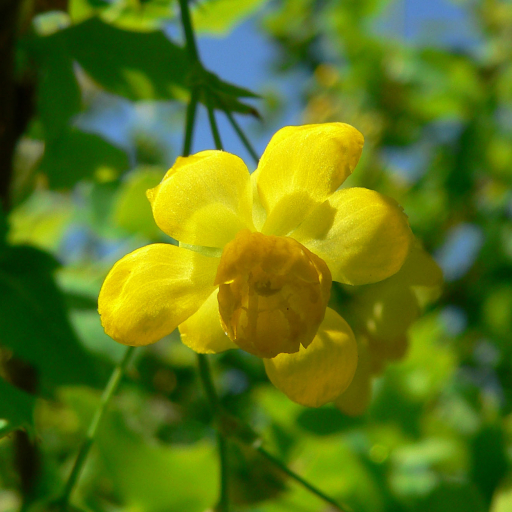
- 🟡 Sulfur-Yellow Blooms: In late spring, the plant produces dense, fragrant clusters of small yellow flowers that stand out brilliantly against the muted foliage.
- 🍇 Colorful Berries: After flowering, small inflated berries appear. They transition from green to yellow, eventually ripening into a deep red or purplish-black color.
🏡 In Your Garden
- 🌵 The Xeriscape King: This plant is a champion of water-wise gardening. It is exceptionally drought-tolerant and, once established, can survive on natural rainfall alone in its native range.
- 🏜️ Drainage is Vital: Because it is a desert native, it hates "wet feet." It requires rocky or sandy soil with excellent drainage; heavy clay or overwatering will quickly lead to root rot.
- 🐦 Avian Sanctuary: The dense, prickly structure makes it a preferred nesting site for small birds, providing them a fortress against predators like cats or hawks.
⚠️ Safety & Toxicity
- 🧤 Physical Hazard: The primary "danger" of this plant is its leaves. They are very sharp and can easily puncture skin or gardening gloves. Always wear heavy-duty protection when pruning.
- 🐾 Pet Safety: It is generally considered non-toxic to domestic animals. While the berries contain berberine (which can cause mild stomach upset in huge quantities), the prickly leaves usually discourage pets from taking a bite.
- 🍴 Edibility: The berries are technically edible for humans but are quite tart and seedy. They are most commonly used in jellies rather than eaten raw.
✨ Fun Fact
🎨 Desert Gold: Native American tribes, including the Hopi and Navajo, traditionally harvested the bright yellow roots and inner bark of Fremont's Mahonia to create a vivid yellow dye for coloring wool, baskets, and buckskin.

Detailed Care Instructions
Here are some tips on how to grow Mahonia fremontii, commonly known as Fremont's mahonia:
- Planting: Choose a location with well-draining soil and partial to full sun exposure. Dig a hole that is twice as wide and just as deep as the root ball. Place the plant in the hole and backfill with soil, firming it gently around the roots.
- Watering: Water the plant deeply after planting and regularly throughout the first growing season. Once established, Mahonia fremontii is drought-tolerant but will benefit from occasional deep watering during prolonged dry periods.
- Mulching: Apply a layer of organic mulch around the base of the plant. Mulching helps conserve soil moisture, suppresses weed growth, and keeps the soil temperature more stable.
- Pruning: Minimal pruning is needed for Mahonia fremontii. Remove any dead or damaged branches and shape the plant as desired in late winter or early spring before new growth emerges.
- Fertilizing: Mahonia fremontii generally doesn't require much fertilization. However, you can apply a balanced, slow-release fertilizer in early spring to provide necessary nutrients.
- Propagation: You can propagate Mahonia fremontii through seeds or stem cuttings. Collect seeds in the fall and plant them in a pot filled with well-draining soil. Stem cuttings can be taken in late spring or early summer, dipped in rooting hormone, and planted in a pot with moistened soil.
Remember that Mahonia fremontii is native to specific regions, such as the western United States, so it may thrive better in those areas. Additionally, always check with your local nursery or garden center for specific advice based on your local climate and growing conditions.
Mahonia Fremontii plant prefers moist soil, so it is important to water it regularly without letting the soil become water-logged. The best way to water this plant is to slowly and thoroughly saturate the soil to a depth of at least 6 inches, allowing the water to soak in deeply before the next watering. The frequency of watering will depend on various factors such as the season, soil type, and weather conditions. As a general rule, the plant should be watered more frequently during the hot and dry summer months, as well as during extended periods of drought. It is recommended to check the soil moisture regularly by sticking a finger into the soil to determine if it feels dry to the touch. When watering, avoid getting the foliage wet, as this can promote the growth of fungal diseases. Additionally, it is important to ensure that the soil has good drainage to prevent waterlogging, which can lead to root rot and other problems.
To fertilize this particular plant, it is important to use a balanced fertilizer with equal proportions of nitrogen, phosphorus, and potassium. It is recommended to apply the fertilizer in early spring, just before new growth begins. Be sure to follow the instructions on the fertilizer packaging carefully, as the application rate may vary depending on the brand. It is also important to avoid over-fertilizing, as this can cause damage to the plant. Instead, aim to apply a moderate amount of fertilizer at regular intervals throughout the growing season.
Mahonia Fremontii plant prefers well-drained soil that is rich in organic matter. The soil should be slightly acidic and have a pH between 4.5 and 6.5. The plant can tolerate different soil types but prefers loam and sandy loam soil. It is important to ensure that the soil is not too heavy or compacted, as this will affect the plant's growth and development. Additionally, Mahonia Fremontii plant prefers soil that is moist but not waterlogged. To achieve this, it is recommended to water the plant regularly, especially during dry periods. Finally, the plant should be planted in an area that receives partial to full shade, as it does not tolerate direct sunlight well.
To propagate this plant, take a stem cutting that is approximately 6 inches long. Remove the leaves from the lower half of the stem. Dip the cut end of the stem in rooting hormone powder. Plant the stem in a well-draining potting mix, ensuring the soil is moist but not waterlogged. Cover the pot with a clear plastic bag to create a humid environment and place it in a warm spot with indirect light. Water the cutting regularly and mist it often to maintain humidity. Once roots have formed, usually in 4-6 weeks, transplant the new plant into a larger container or into the ground.








