Plant Overview
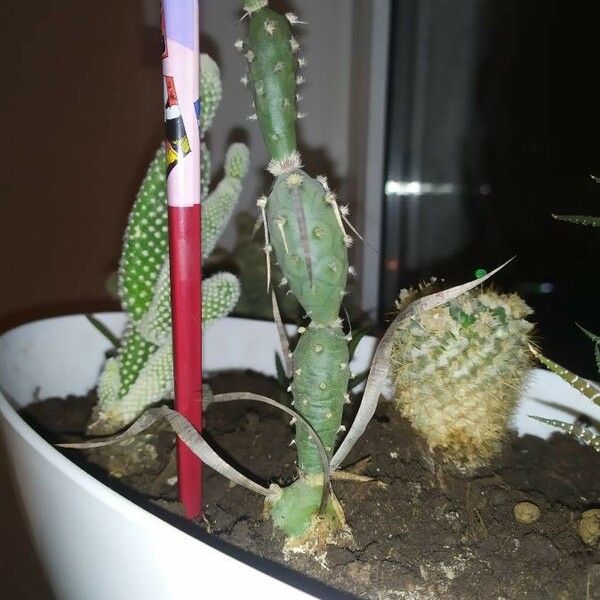
Often called the "Mountain Egg Cactus" or simply "Tephrocactus" by long-time collectors, Maihueniopsis glomerata is a resilient little architect from the high-altitude Andes. It grows in dense, mounding cushions that resemble a collection of dusty, fossilized eggs or smooth river stones. In the wild, it survives some of the harshest conditions on Earth, tucked between rocks where the air is thin and the sun is punishingly bright.
🔍 How to Identify
- 🌵 The Segments: It features small, globe-like or egg-shaped pads (segments) that grow in tight, overlapping clusters. Each segment is typically a dull grey-green to olive color.
- 🛡️ The Spines: This species is known for its flat, papery spines that can be flexible and straw-colored. These spines give the plant a slightly "shaggy" appearance, helping it break up intense sunlight.
- 🌼 The Blooms: During the late spring, it produces surprisingly delicate, bell-shaped flowers in shades of pale yellow or cream that emerge directly from the tips of the newest segments.
🏡 In Your Garden
- 🏔️ Highland Needs: Because it originates from elevations up to 4,000 meters, it craves "hard" growing conditions. This means intense light and significant temperature drops at night. If kept in a dark corner, the segments will stretch and lose their iconic compact shape.
- 🏜️ The Mineral Secret: It is highly susceptible to rot if kept in standard potting soil. It requires a "mineral-heavy" substrate—think 80% pumice, lava rock, or grit and only 20% organic soil. It prefers to stay bone-dry during its winter dormancy.
⚠️ Safety & Toxicity
- 🌵 Physical Hazard: While not chemically toxic, this plant is a "touch-me-not." Beyond the visible papery spines, it possesses glochids—microscopic, barbed bristles that can easily lodge in the skin and cause lasting irritation.
- 🐾 Pets & Kids: It is generally safe in terms of ingestion (non-poisonous), but the spines make it a danger to curious paws and small hands. Place it on a high shelf or in a dedicated "cactus corner" away from walkways.
✨ Fun Fact
Maihueniopsis glomerata is a champion of cold endurance. Because of its high-altitude evolution, it can survive temperatures as low as -10°C (14°F), provided the soil is completely dry. It essentially "mummifies" itself in winter, shrinking slightly to protect its cells from freezing!

Detailed Care Instructions








