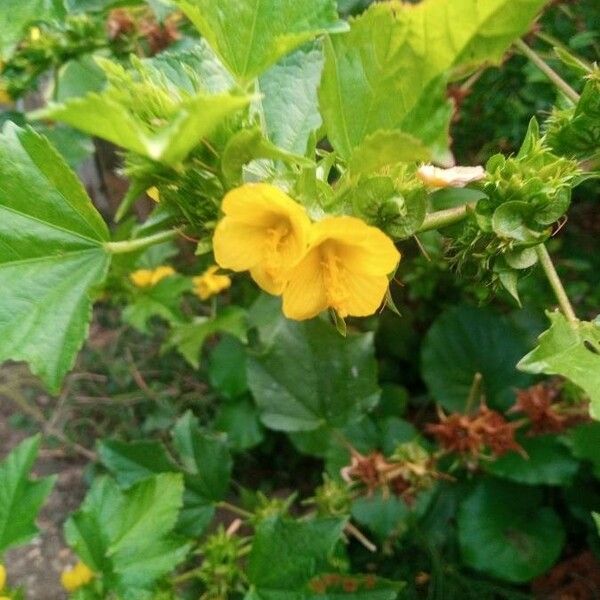
Plant Overview
Often called "Wild Okra" or "Malva de monte," Malachra alceifolia is a resilient tropical shrub that belongs to the same family as Hibiscus and Okra. While some gardeners consider it a common weed, its cheerful yellow blooms and hardy nature make it a fascinating specimen for those exploring tropical flora. It is deeply rooted in the Caribbean and Central American landscape, often appearing spontaneously as a "pioneer" plant after heavy rains.
🔍 How to Identify
- 🌼 Sunny Blooms: It features small, bright yellow flowers with five delicate petals, usually appearing in dense clusters tucked into the leaf axils.
- 🍃 Lobed Foliage: The leaves are broad and heart-shaped at the base, with three to five shallow lobes that resemble a coarse version of a hollyhock leaf.
- 🌵 Bristly Texture: One of its most identifying features is the "fuzzy" look; the entire plant is covered in stiff, yellowish hairs (trichomes) that give it a rough, sandpaper-like feel.
🏡 In Your Garden
- 💧 Moisture Seeker: In the wild, it thrives in damp, disturbed soils. If it pops up in your yard, it’s likely telling you that the area has high moisture retention or poor drainage.
- 🐝 Pollinator Magnet: Despite its "wild" appearance, it is a high-value plant for local ecosystems. It serves as a consistent nectar source for bees and small butterflies throughout the warmer months.
- ✂️ Growth Habit: It has a taproot system that makes it very difficult to transplant once established. If you want to keep it, choose its spot wisely, as it prefers to stay put.
⚠️ Safety & Toxicity
- 🩹 Mechanical Irritant: The primary "danger" of this plant is physical. The stiff hairs on the stems and leaves can cause mild skin irritation, redness, or itching if handled with bare hands.
- 🐾 Pet & Child Safety: While not documented as highly toxic if ingested, the bristly texture makes it very unpalatable. It could cause mechanical irritation to the mouth or throat if a curious pet or child tries to take a bite. Always wear gloves when pruning.
✨ Fun Fact
In various tropical regions, the tough, stringy fibers found in the stalks of Malachra alceifolia have historically been used to create makeshift cordage and rope, similar to its famous relative, Jute!

Detailed Care Instructions
To grow Malachra Alceifolia, also known as the Malay Bushmallow or the Princess Flower, you can follow these steps:
- Seed selection: Obtain high-quality Malachra Alceifolia seeds from a trusted nursery or online seed supplier.
- Germination: Start by soaking the seeds in warm water for 24 hours to help soften the hard outer coating and improve germination. Then, plant the seeds in a seedling tray filled with well-draining potting mix, making sure to sow them at a depth of approximately 1/4 inch.
- Ideal conditions: Malachra Alceifolia thrives in warm, tropical or subtropical climates. Provide the plant with a warm and sunny location that receives at least six to eight hours of direct sunlight daily. Ensure the temperature remains above 60°F (15°C) throughout the growing season.
- Watering: Water the seedlings regularly to keep the soil evenly moist, but not waterlogged. Avoid overwatering as it can lead to root rot. Once the plant establishes, reduce watering frequency but do not let the soil dry out completely.
- Soil requirements: Malachra Alceifolia prefers well-draining soil with a slightly acidic to neutral pH (around 6.0-7.0). Amend the soil with organic matter like compost or peat moss to improve drainage and fertility.
- Fertilization: Feed the plant with a balanced, water-soluble fertilizer once a month during the growing season to promote healthy growth and flowering. Follow the instructions on the fertilizer package for the correct dosage.
- Pruning: Trim the plant regularly to maintain a bushy and compact shape. Remove any dead, damaged, or overgrown branches. Pruning also helps stimulate new growth and enhances overall plant health.
- Pests and diseases: Monitor the plant for common pests such as aphids, mealybugs, or spider mites. Treat any infestations promptly with organic insecticides or insecticidal soap. Ensure good air circulation around the plant to prevent fungal diseases.
- Transplanting: Once the seedlings have developed a sufficient root system, they can be transplanted into larger pots or directly into the garden. Space the plants at least 24-36 inches apart to allow for proper growth.
It's important to note that Malachra Alceifolia can be invasive in some regions, so it's always advisable to check if it's suitable for your specific location and follow any local regulations or restrictions.

To properly water this particular plant, it is important to first understand its unique needs. Begin by carefully observing the soil moisture levels, using a finger to test the soil’s dampness. It is best to water only when the soil feels dry to the touch, as overwatering can lead to root rot and other plant diseases.
When watering, it is necessary to pour water directly onto the soil, avoiding contact with the leaves or stem of the plant. This can cause damage to the foliage and promote the growth of harmful molds. It is also important to avoid allowing the soil to become too saturated, as this can lead to issues with plant health and overall growth.
Finally, ensure that the plant is located in an appropriate environment with proper lighting and temperature requirements. This will allow the plant to thrive and better utilize the water and nutrients given to it through proper watering techniques.
To fertilize this plant, use a balanced fertilizer with equal parts nitrogen, phosphorus, and potassium. Apply the fertilizer once a month during the growing season. Be careful not to over-fertilize, as this can lead to leaf burn and stunted growth. Water the plant thoroughly after fertilizing to help the nutrients soak into the soil.
The ideal soil for Malachra Alceifolia plant should be rich, well-drained, and moist. It should have a slightly acidic to neutral pH level, ideally between 6.0 to 7.0. The soil texture should be loamy that provides a balance of water retention and drainage for optimal plant growth. Organic matter, such as compost or aged manure, can be mixed into the soil to improve its fertility and structure.
It is important to ensure that the soil is not compacted, as this can restrict root growth and cause waterlogging. Additionally, the plant requires good air circulation around the roots to avoid fungal diseases.
To maintain healthy plant growth and development, it is recommended to use a high-quality potting mix that meets the specific requirements of Malachra Alceifolia plant. Fertilizing the plant with a balanced fertilizer every two weeks during the growing season can also improve its growth and flowering.
To propagate this certain plant, you will need to identify a mature, healthy specimen and take cuttings from it. Cuttings should be taken during the growing season, when the plant is actively growing. The cuttings should be between 4-6 inches long and taken from the tip of the stem. The bottom leaves should be removed, and the cutting should be dipped in rooting hormone to encourage roots to grow.
Once the cutting has been prepared, it should be planted in a well-draining potting mix and watered thoroughly. The cutting should be kept in a warm, humid environment and out of direct sunlight. Lightly misting the cutting with water a few times a day can help to keep it hydrated.
After a few weeks, you should see roots forming on the cutting. Once the roots are established, the new plant can be carefully transplanted into a larger pot or outside in the garden. It is important to keep the new plant well-watered and out of direct sunlight until it becomes established. With proper care, your new Malachra Alceifolia plant will grow to be just as healthy and beautiful as its parent plant.








