Plant Overview
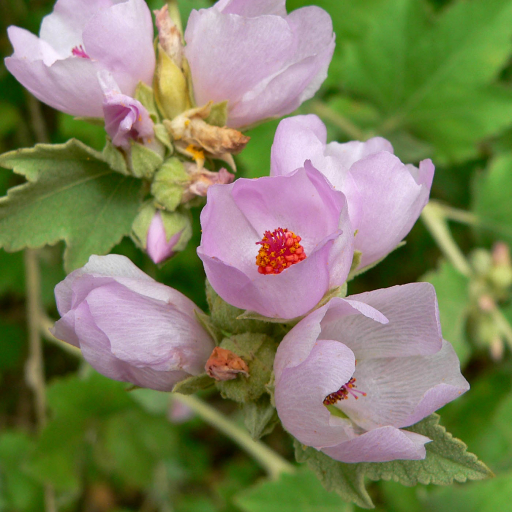
Known affectionately as the Chaparral Mallow or Bush Mallow, this California native is a true survivor of the golden hills. Often seen lining canyon walls or emerging triumphantly from the ashes of a wildfire, it is a sturdy, semi-evergreen shrub that looks like a cloud of soft pink blossoms against a silver-green backdrop. It’s a favorite for "fire-scaping" and habitat restoration due to its incredible resilience.
🔍 How to Identify
- 🌸 The Blooms: Features clusters of delicate, cup-shaped flowers that range from pale lavender to shell pink. Each flower has a prominent central column of yellow stamens.
- 🍃 The Foliage: The leaves are heart-shaped or lobed, covered in a fine, "stellate" (star-shaped) fuzz that gives the plant a distinct dusty-gray or silvery appearance.
- 🎋 Growth Habit: This is a tall, wand-like shrub. It sends up long, slender stems that can reach up to 15 feet in the wild, though it usually stays smaller in home gardens.
🏡 In Your Garden
- 🦋 A Pollinator Party: This plant is a cornerstone of the ecosystem. It is a vital nectar source for native bees and butterflies, and it serves as a host plant for the Northern White Skipper butterfly larvae.
- 🏜️ Tough Love Only: Because it is adapted to the chaparral, it thrives on neglect. It requires exceptionally well-draining soil and very little summer water once established. In fact, overwatering is the fastest way to kill a Chaparral Mallow.
- ✂️ Pruning Nuance: Without regular maintenance, it can become "leggy" or woody. Gardeners should prune it back hard in the late autumn to encourage a denser, more attractive shape for the next spring bloom.
⚠️ Safety & Toxicity
- 🟢 Status: Generally non-toxic and safe.
- 🧤 Skin Sensitivity: While not poisonous, the fine, felt-like hairs on the leaves (trichomes) can sometimes irritate sensitive skin or eyes if handled roughly. It’s a good idea to wear gloves when doing heavy pruning.
✨ Fun Fact
The Chaparral Mallow is a "fire follower." Its seeds have a hard coating that often requires the intense heat of a wildfire to crack open and germinate, allowing it to be one of the first plants to bring color back to a scorched landscape.

Detailed Care Instructions

Place in a bright room that is sun drenched almost all day. Or directly in a south-facing window.

Malacothamnus Fasciculatus plant should be watered regularly to ensure proper growth and survival. The plant requires moderate watering and should not be watered excessively. Before watering, check the soil's moisture level by touching the soil surface or using a soil moisture meter. If the soil feels dry, it is time to water the plant.
To water the plant, gently pour water onto the soil, avoiding the leaves and stem. The water should be allowed to soak into the soil and should not be left standing in the tray or saucer. Watering should be done in the morning or evening when the sun is not too hot to prevent the leaves from burning.
During the winter months, watering should be reduced as the plant goes into a period of dormancy. Overwatering during this period can lead to root rot and damage the plant's health. In summer or hot weather, watering frequency should be increased as the plant may dry out faster.
Overall, Malacothamnus Fasciculatus plant requires regular, moderate watering to ensure optimal growth and survival.
These plant needs regular fertilizing during growing seasons. Fertilizing your plants in dormant state during the winter, might result in scorching or browning of the leaf tips. If mature plants display signs of nutrient insufficiency, fertilizer administration is necessary to restore the plant to its previous state.
You may use All Purpose Plant Food or Flower Fertilizer or All Purpose Fertilizer for your Mendocino Bush-Mallow
Malacothamnus Fasciculatus is a plant that belongs to the family Malvaceae and is native to California. It prefers to grow in well-drained soil that is rich in organic matter. The ideal soil pH range for this plant is slightly acidic to neutral, between 6.0 and 7.5. A sandy loam soil with a mixture of sand, peat moss, and perlite is recommended for optimal growth. The soil should be kept moist but not soggy, as the plant does not tolerate waterlogged conditions. Fertilization is not required, but a light application of a balanced fertilizer in the early spring can help promote growth. It is also important to ensure good air circulation and plenty of sunlight for this plant to thrive.
Common pests of the mendocino bush-mallow include Aphids, larvae. Make a habit of checking your mendocino bush-mallow frequently for pests so that any infestations can be caught and managed early.








