Plant Overview
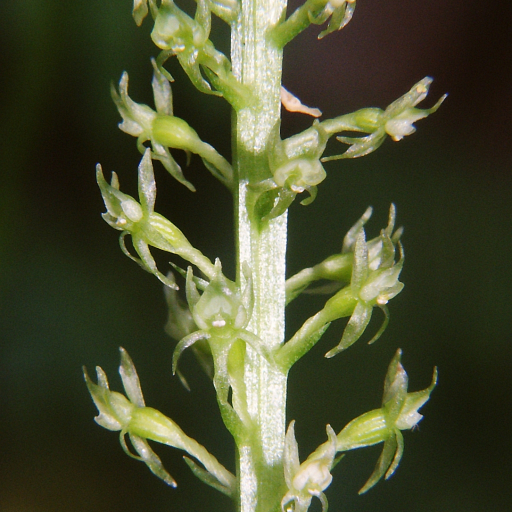
Often called the White Adder’s-Mouth, this tiny orchid is a master of disguise in the damp woodlands and bogs of the Northern Hemisphere. Unlike its flamboyant tropical cousins, this plant celebrates "micro-beauty," requiring a keen eye to spot its delicate spire of pale green blooms. In many regions, finding one is considered a lucky omen for any amateur botanist, as its presence indicates a healthy, undisturbed ecosystem.
🔍 How to Identify
- 🍃 The Lone Leaf: Living up to its name (monophyllos means "single leaf"), it typically features just one broad, oval-shaped leaf that tightly clasps the stem near the base.
- 🗼 The Flower Spike: It produces a slender, upright raceme holding dozens of minuscule, star-shaped flowers that range from pale lime-green to creamy white.
- 🔄 Upside-Down Blooms: Most orchids "flip" their flowers as they grow, but the White Adder's-Mouth is "non-resupinate," meaning its flowers stay "upside-down" with the lip pointing upward.
🏡 In Your Garden
- 💧 Moisture Obsession: This orchid thrives in very specific microclimates, specifically wet meadows, fens, or mossy cedar swamps where the soil stays consistently damp but not stagnant.
- 🍄 Fungal Friendships: It relies on a complex symbiotic relationship with soil fungi (mycorrhizae) to survive. Because of this delicate balance, it is nearly impossible to grow in traditional garden pots or transplant from the wild.
- 🧭 Cool Temperaments: It prefers the "refrigerator" zones of nature, seeking out shaded, north-facing slopes or cool seepage areas where it can hide from the midday sun.
⚠️ Safety & Toxicity
- ✅ Safe Status: Malaxis monophyllos is not known to be toxic to humans, cats, or dogs.
- 🛑 Conservation Warning: While not poisonous, this plant is rare or endangered in many regions. Its primary "danger" is its fragility; picking the flower can prevent the plant from seeding, threatening local populations.
✨ Fun Fact
Each tiny flower is only about 2 to 3 millimeters wide—roughly the size of a pinhead! Despite their microscopic size, they are perfectly engineered to attract tiny fungus gnats, who act as the orchid's primary pollinators in the dark, damp forest understory.

Detailed Care Instructions
To grow Malaxis Monophyllos plant, also known as the White Adder's-Mouth orchid, follow these steps:
- Obtain seeds or a mature plant from a reputable nursery or orchid enthusiast. Make sure it is legal and ethical to obtain and grow this particular species in your area.
- Choose a suitable growing environment for the orchid. It prefers shady locations with high humidity, such as a greenhouse or a shaded corner of your garden. Ensure that the temperature remains relatively constant between 60-80°F (15-27°C).
- Prepare a well-draining potting mix specifically formulated for orchids. You can also use a mixture of fine bark, coconut husk chips, and sphagnum moss. Sterilize the potting mix before planting to minimize the risk of pests and diseases.
- Fill a small pot with the prepared potting mix, ensuring it has drainage holes at the bottom.
- If you obtained seeds, sow them on the surface of the potting mix and press them gently into it. If you have a mature plant, carefully transfer it into the pot without disturbing its roots.
- Water the orchid thoroughly immediately after planting. Ensure that excess water drains completely from the pot. Avoid overwatering, as it can lead to root rot.
- Place the pot in a shady location with indirect sunlight. Direct sunlight can scorch the leaves of this delicate orchid.
- Maintain high humidity around the plant. You can achieve this by placing a humidity tray filled with water near the orchid or using a humidifier.
- Water the orchid regularly, keeping the potting mix slightly moist but not soggy. Allow the top layer of the potting mix to dry out before watering again.
- Provide occasional fertilization using a balanced orchid fertilizer during the growing season. Follow the instructions on the fertilizer package for the appropriate dilution and application frequency.
- Monitor the orchid for pests and diseases regularly. Common pests that can infest orchids include aphids, mealybugs, and spider mites. Treat any issues promptly to protect the plant.
- As the orchid grows, consider repotting it every 2-3 years to refresh the potting mix and provide ample space for the root system.
Remember, growing orchids, including Malaxis Monophyllos, can be challenging and requires patience and careful attention. It may take some time for the plant to bloom, but with proper care and conditions, you can enjoy the delicate beauty of these unique orchids.

Place in a dark room with little light, like a dark bedroom or a spot far away from a window or directly in a north-facing window.

To properly water this plant species, it is important to carefully monitor its soil moisture levels. When watering, it is advisable to use water at room temperature and avoid pouring it directly onto the foliage. Instead, aim to water the soil around the base of the plant until water begins to seep out of the drainage holes. It is important not to over-water this plant, as it prefers a moderately moist soil but can easily become waterlogged. It may be helpful to allow the top inch of soil to dry out slightly between waterings to avoid this issue. Additionally, it is important to consider the humidity levels in the plant's environment, as this species thrives in a moderately humid environment. Misting or placing a tray of water near the plant can help maintain proper humidity levels.
Fertilize your plant with a balanced, all-purpose liquid fertilizer once a month during the growing season. Dilute the fertilizer to half the recommended strength and apply it to the soil around the plant, taking care not to get it on the leaves or stems. Water the plant thoroughly after fertilizing. Avoid fertilizing during the plant's dormant period.
The ideal soil to use for this plant is a well-draining, nutrient-rich soil that is slightly acidic. A mix of organic matter, perlite, and sand can create a soil that provides adequate drainage and the necessary nutrients for the plant. It is important to avoid soils that are too heavy or compact, as this can lead to root rot and other issues. The pH level should be between 5.5 and 6.0. It is also important to ensure that the plant is not overwatered, as this can also lead to root rot and other problems.
Propagation of the plant can be done through vegetative means. One way is by dividing the rhizomes during the early spring or fall when the plant is not actively growing. Carefully dig up the rhizome and separate it into smaller sections, making sure each section has at least one growing point. Replant the sections in a well-draining soil mix while ensuring the rhizomes remain above the soil surface.
Another way to propagate the plant is by taking stem cuttings during the growing season. Choose healthy stems that have at least two nodes, and make a clean cut at a 45-degree angle just below a node. Remove any lower leaves to expose the lower nodes, and dip the cut end of the stem into a rooting hormone. Plant the stem in a sterile, well-draining soil and keep it moist. New roots should appear within four to six weeks.
The plant can also self-seed, which can be encouraged by allowing the flowers to bloom and the seeds to mature on the plant. Once the seeds have ripened and turned brown, harvest them and plant them in a sterile, well-draining soil mix. Keep the soil moist and warm, and germination should occur within a few weeks.








