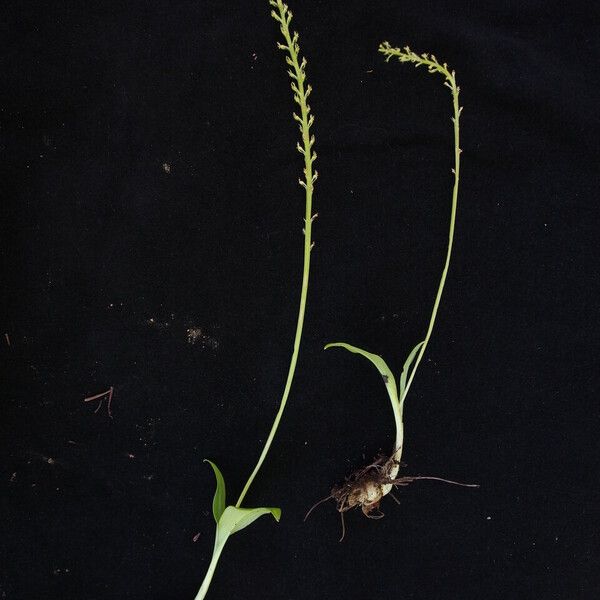
Plant Overview
Known as the Fly-bearing Adder’s Mouth, Malaxis muscifera is a hidden gem of the high Himalayas. Unlike the flamboyant orchids found in tropical shops, this species is a master of camouflage, blending perfectly into the mossy forest floors of India, Nepal, and Tibet. It holds a legendary status in ancient Ayurvedic medicine as "Jeevak," one of the eight sacred herbs known as Ashtavarga.
🔍 How to Identify
- 🍃 The Twin Leaves: This orchid typically produces exactly two broad, oval leaves that emerge from the base, often appearing glossy and ribbed.
- 🗼 The Floral Spike: A slender, upright stem rises from the center, reaching up to 10–15 inches, densely packed with tiny blossoms.
- 🦟 "Fly-Like" Blooms: The flowers are microscopic, yellowish-green, and lack the large "lip" seen in common orchids. Their shape subtly mimics small insects, which gives the plant its name.
🏔️ Habitat & Ecology
- 🌲 Alpine Specialist: You won't find this plant in your average backyard; it thrives in the cool, damp shade of coniferous forests at altitudes of 2,000 to 4,000 meters.
- 🥔 Energy Storage: The plant grows from a small, fleshy bulb-like structure called a pseudobulb. This helps it survive the freezing Himalayan winters by storing nutrients while the foliage dies back completely.
⚠️ Safety & Toxicity
- ✅ General Safety: Malaxis muscifera is non-toxic to the touch and has no known stinging or irritating properties.
- 🍵 Consumption Warning: While used in traditional Ayurvedic medicine (Chyawanprash), it should never be consumed raw or without expert guidance. Furthermore, it is a protected species in many regions; picking it in the wild is often illegal due to its "Endangered" status in several habitats.
✨ Fun Fact
- ✨ The Fountain of Youth: In ancient Sanskrit, "Jeevak" translates to "Life-Giver." It was historically believed to be a powerful "Rasayana"—a substance capable of restoring youth, increasing immunity, and even sharpening the intellect.

Detailed Care Instructions








