Plant Overview
Known as the "Purple Crabapple," this hybrid is the undisputed drama queen of the spring garden. Unlike common apple trees that lean toward white blossoms, this variety erupts in a cloud of deep crimson and magenta. It is a favorite for those who want a "moody" landscape, offering dark, wine-colored foliage that provides a stunning contrast to the bright greens of a typical backyard.
🔍 How to Identify
- 🌸 Blossoms: Deep rose-pink to brilliant crimson flowers that appear in clusters, often so thick they completely hide the branches.
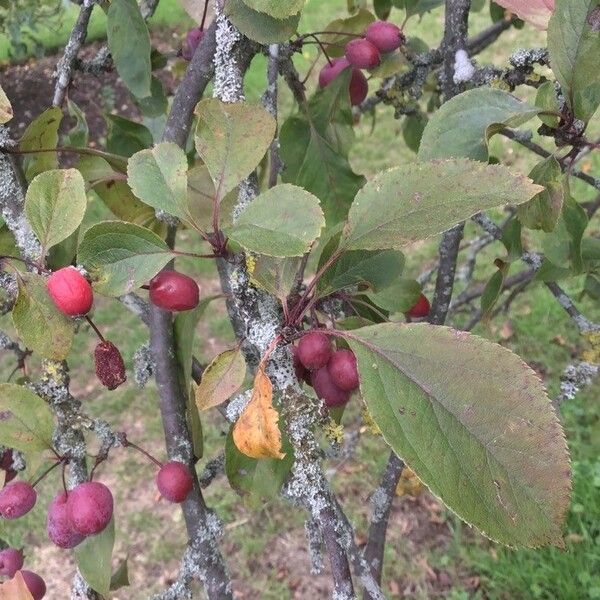
- 🍃 Foliage: Emerging leaves are a striking, glossy reddish-purple. As the season progresses, they often transition to a sophisticated bronzy-green.
- 🍎 The Fruit: It produces small, dark-maroon pomes (crabapples) about one inch in diameter. These tiny fruits often hang onto the tree long after the leaves have fallen, looking like ornaments.
🏡 In Your Garden
- ☀️ Color Maintenance: To keep that intense purple hue in the leaves, this tree demands full sun. If planted in too much shade, the foliage will "revert" to a standard, dull green.
- 💨 Airflow Matters: This hybrid is beautiful but can be susceptible to apple scab (a fungal leaf spot). To prevent this, plant it in a spot with good air circulation and avoid overhead watering that keeps the leaves damp.
- 🏗️ Growth Habit: It typically forms a dense, rounded canopy. It’s a slow-to-moderate grower, making it a perfect choice for small urban gardens where a massive shade tree wouldn't fit.
⚠️ Safety & Toxicity
- 🐾 Pet Warning: Like all members of the Malus (apple) family, the seeds contain cyanogenic glycosides. While the fruit flesh is safe, the seeds are toxic if chewed in large quantities by dogs, cats, or horses.
- 👅 Human Consumption: The fruit is technically edible for humans but extremely tart and astringent. It is most commonly used to make crabapple jelly, as the high pectin content helps it set perfectly.
✨ Fun Fact
The Malus × purpurea is a direct descendant of a rare wild apple from Central Asia (Malus niedzwetzkyana) that is unique in the plant world for having red wood, red buds, red flowers, and even red flesh inside the fruit!

Detailed Care Instructions
To grow Malus × Purpurea (also known as the Purple Crabapple), follow these steps:
- Planting: Choose a sunny spot in your garden. The Purple Crabapple prefers full sun to flourish. Ensure the soil is well-draining and rich in organic matter. Dig a hole that is wide and deep enough to accommodate the root ball of the plant.
- Soil preparation: Improve the soil by adding compost or well-rotted manure to enhance its fertility. Mix it thoroughly with the existing soil.
- Planting the tree: Place the Malus × Purpurea in the hole, making sure that the top of the root ball is level with the surrounding soil. Backfill the hole with soil and gently tamp it down to remove any air pockets. Water the tree thoroughly after planting to settle the soil around the roots.
- Watering: Keep the soil consistently moist but not soaked. Avoid overwatering, as it can lead to root rot. Water deeply weekly during dry spells or when there is no rainfall.
- Mulching: Spread a layer of organic mulch around the base of the tree to retain moisture, suppress weeds, and provide insulation against temperature fluctuations. Keep the mulch a few inches away from the trunk to prevent rotting.
- Pruning: Prune the Malus × Purpurea tree during late winter or early spring before new growth begins. Remove dead or damaged branches and shape the tree to encourage good structure and airflow.
- Fertilizing: Apply a balanced organic fertilizer in early spring to provide the tree with essential nutrients. Follow the manufacturer's instructions for the recommended amount and frequency of application.
- Pest and disease control: Keep an eye out for common pests such as aphids, caterpillars, and apple scab disease. If necessary, use appropriate organic insecticides or fungicides to control these issues.
- Harvesting fruit: The Purple Crabapple tree produces small, purple fruits that can be harvested in late summer or early fall. You can use these fruits for cooking, making jelly, or leave them on the tree as ornamental features.
Remember to regularly monitor the tree's health, water it appropriately, and provide adequate care and maintenance to ensure it grows and thrives.
To water this plant, it is best to check the soil moisture before watering. Stick your finger into the soil up to the first knuckle. If it feels dry, it's time to water. When watering, use a watering can or hose with a gentle spray attachment to avoid damaging the plant. Water the soil around the base of the plant and avoid getting water on the leaves or flowers. Be sure to water thoroughly and then allow the soil to dry out slightly before watering again. In general, this plant prefers moist but well-draining soil, so be sure not to overwater.
To fertilize this plant, you should use a balanced fertilizer with a 10-10-10 ratio. Apply the fertilizer in the spring and again in the fall, spreading it evenly around the base of the plant. Be sure to water the plant well after fertilizing to help the nutrients penetrate the soil. Avoid over-fertilizing, as this can lead to excessive growth and reduced winter hardiness.
The optimal soil for the Malus × Purpurea plant should be well-draining and rich in nutrients. It is recommended to use a loamy soil mix with adequate amounts of organic matter, such as compost or peat moss. The pH level of the soil should be slightly acidic, ideally between 5.5-6.5. It is also important to ensure that the soil is not compacted and has good aeration to promote healthy root growth. Avoid using heavy clay soils, as they can retain too much moisture and hinder the plant's growth. Additionally, adding a layer of mulch around the base of the plant can help to retain moisture and regulate temperature, further promoting healthy growth.
To propagate this plant, you will need to take stem cuttings that are about 6-8 inches long. Make sure that the cutting has a few nodes, as that is where new roots will grow from.
Next, remove any leaves from the lower half of the stem cutting. Dip the cut end of the stem into rooting hormone powder, then plant it into a well-draining soil mix.
Water the soil so that it is moist but not waterlogged, and cover the cutting with a plastic bag to create a greenhouse effect.
Place the cutting in a bright, indirect light spot and make sure to mist it occasionally to keep the humidity high.
After a few weeks, you should start to see new growth on the stem cutting, which means that it has successfully rooted. At this point, you can remove the plastic bag and gradually get the new plant used to lower humidity levels.
Once the roots are established, you can transplant the new plant into a pot or into your garden.








