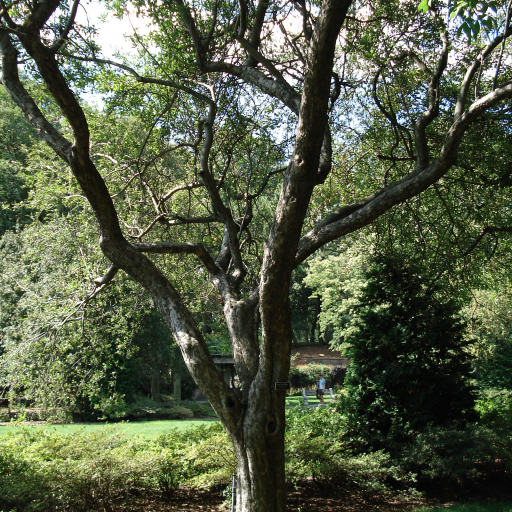
Plant Overview
Known as the "Chinese Flowering Crabapple," Malus × spectabilis is a visual masterpiece that has been celebrated in Asian gardens for centuries. Its botanical name, spectabilis, literally translates to "spectacular" or "remarkable," a fitting title for a tree that erupts into a cloud of soft pink blossoms every spring. While it produces tiny fruits, it is primarily grown as an ornamental treasure that brings a sense of ancient elegance and romance to any landscape.
🔍 How to Identify
- 🌸 The Blossoms: It features large, semi-double or single flowers that transition from deep, rosy-pink buds to a delicate pale pink or white as they fully open.
- 🍃 Leaf Texture: The foliage consists of oval-shaped, bright green leaves with finely serrated edges that turn a subtle yellow in the autumn.
- 🍎 The Fruit: It bears small, globose yellow crabapples (about 2–3 cm in diameter). Unlike grocery store apples, these are prized more for their appearance than their flavor.
🏡 In Your Garden
- 🌬️ Airflow is Key: While it is a hardy tree, it deeply appreciates a spot with excellent air circulation. This helps prevent "Apple Scab," a common fungal issue that can make the leaves look spotted and tired during humid summers.
- ✂️ Pruning Strategy: This tree naturally maintains a graceful, upright vase shape. It is best to prune only in late winter to remove "suckers" (shoots growing from the base) or crossing branches, ensuring the center stays open to sunlight.
- 🦋 Wildlife Hub: In early spring, this tree becomes a bustling airport for bees and butterflies. The lingering winter fruit also provides a vital emergency food source for backyard birds when other options are scarce.
⚠️ Safety & Toxicity
- 🐾 Pet & Child Warning: Like most members of the apple family, the seeds (pips) contain cyanogenic glycosides. If chewed and swallowed in large quantities, they can be toxic.
- 🚫 Fruit Safety: While the flesh of the tiny apples is technically edible, it is extremely tart and woody. It is best to discourage children and pets from snacking on fallen fruit to avoid potential stomach upset or seed ingestion.
✨ Fun Fact
In traditional Chinese culture, the Flowering Crabapple is often planted alongside Peonies and Magnolias. This specific combination of plants is a visual pun representing a "hall full of wealth and nobility," making it one of the most auspicious trees you can plant near a home.

Detailed Care Instructions
To grow a Malus × Spectabilis plant, also known as a crabapple tree, follow these steps:
- Choose a suitable location: Select a place with full sun exposure (at least 6-8 hours of direct sunlight per day) and well-draining soil. Crabapple trees can adapt to various soil types but prefer slightly acidic and fertile soil.
- Prepare the soil: Prior to planting, amend the soil with organic matter such as compost or well-rotted manure to improve drainage and nutrient content. Remove any weeds or grass from the planting area.
- Dig a hole: Dig a hole that is twice as wide and slightly deeper than the rootball of the crabapple tree. This will allow space for the roots to spread out comfortably.
- Plant the tree: Place the tree in the center of the hole, making sure the root collar (where the trunk meets the roots) is at ground level. Backfill the hole with soil, gently firming it around the roots to remove air pockets.
- Water the tree: Immediately after planting, thoroughly water the tree to settle the soil and provide moisture to the roots. Water regularly, especially during dry spells, to keep the soil consistently moist but not waterlogged.
- Mulch the tree: Apply a layer of organic mulch around the base of the tree, leaving a small gap around the trunk to prevent moisture buildup and potential rot. Mulch helps retain moisture, suppresses weed growth, and maintains soil temperature.
- Prune as needed: Prune the crabapple tree in early spring or late winter before new growth begins. Remove any dead, damaged, or crossing branches to maintain a healthy and well-shaped tree. Thin out the canopy to improve air circulation and reduce disease susceptibility.
- Fertilize appropriately: Crabapple trees generally don't require much fertilizer, especially if the soil is already fertile. However, a balanced fertilizer with a ratio of 10-10-10 or similar can be applied in early spring to promote healthy growth.
- Protect from pests and diseases: Monitor the tree for common issues like aphids, scale insects, or apple scab. Regularly inspect the leaves, branches, and trunk, and take appropriate measures to control any infestations or diseases.
Remember, caring for a tree requires patience and consistent maintenance. Observing and addressing any issues promptly will help your Malus × Spectabilis plant thrive and grow into a beautiful and fruit-bearing tree.

Place in a bright room that is sun drenched almost all day. Or directly in a south-facing window.

To water this plant, you should evaluate the moisture level in the soil by feeling the top layer with your fingertips. If it is dry, provide water until the soil is adequately moistened. Make sure not to waterlog the soil. The plant should be watered thoroughly during the growing season, especially during hot and dry weather. During the dormant season, watering should be decreased, and you should permit the soil to dry out a little between watering sessions. It's important to direct the water towards the soil and try to avoid splashing water on the leaves or flowers. A proper watering schedule is crucial for the plant's overall health and development.
To promote healthy growth and flowering of this plant, apply a balanced fertilizer in the early spring before new growth appears. Use a slow-release fertilizer according to the package instructions, taking care not to over-fertilize as this can damage the plant. Water the plant before and after applying the fertilizer to help it absorb the nutrients. Avoid fertilizing during the hotter months of summer and fall, as this can cause excess growth that is susceptible to winter damage.
When planting Malus × Spectabilis, it is recommended to use a well-draining soil that is rich in organic matter. The pH of the soil should be slightly acidic, between 5.5 and 7.0. The plant requires a soil that is moist but not waterlogged, so be sure to avoid soils that are heavy in clay. If your soil is lacking in nutrients, consider adding organic amendments such as compost or well-rotted manure. Additionally, mulching around the base of the plant can help to retain moisture and discourage weeds. When selecting soil for Malus × Spectabilis, be sure to choose a soil that will provide the plant with the best growing conditions for optimal growth and health.
Malus × Spectabilis is a flowering plant that can be propagated by using several methods:
- Stem Cuttings: Take a 6 to 8-inch stem cutting from a healthy plant in the spring or early summer. Remove the lower leaves and dip the cut end in rooting hormone. Plant the cutting in a pot filled with well-draining soil. Water it and keep the pot in a warm, bright place. It may take several weeks for the cutting to root.
- Air Layering: Select a healthy branch from the plant's middle portion in the spring or early summer. Make a small cut on the middle part of the branch, about 8 inches from the tip. Apply rooting hormone and wrap the area in sphagnum moss. Cover the moss with plastic wrap and tie it tightly. Cut off the branch below the wrapped area. In a few weeks, new roots will form and the new plant can be transplanted.
- Grafting: Grafting is a technique used for propagation of fruit trees, including Malus × Spectabilis. In spring, cut small sections from a healthy Malus tree. The scion should have a bud or two and a healthy leaf. Make a cutting or incision on the rootstock, adding the scion to the incision. Cover the graft with grafting wax and add a plastic wrap to keep it secure. Within a month, the graft will have successfully joined, and the new plant can be transplanted.
These methods can be used to propagate Malus × Spectabilis and produce new plants without growing from seed.








