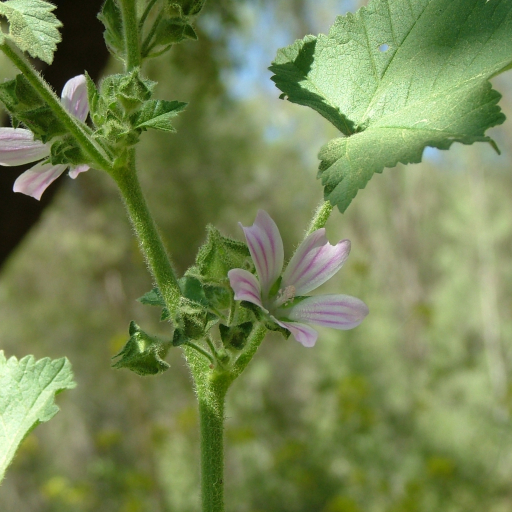
Plant Overview
Often referred to as the Cornish Mallow or the Small-flowered Tree Mallow, Malva multiflora is a Mediterranean native that has traveled the globe. With its tall, stately posture and delicate, veined flowers, it often behaves like a "wildflower socialite," popping up in coastal gardens and urban vacant lots alike. It is a resilient survivor that brings a touch of soft, cottage-core aesthetic wherever it decides to root.
🔍 How to Identify
- 🌸 The Bloom: Look for clusters of 2 to 7 small, pale lilac or pinkish-purple flowers. Each petal usually features darker violet veins that act as "landing strips" for pollinators.
- 🍃 The Foliage: The leaves are broad, circular, and slightly heart-shaped at the base. They have 5 to 7 shallow lobes and a soft, finely hairy texture that feels velvety to the touch.
- 🧀 The "Cheese" Pods: After flowering, the plant produces distinctive circular seed capsules. These look remarkably like tiny, green wheels of cheese, earning the plant its common family nickname, "Cheeseweed."
🏡 In Your Garden
- 🌊 Coastal Warrior: This plant is exceptionally salt-tolerant. If you live near the ocean where salty breezes kill more delicate flowers, the Many-flowered Mallow will thrive without complaint.
- 🌱 Self-Seeding Nature: Be aware that it is a prolific self-seeder. If you don't deadhead the spent blooms, you may find a small forest of mallows the following spring. It prefers well-drained soil and doesn't like "wet feet" or stagnant water around its roots.
⚠️ Safety & Toxicity
- 🟢 Status: Generally non-toxic and safe.
- 🐾 Details: Malva multiflora is not known to be poisonous to cats, dogs, or horses. In fact, many species in the Mallow family are historically edible; however, wild plants can accumulate high levels of nitrates if grown in over-fertilized or polluted soils, which can cause minor stomach upset if ingested in large amounts.
✨ Fun Fact
In Victorian times, mallow flowers were often included in bouquets to symbolize "consumed by love." Today, they are more famous in the culinary world's history—the original marshmallow treat was made using the sap from the roots of its cousin, the Marsh-mallow (Althaea officinalis)!

Detailed Care Instructions
To grow Malva Multiflora plant, you can follow these steps:
- Choose a suitable location: Malva Multiflora prefer full sun to partial shade, so select a spot that receives at least 6 hours of direct sunlight per day.
- Prepare the soil: The plant prefers well-draining soil with a pH level of around 6.0 to 7.0. You can amend the soil with organic matter like compost or aged manure to improve fertility and drainage.
- Sow the seeds: Malva Multiflora can be grown from seeds. Sow the seeds directly in the prepared soil once the last frost date has passed. Lightly press the seeds into the soil without covering them, as they require light for germination.
- Watering: Keep the soil consistently moist but not waterlogged. Water the plant regularly, especially during dry spells or hot weather. Avoid overhead watering as it may cause foliage diseases. Instead, water at the base of the plant to keep the leaves dry.
- Mulching: Apply a layer of organic mulch around the base of the plants to help retain moisture, suppress weed growth, and regulate soil temperature.
- Provide support: Malva Multiflora plants tend to grow tall and may require support. You can provide stakes or a trellis to support the plant and prevent it from collapsing under its own weight.
- Pruning and maintenance: Regularly remove dead blooms and prune back any overgrown or damaged stems to encourage bushier growth and prolong blooming.
- Fertilizing: Malva Multiflora generally does not require heavy feeding. However, you can fertilize with a balanced, slow-release fertilizer once or twice during the growing season to promote healthy growth.
- Protect from pests and diseases: Monitor the plant for common pests like aphids, spider mites, and caterpillars. Treat them with appropriate organic or chemical controls. Additionally, ensure good air circulation and avoid overhead watering to prevent fungal diseases.
By following these steps, you should be able to successfully grow Malva Multiflora plant in your garden.

Place in a bright room that is sun drenched almost all day. Or directly in a south-facing window.

1. Identify the plant: Malva Multiflora is a species of flowering plant in the Malvaceae family, which is known for its showy, multicolored blossoms.
2. Determine the optimal watering conditions: Malva Multiflora prefers well-drained soil that is kept slightly moist. It does not tolerate waterlogging or standing water, so be sure to avoid over-watering.
3. Plan your watering schedule: To maintain optimal soil moisture levels, Malva Multiflora may require regular watering during periods of drought or heat, especially if it is planted in full sun. However, during cooler weather or in partial shade, it may only need occasional watering.
4. Choose your watering method: The best way to water Malva Multiflora is to use a watering can or a low-pressure hose. This will ensure that the water is delivered directly to the roots and won't damage the plant's leaves or flowers.
5. Water deeply and infrequently: When you do water Malva Multiflora, make sure to water deeply enough that the soil is moist at least a few inches below the surface. Avoid frequent shallow watering, as this can lead to shallow root growth and make the plant more susceptible to stress and disease.
6. Monitor soil moisture levels: To avoid over-watering, always monitor the soil moisture level before watering again. Malva Multiflora may benefit from a layer of organic mulch around the base of the plant, which can help retain moisture and regulate soil temperature.
7. Adjust your watering schedule as necessary: Finally, adjust your watering schedule based on the weather, season, and other conditions that may affect the plant's water needs. With proper care and attention, Malva Multiflora can thrive and produce beautiful blooms year after year.
- Begin by choosing a fertilizer that is rich in nutrients, such as nitrogen, phosphorus, and potassium, as well as trace elements that the plant needs.
- Apply the fertilizer to the soil around the base of the plant, making sure to distribute it evenly and avoid getting it on the leaves or stems.
- Water the fertilizer into the soil thoroughly, allowing it to penetrate deeply and reach the roots of the plant.
- Repeat this process every 4-6 weeks during the growing season, taking care not to over-fertilize as this can cause damage to the plant.
- Monitor the plant for signs of nutrient deficiencies or excesses, such as yellowing leaves, stunted growth, or burning around the edges of the leaves.
- Adjust the fertilization schedule and amount as needed to ensure that the plant remains healthy and vibrant.
Malva Multiflora requires a specific type of soil for healthy growth and development. The ideal soil for this plant should be well-draining, moderately fertile, and slightly acidic. It should also have good water-holding capacity and be able to retain moisture without becoming waterlogged.
To create the right soil conditions, you can start by mixing together a combination of soil, sand, and compost. This will help improve the soil's texture and drainage, as well as provide the plant with essential nutrients. You can also add some organic matter, such as well-rotted manure, to further enrich the soil and promote healthy growth.
When planting Malva Multiflora, it's important to ensure that the soil is well-prepared and free from any weeds or debris. You should also make sure that the plant is placed at the right depth, with the top of the root ball level with the soil surface. After planting, water the plant thoroughly and continue to keep the soil moist, but not waterlogged, throughout the growing season.
To propagate this particular plant, you will first need to identify a healthy and strong mother plant in your garden. Make sure it's disease-free and has plenty of blooming flowers. Next, choose a stem that's at least four inches long and has several nodes. Cut this stem cleanly at a 45-degree angle, and remove any leaves or flowers at the bottom of the cutting.
Then, dip the end of the stem in rooting hormone powder to stimulate new root growth. Place the stem in a pot filled with moistened potting soil, burying the cutting up to the first node. Cover the pot with a clear plastic bag or a glass jar to create a mini greenhouse, which will help keep the soil moist and warm. Place the pot in a brightly lit but cool area, but not in direct sunlight as the cutting may dry out.
After a few weeks, check the cutting for root growth by gently tugging on it. If you feel resistance, it means roots have formed and the cutting has successfully rooted. Once the roots have established, you can transplant the new plant into a larger pot or into your garden. Water the new plant regularly and make sure it gets enough sunlight and fertilizer to promote healthy growth.








