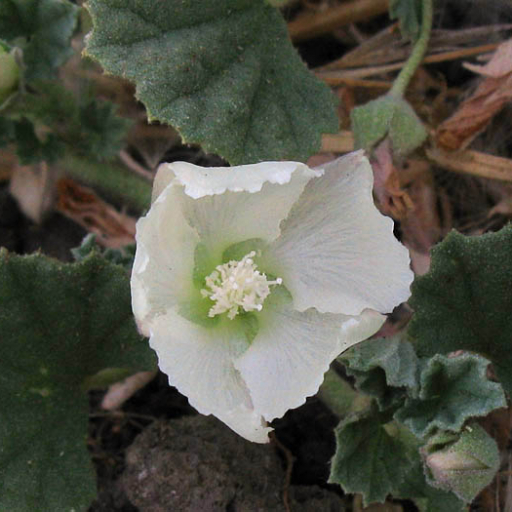
Plant Overview
Often called the Alkali Mallow or Scurfy Mallow, this resilient ground-hugger is a master of survival in harsh, unforgiving environments. While most plants wither in salty or "alkaline" soil, this mallow thrives, spreading a silvery, dusty carpet across sun-scorched plains and dried-up pond beds. Its species name, leprosa, refers to its scaly, scurfy texture—a clever adaptation for water conservation.
🔍 How to Identify
- 🍃 Leaf Shape: Look for small, triangular or kidney-shaped leaves that often appear "lopsided" or asymmetrical at the base.
- ✨ Texture: The entire plant is covered in tiny, star-shaped white scales, giving it a distinct silvery-green or "dusty" appearance that feels slightly rough to the touch.
- 🌸 Flowers: It produces delicate, five-petaled flowers that range from cream to pale yellow, sometimes blushing with a hint of pink or orange as they age.
🏡 In Your Garden
- 🌱 The Taproot Challenge: This plant is famous for its incredibly deep, woody taproot. This makes it nearly impossible to "just pull up"—if even a small piece of the root remains, the plant will likely regenerate, making it a persistent guest in lawns.
- 🌍 Soil Indicator: If you find Alkali Mallow volunteering in your yard, it’s a biological messenger telling you that your soil is likely heavy, compacted, or has a high salt content where other ornamentals might struggle.
- ☀️ Sun Lover: It requires full, intense sunlight to thrive; you will rarely find this plant lurking in the shade of a forest or under thick canopy.
⚠️ Safety & Toxicity
- ✅ Status: Non-toxic and generally safe.
- 🐾 Pets & Kids: There are no known toxic effects for dogs, cats, or humans who come into contact with the plant.
- 🌾 Agricultural Nuisance: While safe to touch, it is considered a "noxious weed" in many agricultural regions because it is so difficult to eradicate and competes fiercely with crops for deep-soil moisture.
✨ Fun Fact
The "scaly" silver coating on the leaves acts like a tiny suit of armor. These scales reflect intense UV rays away from the plant and create a micro-layer of still air, preventing the desert wind from whisking away precious internal moisture.

Detailed Care Instructions
To grow Malvella Leprosa (also known as Red Velvet Mallow), you can follow these steps:
- Obtain seeds: Acquire Malvella Leprosa seeds from a trusted supplier or collect them from existing plants, if available.
- Soil preparation: Choose a well-draining soil mix that is fertile and rich in organic matter. Malvella Leprosa prefers a slightly acidic to neutral pH level.
- Seed sowing: In late winter or early spring, sow the seeds shallowly in individual pots or trays. Sow multiple seeds in each pot to increase the chances of successful germination. Lightly cover the seeds with soil.
- Germination: Place the pots or trays in a warm and bright location, such as a greenhouse or a sunny window sill. Malvella Leprosa typically germinates within 1 to 2 weeks.
- Transplanting: Once the seedlings have developed a few sets of true leaves, they can be transplanted into larger containers or directly into a prepared garden bed. Ensure sufficient spacing between plants, as Malvella Leprosa can grow up to 3 feet (1 meter) tall and wide.
- Sunlight and temperature: Malvella Leprosa thrives in full sun to partial shade conditions. Provide the plant with at least 6 hours of direct sunlight per day. The temperature range for optimal growth is between 60 to 80 °F (15 to 27 °C).
- Watering: Keep the soil evenly moist but not waterlogged. Water the plant when the top inch of soil feels dry. Avoid overwatering, as it can cause root rot.
- Fertilization: Apply a balanced, slow-release fertilizer during the growing season to promote healthy growth. Follow the instructions on the fertilizer packaging for dosage and application frequency.
- Pruning: As the plant grows, you may need to prune it for shape and to encourage bushiness. Cut back any leggy or damaged branches. Pruning in early spring helps rejuvenate the plant.
- Pests and diseases: Monitor the plant regularly for pests like aphids, spider mites, or whiteflies. Treat any infestations promptly using appropriate organic or chemical methods. Malvella Leprosa is generally resistant to common diseases.
- Mulching: Apply a layer of organic mulch around the base of the plant to suppress weed growth, retain soil moisture, and regulate soil temperature.
- Maintenance: Regularly remove any spent flowers to prolong the blooming period and prevent seed formation. Deadheading also keeps the plant tidy and encourages new flowers to form.
By following these steps, you can successfully grow Malvella Leprosa and enjoy its beautiful red velvet-like blooms.

Place in a bright room that is sun drenched almost all day. Or directly in a south-facing window.

Malvella Leprosa plant requires regular watering, but it is important not to overwater as it can lead to root rot. The soil should be allowed to dry out slightly between watering. It is recommended to water deeply and less frequently rather than shallowly and frequently. When watering, it is best to avoid getting the leaves wet as this can lead to fungal issues. Water should be directed to the base of the plant. In the winter months, the plant may require less water as it goes into a dormant phase. It is also important to ensure good drainage as the plant prefers well-draining soil.
- Choose a well-draining pot or garden bed for your Malvella Leprosa plant.
- Prepare the soil by loosening it and removing any weeds or debris.
- Apply a balanced slow-release fertilizer with an NPK ratio of 10-10-10 or similar. Follow the manufacturer's instructions for the appropriate amount to use based on the size of your plant.
- Sprinkle the fertilizer evenly around the base of the plant, avoiding direct contact with the stems or leaves.
- Gently work the fertilizer into the top layer of soil using a small hand trowel or your fingers.
- Water the plant thoroughly after fertilizing to help activate the nutrients and prevent any potential root burn.
- Repeat the fertilizing process every four to six weeks during the active growing season, typically from spring to early fall.
- Monitor the plant's growth and overall health. If you notice any signs of nutrient deficiencies or excesses, adjust the fertilizer application accordingly.
- During the dormant period, reduce or stop fertilizing as the plant's growth slows down.
- Regularly inspect the plant for any pests or diseases and take appropriate measures to control them. A healthy plant is better able to absorb nutrients from the fertilizer.
Malvella leprosa plant requires a well-draining soil that is rich in organic matter. It prefers a slightly acidic to neutral soil pH range of 6.0 to 7.0. The soil should be fertile and able to hold moisture, but not waterlogged. It can thrive in sandy, loamy, or clay soils, as long as drainage is adequate. Adding compost or other organic materials to the soil can help improve its structure, provide nutrients, and aid in moisture retention. It is important to avoid using soil that has been contaminated with pathogens or chemicals, as this can harm the plant's growth and development.
To propagate Malvella Leprosa plants, follow these steps:
- Choose a healthy parent plant with mature and well-developed stems. Ensure that it is disease-free and free from pests.
- Sterilize a sharp pruning shear or knife with rubbing alcohol to prevent the transmission of any diseases.
- Identify the best stem for propagation. Look for a stem that is firm, healthy, and around 4-6 inches long. Avoid stems that are weak, damaged, or diseased.
- Make a clean cut just below a leaf node using the sterilized pruning shear or knife. A node is a bumpy area on the stem where the leaves grow.
- Remove any lower leaves that would be below the soil level when planted, as they can rot and cause diseases. Leave 2-3 sets of leaves remaining on the stem.
- Dip the cut end of the stem in a rooting hormone powder or gel. This will encourage root development and enhance the chances of successful propagation. Follow the instructions on the rooting hormone package for application.
- Prepare a suitable rooting medium for the stem cuttings, such as a well-draining soilless mix or a mixture of peat and perlite. Fill a small pot or container with the rooting medium and moisten it slightly.
- Create a hole in the rooting medium using a pencil or your finger, ensuring it is deep enough to accommodate the stem cutting.
- Gently insert the treated end of the stem cutting into the prepared hole in the rooting medium, making sure it sits firmly but not too tightly. Press the rooting medium around the stem to provide support.
- Place the potted cutting in a warm and bright location, avoiding direct sunlight which can scorch the delicate cutting. Maintain a constant temperature of around 70-80°F (21-27°C) for optimal rooting.
- Water the cutting regularly, keeping the soil slightly moist but not overly saturated. Avoid overwatering as this can lead to rotting. Mist the leaves occasionally to provide humidity.
- After a few weeks, gently tug on the stem cuttings to check for resistance, which indicates that the roots have started to develop. At this point, the cutting can be considered rooted and can be gradually acclimated to normal growing conditions.
- Once the Malvella Leprosa plant has established roots and has grown significantly, it can be transplanted into a larger pot or directly into the garden soil, provided it is the right planting season and climate for the plant.
Remember to monitor the propagation process closely and provide proper care to increase the chances of successful propagation.








