Plant Overview
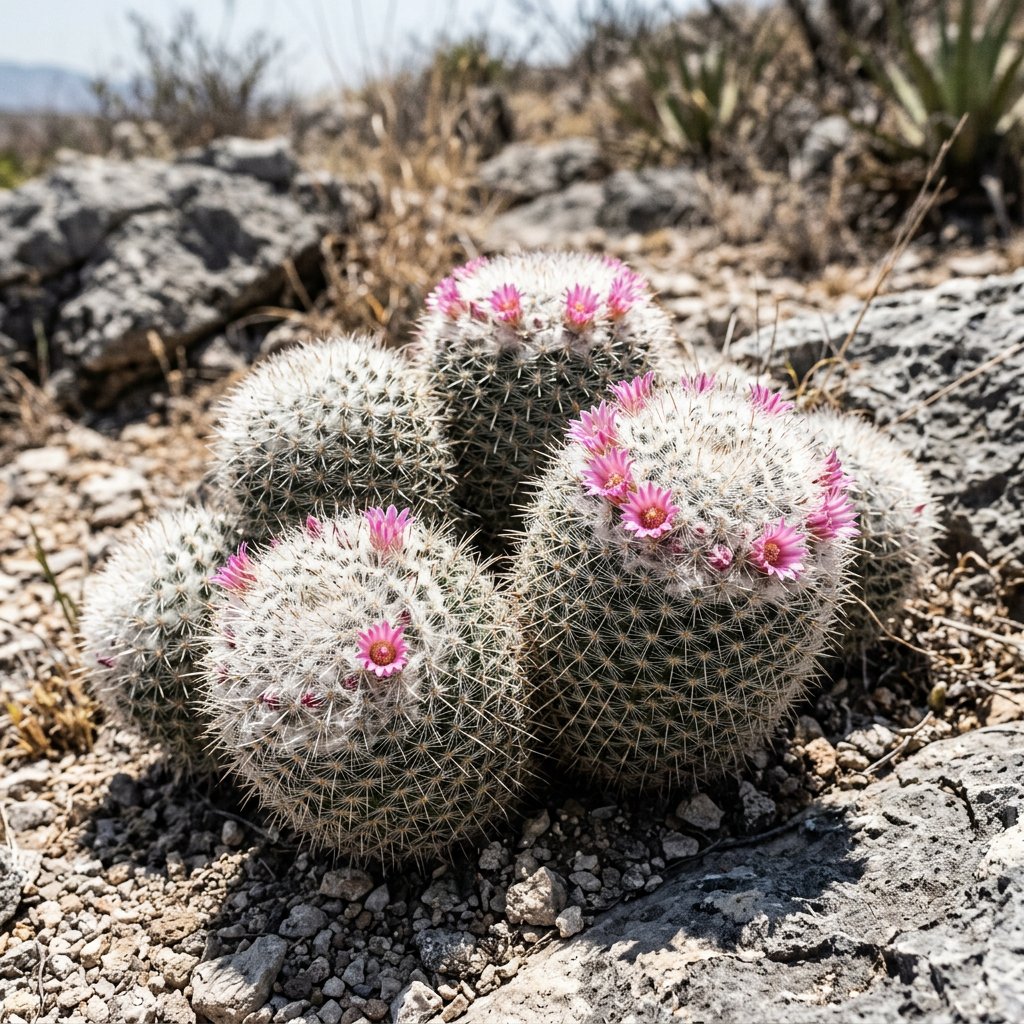
Often called the White-wooly Pincushion, Mammillaria albilanata is a charming desert traveler from the high-altitude regions of Mexico. It looks as though it has been caught in a gentle snowstorm, covered in a dense coat of white spines and soft wool that protects it from the harsh sun. This "living snowball" is a favorite for windowsill gardeners who want a plant that looks like a piece of art even when it isn't blooming.
🔍 How to Identify
- 🌵 Body Shape: It starts as a small, solitary globe but can stretch into a short cylinder as it matures, usually staying under 6 inches in height.
- 🧶 The "Wool": The spaces between its bumps (axils) are filled with dense, white woolly fibers, giving it a soft, fuzzy appearance from a distance.
- 🌸 Floral Crown: In the spring, it produces a perfect ring of tiny, vibrant pink or deep red flowers that emerge near the top of the plant like a floral headband.
🏡 In Your Garden
- ☀️ Light Lover: This cactus thrives in bright, indirect light. While it loves the sun, its white wool acts like a natural sunscreen; however, in extreme heat, it appreciates a bit of afternoon shade to prevent "scorching" beneath its spines.
- 💧 The "Drought" Rule: It has a very sensitive root system that hates "wet feet." It is better to forget to water it for a month than to water it twice in one week. Use a very gritty, mineral-heavy cactus mix to ensure water zips right through.
- 🪴 Slow & Steady: It is a slow grower, making it the perfect low-maintenance companion for small decorative pots or rocky "dish gardens" where it won't outgrow its home quickly.
⚠️ Safety & Toxicity
- 🌵 Physical Hazard: While not chemically toxic, the spines are short, stiff, and numerous. They can easily prick curious fingers or paws, leading to minor skin irritation.
- 🐾 Pet Safety: It is generally considered non-toxic to cats and dogs if nibbled, but the sharp spines are a significant "keep-away" signal that usually prevents pets from doing any real damage.
✨ Fun Fact
The species name albilanata comes from the Latin words albus (white) and lanatus (wooly). In its native Mexican habitat, this thick white "hair" isn't just for looks—it actually traps a layer of cool air against the plant's skin, acting like a built-in air conditioner!

Detailed Care Instructions
To grow a Mammillaria Albilanata plant, follow these steps:
- Choose the right location: Mammillaria Albilanata prefers a bright, filtered sunlight location. It should be protected from direct, intense sun exposure.
- Soil and pot: Use a well-draining cactus potting mix or create your own by combining regular potting soil with coarse sand or perlite. Use a pot with drainage holes to prevent waterlogging of the roots.
- Planting: Gently remove the plant from its nursery pot and place it in the center of the new pot. Fill the sides with the prepared potting mix, making sure to leave some space at the top for watering.
- Watering: Mammillaria Albilanata is drought-tolerant and doesn't like to be over-watered. Allow the soil to dry out between waterings. It is advisable to water deeply but infrequently to mimic its natural desert environment.
- Temperature and humidity: Mammillaria Albilanata prefers warm temperatures between 60-80°F (15-27°C). It can tolerate slightly cooler temperatures but should be protected from frost. It thrives in low humidity environments, so avoid high humidity conditions.
- Fertilizer: During the growing season (spring and summer), you can feed your Mammillaria Albilanata with a diluted cactus fertilizer once a month. Follow the instructions provided with the fertilizer for proper dosage.
- Repotting: Mammillaria Albilanata generally prefers to be slightly root-bound. However, if the plant outgrows its current pot or soil becomes compacted, you can repot it into a slightly larger pot with fresh potting mix.
- Pruning: Pruning is not necessary for Mammillaria Albilanata, but you can remove any dead or dying parts of the plant using clean, sterilized pruning shears.
- Pests and diseases: Keep an eye out for common cactus pests such as mealybugs or spider mites. If you notice any infestation, treat it with appropriate organic or chemical insecticides following the instructions on the label.
Remember to research and understand the specific needs of the Mammillaria Albilanata plant as individual care requirements may vary slightly.

Place in a bright room that is sun drenched almost all day. Or directly in a south-facing window.

To water this type of plant, you should give it a sufficient amount of water to keep the soil moist but not overly saturated. It is important to allow the soil to dry out slightly in between waterings, as overwatering can lead to root rot and other issues. During the growing season, it may be necessary to water more frequently, perhaps once every two weeks or so, but during the winter months, when the plant is dormant, watering can be reduced to once a month or even less. When watering, it is best to avoid getting water on the plant's leaves and stem, as this can lead to mold and other problems. It is also important to use a well-draining potting mix that allows excess water to drain away from the roots. Finally, it may be helpful to add a layer of mulch around the base of the plant to help retain moisture and regulate temperature.
To fertilize this plant, you should use a general cactus fertilizer during the growing season. Dilute the fertilizer to half strength and apply it every two weeks. In the winter months, refrain from fertilizing as the plant is in dormancy and won't require as much nutrients. Over-fertilizing can burn the roots, so be sure to follow the instructions carefully.
The ideal soil for Mammillaria Albilanata plant is a well-draining mixture that is composed of a combination of coarse sand, perlite, and finely shredded bark. This mixture should provide the plant with excellent drainage, as well as ensure that the roots do not become waterlogged. Additionally, the soil should be slightly acidic with a pH level of around 6.0-6.5. It is also important to ensure that the soil is not too compacted or dense, as this can prevent proper air circulation to the roots. The plant should be potted in a container with drainage holes, and any excess water should be allowed to drain away quickly to prevent waterlogging.
To propagate this particular plant, you need to first select a healthy parent plant that has strong growth and well-established roots.
The next step is to carefully remove the offsets or pups that grow around the base of the parent plant. This can be done by gently twisting the offsets until they separate from the main plant.
Once you have the offsets removed, allow them to callus over for several days. This helps to prevent moisture from entering the wounds and causing rot.
After the offsets have callused over, you can plant them in a well-draining soil mixture that is designed for cacti and succulents. Water the new plants sparingly and keep them out of direct sunlight until they have established roots.
Over time, the new plants will grow and mature, and you can repeat the propagation process with the new offsets that emerge. This helps to expand your collection of these beautiful cacti and share them with others who appreciate their unique beauty.
Common pests of the mammillaria albilanata include Scale insect, mealybugs, spider mites, thrips. Make a habit of checking your mammillaria albilanata frequently for pests so that any infestations can be caught and managed early.








