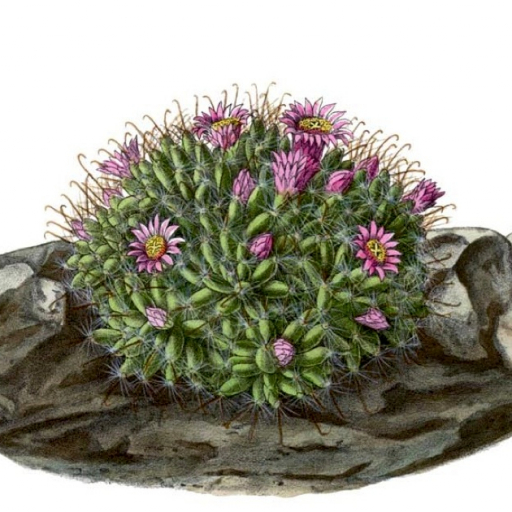
Plant Overview
Often called the Pincushion Cactus or the Bird's Nest Mammillaria, Mammillaria crinita is a small, charismatic succulent from the highlands of Central Mexico. Its dense, fuzzy appearance often makes it look like a tiny, snow-covered ball resting in the desert. While it looks soft from a distance, it is famous among collectors for its hidden "fish-hook" spines that love to snag onto anything that brushes past.
🔍 How to Identify
- 🌵 Body Shape: It typically grows as a small, spherical globe that eventually offsets to form charming, low-growing clusters or "mounds."
- 🪝 The Spines: The plant is covered in two types of spines: soft, white radial spines that look like fine hair, and dark, reddish-brown central spines that are sharply hooked at the tip.
- 🌸 The Flower Halo: In spring, it produces a "crown" of small, funnel-shaped flowers—usually creamy white or pale pink—that emerge in a perfect circle around the top of the plant.
🏡 In Your Garden
- ☀️ Light & Texture: This cactus thrives in bright, direct sunlight, which helps it maintain its tight, globular shape. Without enough light, it will stretch out and lose its signature "pincushion" look.
- 💧 The "Wet Feet" Warning: Because the body is so densely covered in fine spines, it can easily trap moisture against its skin. It is vital to water only the soil, never the plant itself, to prevent fungal rot and "orange spotting."
- 🪨 Soil Nuance: It prefers a very gritty, porous mineral mix. It has a relatively shallow root system, so it performs best in wide, shallow pots rather than deep ones.
⚠️ Safety & Toxicity
- 🩹 Physical Hazard: While not chemically toxic to humans or pets, the central spines are literally shaped like fish hooks. They are difficult and painful to remove if they catch on skin, fur, or clothing.
- 🐾 Pet Safety: Keep this plant out of reach of curious tails and noses; the hooks can easily get stuck in a pet's fur or paw, leading to a stressful trip to the vet.
✨ Fun Fact
The hooked spines of Mammillaria crinita are a clever survival tactic! In the wild, these hooks snag onto the fur of passing animals, allowing small "pups" (offsets) to break off and hitchhike to a new location to start a new colony.

Detailed Care Instructions
To grow Mammillaria crinita, also known as the "Hairy Pincushion Cactus," follow these steps:
- Lighting: Place the plant in a bright area with indirect sunlight. Mammillaria crinita requires at least 6 hours of bright light per day. Avoid placing it in direct sunlight, as it can scorch the plant.
- Temperature: These cacti thrive in temperatures between 60-80°F (15-27°C). Protect them from extreme cold or heat.
- Watering: Water your Mammillaria crinita thoroughly, allowing the soil to dry completely between waterings. Overwatering can cause root rot, which is fatal for cacti. During the growing season (spring and summer), water once a week or when the soil is completely dry. Reduce watering during winter months when the plant enters dormancy.
- Soil: Use a well-draining cactus or succulent mix. You can also create your own by combining regular potting soil with sand and perlite to improve drainage.
- Potting: Choose a pot with drainage holes to prevent water from accumulating. Repot your Mammillaria crinita every 2-3 years, or when the plant outgrows its current pot.
- Fertilizer: Feed your cactus with a diluted low-nitrogen cactus fertilizer once a month during the growing season. Follow the package instructions for proper dosage.
- Humidity: Mammillaria crinita prefers low humidity environments, so no additional humidity is necessary.
- Propagation: Mammillaria crinita can be propagated through offsets or seeds. To propagate offsets, carefully remove them from the main plant and allow them to dry for a few days before planting in well-draining soil. For seed propagation, follow the instructions on the seed packet.
- Pruning: Remove any dead or damaged parts of the plant using garden shears or sharp, clean scissors. Be careful to avoid contact with the spines.
With proper care, your Mammillaria crinita should grow and thrive, producing lovely pinkish flowers in late spring or early summer.

Place in a bright room that is sun drenched almost all day. Or directly in a south-facing window.

Mammillaria Crinita plant should be watered in a way that allows the soil to dry out between waterings. This can be achieved by watering deeply but infrequently, typically once every one or two weeks depending on environmental conditions. It is important to avoid overwatering, as this can lead to root rot and other issues. When watering, use room temperature water and pour directly onto the soil, being careful to avoid getting water on the plant's leaves or stem. It may be helpful to use a well-draining soil mix and a pot with drainage holes to ensure excess water can escape. In addition to proper watering, it is important to provide appropriate light and temperature conditions for optimal plant health.
To fertilize this plant, mix a balanced fertilizer with equal amounts of nitrogen, phosphorus, and potassium. Apply the fertilizer once a month in the growing season, which is usually spring and summer. Be sure to dilute the fertilizer to half the recommended strength to avoid burning the roots. Water the plant first before applying the fertilizer, and avoid getting the fertilizer on the leaves or stem.
Mammillaria crinita plant requires a well-draining soil mix that is optimized for cactus plants. It should be comprised of coarse sand, perlite, and non-organic materials to ensure proper drainage and avoid excess moisture and root rot. The soil should also be slightly acidic with a pH range of 5.5 to 6.5. It is recommended to avoid using regular potting soil or organic matter, such as peat moss or compost, as these can retain moisture and promote fungal growth. Instead, a specialized cactus soil mix can be purchased or mixed at home with the appropriate materials.
To propagate this particular species of plant, you will need to remove offsets or “pups” that grow at the base of the main stem. Wait until the pups are several inches tall and have developed roots of their own. Gently remove the pup from the parent plant, taking care not to damage its roots or stem. Allow the pup to air dry for several days before planting it in well-draining soil. Water it sparingly until roots become established in the new soil.
Common pests of the long hair coctus include Scale insect, mealybugs, spider mites, thrips. Make a habit of checking your long hair coctus frequently for pests so that any infestations can be caught and managed early.








