Plant Overview
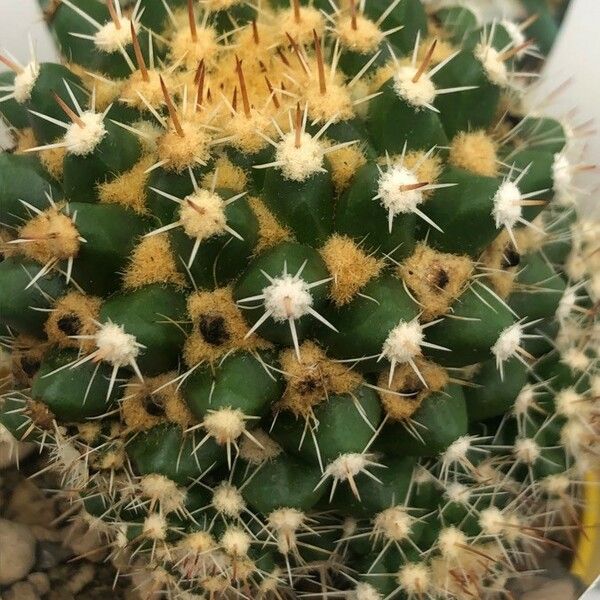
Often referred to as the "Eichlam's Pincushion," Mammillaria eichlamii is a charming, globose cactus that brings a touch of the arid tropics to your windowsill. Originating from the rocky slopes of Guatemala, this plant is a favorite among succulent collectors for its geometric precision and delightful crown of pink-to-magenta flowers that emerge like a halo around the stem.
🔍 How to Identify
- 🌵 Body Shape: It typically starts as a solitary, globe-shaped body that may cluster into small, tight mounds as it matures.
- 🌸 Floral Halo: During the blooming season, small, vivid pink flowers form a distinct ring near the top of the stem, contrasting beautifully with its emerald skin.
- 🪡 Spine Pattern: The spines are relatively fine and hair-like compared to other cacti, radiating from small tubercles, which gives it a soft, "pincushion" appearance despite the prickly reality.
🏡 In Your Garden
- ☀️ Light Needs: While it enjoys bright, direct light, it appreciates a bit of afternoon shade in extreme summer heat to prevent "sunburn" on its delicate skin.
- 💧 Watering Wisdom: Because it stores water in its fleshy tubercles, it is highly susceptible to root rot; always allow the soil to dry out completely between waterings, and keep it bone-dry during the winter dormancy period.
- 🌱 Substrate: It thrives in a fast-draining gritty mix; think of the rocky cliffside it calls home rather than rich, moisture-retaining potting soil.
⚠️ Safety & Toxicity
- 🚫 Toxicity: While Mammillaria species are generally considered non-toxic to humans and pets, the physical danger lies in the spines.
- 🧤 Handling: Use thick gloves or folded newspaper when repotting. The tiny, hooked spines can easily lodge in skin or pet paws, causing localized irritation. Keep it out of reach of curious cats or small children who might be tempted to touch its soft-looking exterior.
✨ Fun Fact
The name Mammillaria comes from the Latin word mamilla, meaning "nipple," which refers to the unique, bump-like tubercles that cover the surface of the plant. These tubercles aren't just for decoration—they are highly efficient structures designed to maximize the surface area for photosynthesis while minimizing water loss in harsh, sun-drenched environments.

Detailed Care Instructions








