Plant Overview
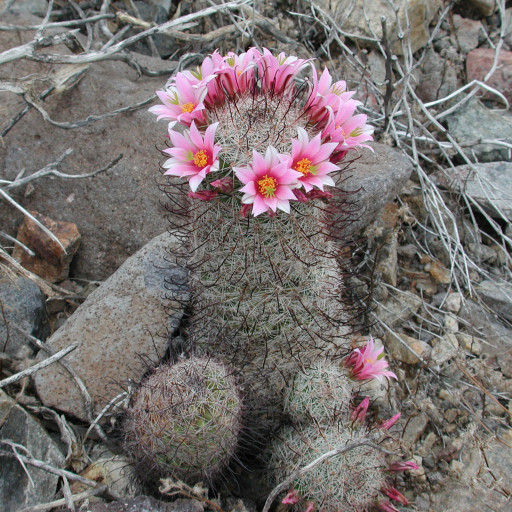
Known affectionately as the "Graham’s Pincushion" or the "Arizona Fishhook Cactus," this desert gem is a resilient staple of the American Southwest. Its unique hooked spines look like tiny fishing rods prepared to catch anything that brushes past. Despite its prickly exterior, it is beloved by collectors for the stunning "floral crown" it wears during the spring and summer months.
🔍 How to Identify
- 🪝 The Hooks: It features distinctive, dark-colored central spines that curve sharply at the end, looking exactly like miniature fishhooks.
- 🟢 The Body: The plant is small and globular to cylindrical, covered in "tubercles" (nipple-like bumps) rather than the long vertical ribs found on many other cacti.
- 🌸 The Crown: It produces a striking halo of bright pink or lavender funnel-shaped flowers that bloom in a circle near the top of the stem.
🏡 In Your Garden
- 🏜️ Drainage is King: This cactus hates "wet feet." In a home setting, it requires a very gritty, porous soil mix. It is far more likely to die from a single overwatering than from a long drought.
- ☀️ Light Nuance: While it thrives in the intense desert sun, potted specimens can actually suffer from "sunburn" if moved abruptly from a dark room to a bright balcony. Introduce it to direct light gradually.
- ❄️ Winter Dormancy: To encourage those beautiful pink blooms, the plant needs a dry, cool resting period during the winter. Stop watering almost entirely when the temperature drops.
⚠️ Safety & Toxicity
- 🌵 Mechanical Injury: Mammillaria grahamii is non-toxic if nibbled, but its spines are a significant physical hazard.
- 🐾 The "Snag" Factor: Because the spines are hooked, they do not just prick; they latch onto fur, clothing, and skin. Removing a hooked spine from a curious dog’s nose or a child’s finger can be a difficult and painful process. It is best kept on a high shelf or in a protected area.
✨ Fun Fact
🍓 Desert Candy: After the flowers fade, the cactus produces small, elongated red fruits known as "chilitos." These fruits are completely edible and have a zesty, tart flavor that many people compare to a cross between a strawberry and a cranberry!

Detailed Care Instructions
To grow a Mammillaria Grahamii plant, also known as Graham's nipple cactus, you can follow these steps:
- Select a suitable pot or container: Choose a pot with drainage holes on the bottom to ensure proper drainage. A terracotta or clay pot is ideal since it allows air circulation and absorbs excess moisture.
- Soil mix: Use a well-draining soil mix specifically formulated for cacti and succulents. You can also create your own mixture by combining regular potting soil with perlite or sand to increase drainage.
- Planting: Gently place the Mammillaria Grahamii plant into the prepared pot, ensuring that the roots are well-covered with soil. Leave some space between the soil surface and the rim of the pot for watering.
- Light and temperature: Place your plant in a bright location with indirect sunlight. Mammillaria Grahamii plants thrive in temperatures ranging from 60°F to 80°F (15°C to 27°C). Protect them from frost during winter months.
- Watering: Water the plant sparingly. Allow the soil to dry out almost completely between watering sessions, as overwatering can lead to root rot. Water from the base and avoid getting water on the plant's body to prevent rotting.
- Humidity and ventilation: Mammillaria Grahamii plants prefer low humidity environments, so no additional humidity is required. Ensure good airflow around the plant, as stagnant air can lead to fungal issues.
- Fertilization: During the active growing season (spring and summer), you can fertilize your plant once a month using a balanced cactus fertilizer diluted to half strength. Reduce or eliminate fertilization during the dormant winter period.
- Pruning and repotting: Over time, your Mammillaria Grahamii plant may produce offshoots or pups. You can remove these carefully and replant them in separate containers to propagate new plants. Repotting is typically done every few years when the plant outgrows its current pot.
Remember to wear appropriate gloves when handling these cacti, as they have sharp spines that can cause irritation or injury.
With proper care and attention to their specific needs, your Mammillaria Grahamii plant should thrive and grow.

Place in a bright room that is sun drenched almost all day. Or directly in a south-facing window.

To water this particular species of cactus plant, it is important to use a watering can or dropper to ensure a controlled amount of water is applied to the soil. It is recommended to water the plant thoroughly but only once the soil has completely dried out. Overwatering can lead to root rot and damage to the plant. Additionally, it is important to avoid getting water on the body or foliage of the plant as this can cause damage or disease. It is best to water at the base of the plant, allowing the soil to absorb the water and distribute it to the roots. Overall, it is crucial to maintain proper watering habits and check the soil regularly to prevent any potential harm to the plant.
To fertilize this plant, use a balanced fertilizer with equal parts nitrogen, phosphorus, and potassium. Apply the fertilizer to the soil every two weeks during the growing season, which is typically from spring to fall. In the winter months, reduce fertilizing to once a month. Be sure to water the plant thoroughly before and after fertilizing to avoid burning the roots. Follow the instructions on the fertilizer package for the appropriate amount to use based on the size of your plant.
Mammillaria Grahamii plant requires a well-draining soil that is not water-logged. It prefers sandy to loamy soil that has a neutral pH level. Soil that retains too much moisture can lead to rotting of the roots and other parts of the plant. A suitable soil mix for this plant can be made by combining coarse sand, perlite, and peat moss in equal parts. This will provide good drainage and aeration, which are crucial for the healthy growth of the plant. It is also important to avoid using heavy clay or compacted soil, which can trap water and lead to root rot.
To propagate this plant, first prepare a well-draining potting mix with a combination of sand and perlite. Next, carefully remove offsets or pups from the mother plant, ensuring that they have developed their own root system. Allow the cuttings to dry for a few days so that they form a callus. Then, place the cuttings into the prepared potting mix, and water sparingly until the roots become established. Provide bright light and allow the soil to dry out before watering again. With appropriate care, the propagations should grow into healthy mature plants.
Common pests of the graham's nipple cactus include Scale insect, mealybugs, spider mites, thrips. Make a habit of checking your graham's nipple cactus frequently for pests so that any infestations can be caught and managed early.








