Plant Overview
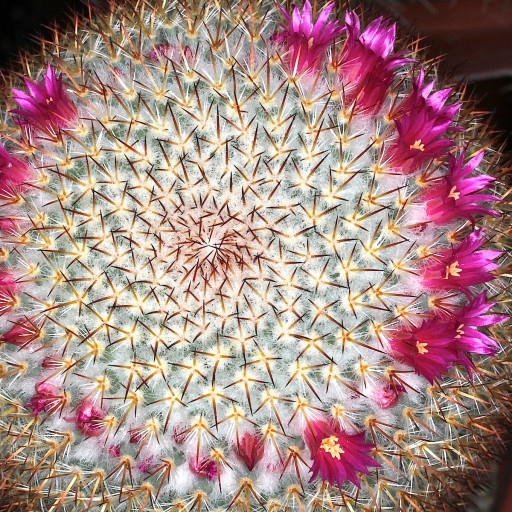
Known to many collectors as the Haage’s Pincushion, this Mexican native is a geometric marvel of the desert. It looks like a masterfully woven ball of white silk, often forming a perfect sphere before slowly elongating as it matures. In the spring, it rewards its keepers with a stunning "halo" of tiny, vibrant magenta flowers that crown its top like a royal tiara.
🔍 How to Identify
- 🌵 The Stem: It features a globose (round) body that gradually becomes cylindrical over time, typically staying under 6 inches in height in home collections.
- 🧶 The Spines: The plant is densely covered in up to 30 fine, white radial spines that create a "frosted" look, accented by 2 to 4 darker-tipped central spines.
- 🌸 The Flower Ring: It is famous for its "floral crown"—a distinct circle of small, funnel-shaped blossoms in shades of carmine or deep pink that appear near the apex.
🏡 In Your Garden
- ☀️ Light & Protection: This cactus craves bright, indirect light. While it loves the sun, the dense white spines actually act as a natural parasol, reflecting intense UV rays to keep the plant's "skin" from scorching.
- 🪴 Soil Nuance: It prefers a very "lean" and gritty mineral mix. Because it has a sensitive root system, it is best to avoid frequent repotting; only move it when it has completely outgrown its container to avoid transplant shock.
⚠️ Safety & Toxicity
- ✅ Safe Status: Mammillaria haageana is generally considered non-toxic to humans, cats, and dogs. It contains no known harmful alkaloids.
- 🌵 Physical Warning: While not chemically toxic, the central spines are stiff and sharp. The "fuzzy" appearance can be deceptive to curious pets or toddlers, who may get a painful poke if they try to touch the plant.
✨ Fun Fact
The genus name Mammillaria comes from the Latin word mamilla, which means "nipple." This refers to the unique, bump-like structures (tubercles) that cover the plant's surface, rather than the continuous vertical ribs found on most other cacti.

Detailed Care Instructions
To grow a Mammillaria Haageana plant, follow these steps:
- Choose a suitable pot: Select a small, shallow pot with drainage holes. Mammillaria Haageana prefers well-draining soil and does well in terracotta pots.
- Soil mix: Use a cactus potting mix or create your own by combining regular potting soil with perlite or coarse sand to improve drainage. Avoid using heavy soils that retain moisture.
- Planting: Fill the pot with the prepared soil mix, leaving some space at the top. Carefully remove the Mammillaria Haageana plant from its nursery pot, taking care not to damage its roots. Place the plant in the center of the pot and gently backfill with soil, ensuring the roots are covered.
- Placement: Mammillaria Haageana requires bright, indirect sunlight. Place the plant near a south or west-facing window where it can receive bright light but avoid direct, intense sunlight, which can scorch the plant. If sunlight is limited, you can use artificial grow lights to supplement.
- Watering: Mammillaria Haageana is a drought-tolerant plant and prefers infrequent but deep watering. Only water when the soil is dry to touch, but avoid overwatering as it can lead to root rot. During the growing season (spring and summer), water approximately once a week. In the dormant period (fall and winter), reduce watering to once every two to three weeks.
- Humidity and temperature: Mammillaria Haageana is adapted to arid conditions and does not require high humidity. Average household humidity is usually sufficient. The ideal temperature range is between 70-80°F (21-27°C) during the day and cooler at night, around 60-65°F (15-18°C).
- Fertilizing: During the growing season, you can feed the plant once a month with a balanced cactus fertilizer diluted to half strength. Avoid fertilizing during the dormant period.
- Repotting: Mammillaria Haageana grows slowly and usually doesn't require frequent repotting. However, if the plant becomes root-bound or outgrows its pot, it can be repotted during the spring or early summer into a slightly larger pot using fresh cactus soil.
- Pests and diseases: Mammillaria Haageana is generally resilient to pests and diseases. However, common issues can include mealybugs, scale insects, or fungal diseases. Regularly inspect the plant and treat any infestations or infections promptly.
Remember to research and understand the specific needs of your Mammillaria Haageana plant, as there may be variations within the species.

Place in a bright room that is sun drenched almost all day. Or directly in a south-facing window.
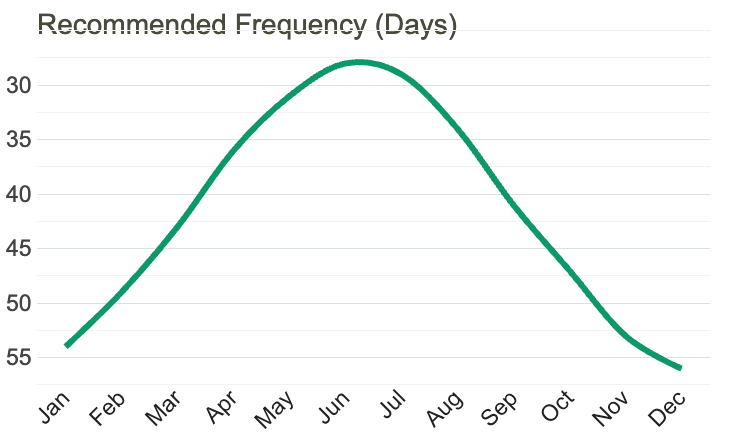
To properly water this plant, it is important to first understand its watering needs. The frequency and amount of watering can vary depending on the environment, time of year, and growth stage of the plant.
One way to determine if the plant needs watering is by checking the soil moisture level. One can do this by sticking a finger into the soil up to the second knuckle. If the soil feels dry, it’s time to water the plant.
When watering, it’s important not to over-water the plant as this can lead to root rot. The plant should be watered thoroughly, meaning watering until water drains from the bottom of the pot. The excess water should be discarded, never leaving the plant sitting in standing water.
When watering, it’s important to avoid getting water on the plant’s leaves. This can lead to the growth of mold or fungus. Instead, water the soil directly.
Finally, it’s important to adjust the watering schedule based on the season. During the hotter months, the plant may need to be watered more frequently. During the cooler months, the plant may need less water.
To fertilize the plant, use a balanced fertilizer with equal amounts of nitrogen, phosphorus, and potassium. During the growing season, apply the fertilizer once every two to three weeks, diluting it to half strength. When applying the fertilizer, make sure to water the plant beforehand and avoid getting any on the foliage or stems. Reduce the frequency of fertilizer applications during the winter months when growth slows down.
Mammillaria Haageana requires a well-draining soil mix that is slightly acidic to neutral in pH. The soil should be a sandy loam or a mix of sand and fine-grained materials such as perlite or pumice to ensure water drains away from the roots quickly. The ideal soil mix should contain good quality humus, nutrients, and trace minerals to support healthy plant growth. It is recommended to avoid soils with high levels of organic matter, as it can retain too much moisture and lead to root rot. Additionally, it is important to ensure that the soil is not too compacted, as it can impede root growth and development.
To propagate this species of plant, first obtain a healthy specimen with several stems and mature roots. Using sterilized pruning shears, carefully separate one of the stems from the rest of the plant, leaving a clean, smooth cut. Allow the cut end to callus over for several days to prevent infection.
Prepare a well-draining growing medium consisting of equal parts sand and perlite. Fill a small pot with the prepared soil mixture, leaving about an inch of space at the top.
Next, dip the cut end of the stem in rooting hormone powder to encourage root growth. Gently insert the stem into the soil mixture, being careful not to damage the new roots.
Place the potted cutting in a warm, bright location, but protect it from direct sunlight. Water sparingly, only when the soil is completely dry. Overwatering can cause the new roots to rot.
After a few weeks, check for signs of new growth. Once the new plant has established roots and is growing vigorously, it can be gradually acclimated to brighter sunlight and watered more frequently.
Common pests of the mammillaria haageana include Scale insect, mealybugs, spider mites, thrips. Make a habit of checking your mammillaria haageana frequently for pests so that any infestations can be caught and managed early.








