Plant Overview
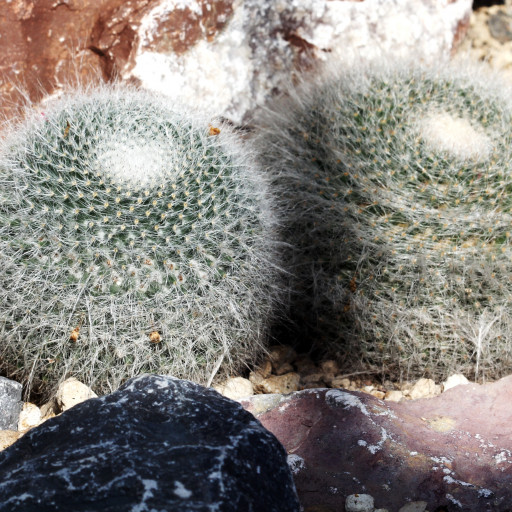
Nicknamed the Old Lady Cactus, this Mexican native is a favorite among succulent collectors for its charming, "frosty" appearance. It gets its name from the dense, white hair-like bristles that wrap around its spherical body, making it look like a wise, white-haired grandmother sitting in the sun. In the spring, it rewards its keepers with a stunning "crown" of vibrant pink flowers.
🔍 How to Identify
- 🌵 Body Shape: Naturally grows as a solitary globe, but as it matures, it may form a cluster of smaller rounded offsets.
- 🦳 The "Hair": It is covered in soft, white radial spines and long, hair-like bristles that give it a fuzzy, woolly texture.
- 🌸 The Halo: During blooming season, small, funnel-shaped flowers appear in a perfect circle around the top of the plant, resembling a floral tiara.
🏡 In Your Garden
- ☀️ Sun Protection: Those white hairs aren't just for show—in the wild, they act as a natural sunscreen, reflecting intense UV rays and trapping a layer of air to keep the plant cool.
- 💧 Drought Strategy: Like many Mexican cacti, it stores water in its thick stem. It is highly susceptible to root rot, so it prefers a "soak and dry" method where the soil is allowed to turn completely bone-dry before the next drink.
- 🪴 Winter Rest: This plant appreciates a cool, dry dormancy period in the winter. Reducing water during the cold months helps encourage those beautiful flower rings to form come springtime.
⚠️ Safety & Toxicity
- 🟢 Non-Toxic: Good news for pet owners—the Mammillaria hahniana is generally considered non-toxic to cats, dogs, and horses.
- 🌵 Hidden Spines: While the long white hairs look soft and "pet-able," don't be fooled! Sharp, stiff spines are often hidden beneath the fuzz, which can easily prick curious fingers or paws.
✨ Fun Fact
In its native habitat in the high deserts of Mexico, the Old Lady Cactus is unfortunately considered a "near-threatened" species due to illegal collection and habitat loss. Growing one from a reputable nursery helps keep the wild populations safe!

Detailed Care Instructions
| Color | Pink |
| Humidity | Dry |
| Lighting | Full Sun |
| Toxicity | Non-Toxic |
| Soil Type | Rich, Well-Draining, Sandy Soil |
| Bloom Time | Spring, Summer |
| Difficulty | Easy |
| Hibernation | Cold Period |
| Temperature | 20°C - 35°C |
| Sun Exposure | Bright, Even Light |
| Hardiness Zones | Min 9A |
To grow Mammillaria hahniana, also known as Old Lady Cactus, you can follow these steps:
- Choose a well-draining pot: Select a pot with drainage holes to prevent waterlogging, as these plants are susceptible to root rot.
- Soil mixture: Use a cactus or succulent potting mix or create your own by combining equal parts of regular potting soil, perlite, and coarse sand. This mixture provides good drainage.
- Planting: Gently remove the plant from its nursery pot and place it into the new pot. Ensure the plant is positioned at the same depth as it was in the previous pot. Avoid burying the plant deeper as it can cause rot.
- Sunlight: Mammillaria hahniana thrives in bright light, preferably a few hours of direct sunlight each day. Place the plant near a south-facing window or in a well-lit area indoors.
- Temperature: These cacti prefer warmer temperatures. Keep the plant at an average room temperature between 70-80°F (21-27°C) during the day and around 50-60°F (10-15°C) at night.
- Watering: Allow the soil to dry out completely between waterings. Water thoroughly, ensuring the excess water drains out completely. Avoid overwatering, as it can lead to root rot. During winter, reduce watering frequency.
- Fertilization: Feed the cactus every two months during the growing season (spring through summer) using a balanced cactus fertilizer diluted to half strength. Avoid fertilizing during winter when the plant goes into its dormant phase.
- Propagation: Mammillaria hahniana can be propagated through seeds or offsets. When offset plants appear, carefully separate them from the main plant and replant them in a separate pot. Seeds can be sown in well-draining soil.
- Pruning: If the cactus grows too tall or becomes unbalanced, you can prune it using clean, sterilized pruning shears. Wear gloves to protect yourself from spines. Allow the cut end to dry before replanting.
Remember, these plants are slow-growing, so be patient and avoid excessive care. With proper growing conditions and minimal intervention, Mammillaria hahniana can thrive and produce beautiful flowers.

Place in a window with dappled sun or a spot in the middle of a room. Or directly in a window facing west or east.

Mammillaria Hahniana is a small cactus that requires careful watering to ensure its health and survival. To water this plant, you should start by checking the soil moisture level by pressing your finger 1 inch into the soil. If the soil feels dry, it's time to water.
Use a watering can with a narrow spout to pour water directly onto the soil around the base of the plant. Avoid getting water on the plant's body, as this can cause it to rot. Water slowly and evenly until excess water drains out of the bottom of the pot.
Wait until the soil dries out completely before watering again. In general, Mammillaria Hahniana requires less frequent watering during the winter months when it is likely to be dormant.
It's important to note that overwatering is one of the most common causes of plant death for Mammillaria Hahniana. Always err on the side of underwatering rather than overwatering, and make sure the plant is in a well-draining soil mix and pot.
To fertilize your Mammillaria Hahniana plant, follow these instructions:
- Choose a balanced fertilizer with an N-P-K ratio of 10-10-10 or similar. This ratio indicates the percentage of nitrogen (N), phosphorus (P), and potassium (K) in the fertilizer, providing a balanced nutrient supply.
- Dilute the fertilizer according to the package instructions. Generally, a dilution ratio of 1:2 or 1:4 fertilizer to water is recommended.
- Apply the diluted fertilizer to the soil around the base of the plant. Avoid pouring it directly onto the plant's body or spines.
- Use a watering can or spray bottle to evenly distribute the fertilizer solution.
- Generally, fertilize the plant once every two to four weeks during the growing season, typically from spring to fall. However, always check the specific fertilizer's instructions for accurate timing and frequency.
- Avoid fertilizing the plant during its dormant period, which usually occurs in winter. During this time, reduce watering and withhold fertilization to allow the plant to rest.
- Additionally, monitor the plant's response to the fertilizer. If you notice excessive growth or signs of nutrient burn, decrease the fertilizer concentration or frequency accordingly.
- Finally, always follow the recommended dosage and safety instructions provided by the fertilizer manufacturer to ensure proper usage for your Mammillaria Hahniana plant.
The soil suitable for the plant in question should have good drainage and be well-aerated. A mixture of sandy soil and perlite or pumice can be used to achieve this. It is important to avoid using soils that are too rich in organic matter, as this can cause the roots to rot. Additionally, the pH of the soil should be slightly acidic, around 6.0-6.5. It is recommended to repot the plant every 2-3 years to ensure it has fresh soil and room for growth.
Mammillaria Hahniana can be propagated through offsets or seeds.
- Offsets: Wait for a mature plant to produce offsets, which are small plants growing from the base of the main plant. When the offsets are about a third or half the size of the main plant, separate them carefully using a clean and sharp knife. Let the cut area dry for a few days before planting in well-draining soil. It is essential to avoid overwatering the newly planted offsets to avoid rot.
- Seeds: Collect ripe fruits from the plant and remove the seeds. Sow the seeds in well-draining soil mix that is moist but not soggy, and cover the pot with a plastic wrap to retain moisture. Place it in a warm place with bright, indirect light, and keep the soil consistently moist, but not wet. Germination can take up to three weeks, depending on the temperature and humidity. Once the seedlings emerge, remove the plastic wrap and gradually adjust them to full light conditions.
Note: It is important to handle the plant and seeds with gloves to avoid skin irritation or injury from the plant's spines.
Common pests of the old-lady pincushion include Scale insect, mealybugs, spider mites, thrips. Make a habit of checking your old-lady pincushion frequently for pests so that any infestations can be caught and managed early.








