Plant Overview
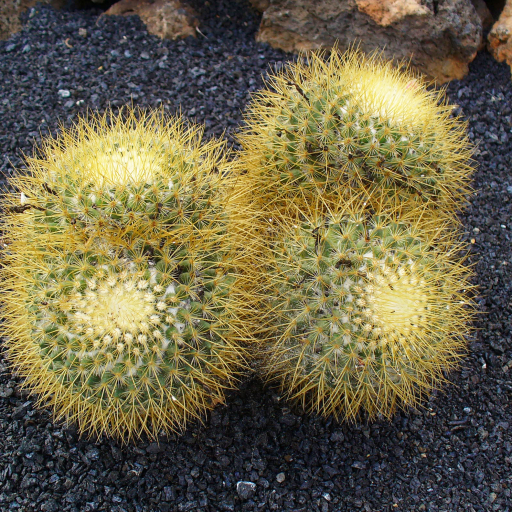
Known affectionately as the Lemon Ball Cactus or Golden Pincushion, Mammillaria pringlei is a sun-loving treasure from the rocky terrains of central Mexico. Wrapped in a radiant coat of golden-yellow spines, it looks like a glowing orb tucked into a desert landscape. It is cherished by collectors for its near-perfect symmetry and the charming "crown" of vibrant flowers it wears during the spring.
🔍 How to Identify
- 🌵 The Body: Grows as a solitary, globe-shaped stem that eventually becomes cylindrical, reaching about 6 to 8 inches in height.
- ✨ The Spines: Densely covered in stiff, golden-yellow spines that radiate outward, often obscuring the green flesh of the cactus entirely.
- 🌸 The Bloom: Produces a distinctive ring (or "halo") of small, deep pink to reddish-purple flowers near the apex of the plant.
🏡 In Your Garden
- ☀️ Sun Seeker: This cactus is a true sun-worshipper; if it doesn't receive enough direct light, the golden spines will look dull, and the plant will stretch out of its beautiful round shape.
- 🪴 Drainage is Key: Like many Mexican cacti, it hates "wet feet." It is best grown in a porous, grit-heavy soil mix and prefers terracotta pots which allow the roots to breathe and dry out quickly between waterings.
⚠️ Safety & Toxicity
- 🌵 Physical Hazard: While the plant is generally considered non-toxic if accidentally nibbled, its spines are a different story.
- 🚫 Sharp Spines: The spines are very stiff and sharp. They can easily puncture skin or get stuck in fur, so it should be kept on a high shelf away from curious pets and small children.
✨ Fun Fact
The genus name Mammillaria comes from the Latin word mammilla, meaning "nipple," referring to the small, bump-like tubercles that cover the surface of the cactus instead of the continuous ribs found on other species!

Detailed Care Instructions








