Plant Overview
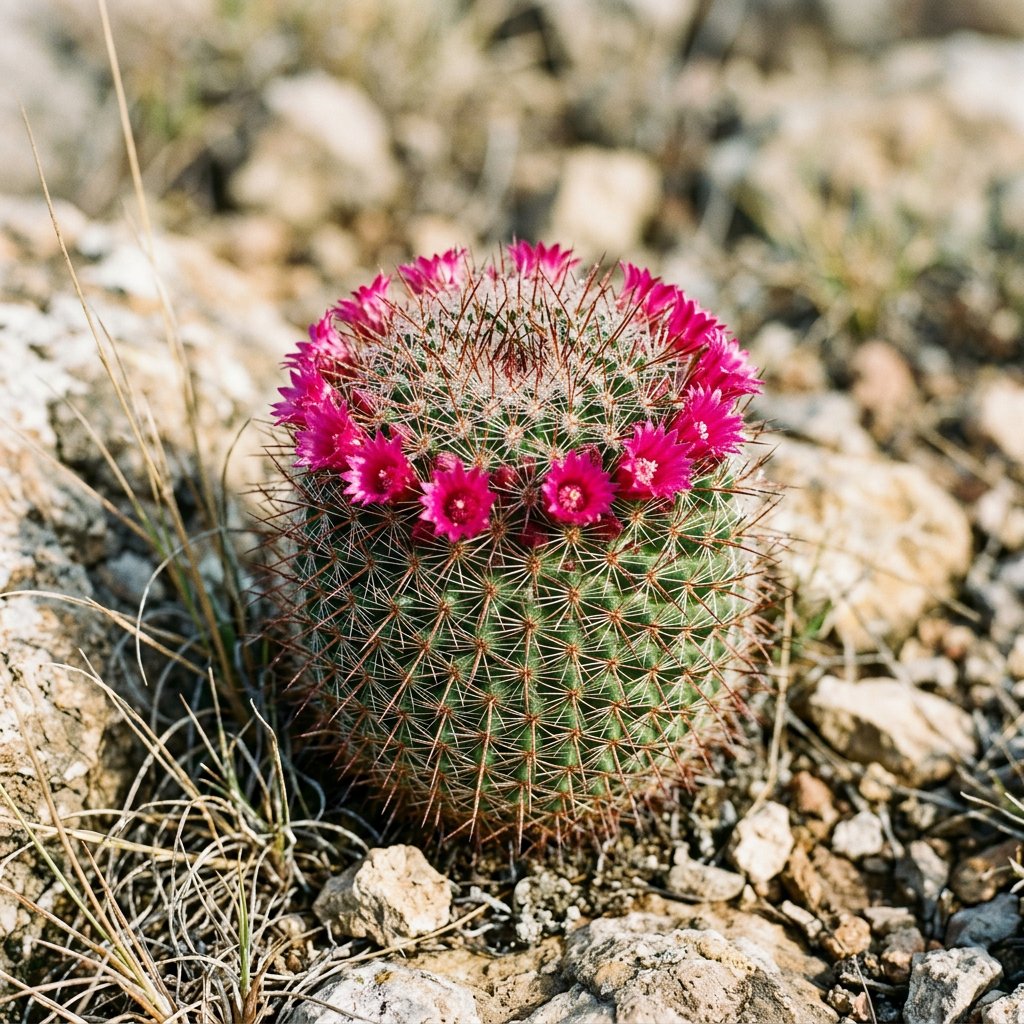
Affectionately known as the "Red-Headed Irishman," Mammillaria spinosissima is a stunning cylindrical cactus hailing from the central mountains of Mexico. Its dense coat of coppery-red spines gives it a fuzzy, glowing appearance from a distance, but those bristles are surprisingly sharp. It is a favorite among succulent collectors because it reliably produces a perfect "halo" of vibrant pink flowers around its crown every spring.
🔍 How to Identify
- 🌵 Cylindrical Form: Unlike ball-shaped cacti, this species grows into an upright, pillar-like shape, eventually reaching about 12 inches in height.
- 🔴 Dense Spination: The body is almost entirely hidden by a thick mat of needle-like spines that range from deep reddish-brown to a bright copper-gold.
- 🌸 Floral Crown: It produces a distinct ring of small, funnel-shaped flowers in shades of magenta or deep pink that circle the top of the plant like a floral headband.
🏡 In Your Garden
- ☀️ Light & Color: To keep its "red-headed" look, this cactus needs very bright light. Without enough sun, the new spines will grow in pale and weak, and the plant will lose its compact, iconic shape.
- 💧 The "Drought" Rule: This plant is a desert survivor; it hates "wet feet." It requires a very gritty, fast-draining potting mix. Only water when the soil is bone-dry to the touch, and almost never during the cold winter months to prevent rot.
⚠️ Safety & Toxicity
- 🌵 Physical Hazard: While the plant is not chemically toxic or poisonous, its spines are extremely sharp and numerous. They can easily pierce skin or get lodged in a pet's fur or paws.
- 🐾 Placement: Keep this cactus on a high shelf or in a stable decorative pot. It is best kept out of reach of curious cats, dogs, and toddlers who might be tempted by its "fuzzy" appearance.
✨ Fun Fact
In its native Mexican habitat, the Red-Headed Irishman is often found clinging to vertical limestone cliffs. Its dense network of spines acts like a tiny weather system, trapping a layer of still air against the plant's skin to insulate it from both the scorching daytime heat and the chilly mountain nights.

Detailed Care Instructions
| Soil Ph | Acidic |
| Humidity | Dry |
| Lighting | Full Sun |
| Soil Type | Sandy, Well-Drained |
| Bloom Time | Summer |
| Difficulty | Easy |
| Plant Type | Cactus |
| Mature Size | Up To 12 In. Tall |
| Native Area | Mexico |
| Temperature | 20°C - 35°C |
| Sun Exposure | Full Sun |
| Hardiness Zones | 9-11 |
If you want to grow a Mammillaria Spinosissima plant, here are some general steps to follow:
- Choose the right location: Mammillaria Spinosissima plants prefer bright indirect sunlight. Place them near a south-facing window or provide artificial grow lights. They also need good air circulation.
- Select a well-draining pot: Use a clay or terracotta pot with drainage holes to prevent waterlogging. Mammillaria Spinosissima plants prefer a slightly acidic to neutral pH soil mix, such as cactus mix or a combination of potting soil, sand, and perlite.
- Watering: Allow the soil to dry thoroughly between waterings. Mammillaria Spinosissima is drought-tolerant and too much water can cause root rot. Water when the top inch of soil is dry, and make sure to water the base of the plant rather than spraying the entire plant.
- Temperature and Humidity: Mammillaria Spinosissima plants prefer temperatures between 70-80°F (21-27°C) during the growing season and cooler temperatures around 50-60°F (10-16°C) during the winter. They prefer dry, low humidity environments.
- Fertilization: Use a diluted, balanced cactus fertilizer once a month during the growing season (spring and summer). Follow the instructions on the fertilizer packaging for appropriate dilution ratios.
- Propagation: Mammillaria Spinosissima can be propagated through offsets or seeds. To propagate through offsets, wait for the plant to produce small, new pups, and carefully separate them from the mother plant using a sharp, sterilized knife. Allow the offset to dry for a few days, then plant it in a well-draining soil mix. For seeds, sow them on the soil surface and cover lightly with a thin layer of soil. Keep the soil slightly moist until germination.
- Pruning: Prune any dead or damaged parts of the plant with clean, sterilized tools. Be careful when handling Mammillaria Spinosissima plants as they have spines that can cause irritation or injury.
Remember to regularly monitor your Mammillaria Spinosissima plant for pests such as mealybugs or spider mites. Treat any infestations promptly using appropriate pest control methods.

Place in a bright room that is sun drenched almost all day. Or directly in a south-facing window.

Watering Mammillaria Spinosissima plant requires a delicate balancing act. It is important to avoid overwatering as it can lead to root rot. The frequency of watering depends on several factors including the soil moisture, humidity level, temperature, and size of the plant.
To water the Mammillaria Spinosissima plant, one should wait for the soil to dry out completely before watering it again. It is best to water the plant thoroughly until the water drains out of the bottom of the pot.
The frequency of watering depends on the environmental conditions. In warmer months, the plant may require more frequent watering, while in cooler months, the frequency of watering should be reduced. It is important to avoid getting the water on the leaves or the spines as this can encourage the growth of fungi and bacteria.
To ensure proper drainage, it is recommended to plant Mammillaria Spinosissima in a well-draining soil mixture. The plant should not be left standing in water as the roots can become waterlogged and suffer from root rot.
In summary, watering Mammillaria Spinosissima involves waiting for the soil to dry out completely before watering it thoroughly. The frequency of watering depends on environmental factors, and it is important to avoid overwatering and ensure proper drainage.
To fertilize this cactus plant, begin by first watering it thoroughly and ensuring the soil is moist. Then, mix a balanced fertilizer that is low in nitrogen, high in phosphorus and potassium, and suitable for cacti and succulents.
Apply the fertilizer to the soil around the base of the plant, taking care not to get any on the needles. Water the plant again lightly after fertilizing to help the nutrients reach the roots.
During the growing season, fertilize this plant every two to three weeks, but reduce the frequency during the dormant season. Remember to always follow the instructions on the fertilizer packaging and do not over-fertilize as this can harm the plant.
The ideal soil for Mammillaria Spinosissima should have good drainage and water retention properties. It is recommended to use a cactus/succulent-specific potting mix that is well-draining, loose, and gritty. The soil pH should be between 6.0 and 7.5. Adding coarse sand or perlite to the soil mix can also help improve drainage. Avoid using heavy soils with a high organic matter content as this can cause the soil to retain too much moisture, which can lead to root rot. It is also important to choose a pot with drainage holes to prevent waterlogging.
To propagate this plant, you should begin by carefully removing offsets or baby plants that are growing at the base of the parent plant. You should ensure that the offsets have their own set of roots before separating them from the parent plant.
Prepare a pot with well-draining soil and place the newly separated offsets in the soil. Be cautious not to bury them too deep into the soil as it can cause root rot.
Place the pot in a location with bright, indirect sunlight and let the soil dry out between watering. Overwatering can lead to root rot and cause the plant to fail.
With good care, the newly propagated plant should begin to grow. After a few months, it may be necessary to repot the plant into a larger pot with fresh soil to ensure proper growth and development.
Common pests of the spiny pincushion cactus include Scale insect, mealybugs, spider mites, thrips. Make a habit of checking your spiny pincushion cactus frequently for pests so that any infestations can be caught and managed early.








