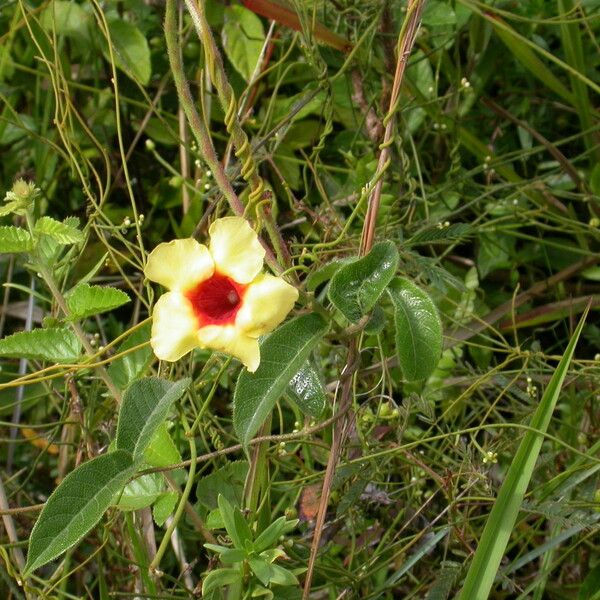
Plant Overview
Often referred to as the "Velvety Mandevilla," Mandevilla hirsuta is a show-stopping tropical climber that brings a touch of the wild Amazon to your home. Unlike its common garden cousins, this species is prized for its "hirsute" (hairy) stems and leaves, which feel like soft suede to the touch. In folklore and local medicine across Central and South America, various parts of the plant have been used for generations, though it remains primarily a golden-crowned jewel for collectors today.
🔍 How to Identify
- 🌟 The Golden Trumpet: The flowers are large, trumpet-shaped, and usually a vibrant yellow or creamy gold, often featuring a contrasting deep orange or reddish throat that acts as a bullseye for pollinators.
- ☁️ Velvety Foliage: Both the stems and the elliptical leaves are covered in fine, soft hairs. This "fuzziness" is a key identifier and helps the plant retain moisture in humid environments.
- 🌀 Twining Tendrils: As a vigorous climber, it doesn't use tendrils to grip; instead, the entire stem wraps itself tightly around trellises, fences, or neighboring branches in a clockwise spiral.
🏡 In Your Garden
- 🧗 The Need for Support: Because of its rapid growth habit, this plant hates being "grounded." It thrives best when given a tall trellis or a moss pole immediately, as its roots prefer stability while its head reaches for the sun.
- 💧 Drainage is Non-Negotiable: While it loves tropical humidity, it is prone to root rot if left in standing water. Think of its natural habitat on the edges of forests—it wants "damp feet but dry ankles," meaning well-draining, airy soil is a must.
- ☀️ Light Nuance: It craves bright, filtered light. Too much direct afternoon sun can scorch the delicate hairs on the leaves, while too much shade will result in "leggy" growth with very few golden blooms.
⚠️ Safety & Toxicity
- 🚫 Toxic Status: Highly Irritating. Like most members of the Dogbane family, this plant contains a milky white latex sap.
- 🐾 Pets & Kids: The sap can cause skin irritation or dermatitis upon contact. If ingested, it may cause nausea, vomiting, or stomach upset in cats, dogs, and curious children. It is best placed in a hanging basket out of reach.
✨ Fun Fact
The name hirsuta literally translates from Latin to "shaggy" or "bristly." In the wild, those tiny hairs serve a brilliant purpose: they create a "boundary layer" of still air around the leaf, which helps the plant survive brief periods of dry wind without losing too much water!

Detailed Care Instructions
To grow a Mandevilla hirsuta plant, follow these steps:
- Choose the right location: Mandevilla hirsuta requires full sun to partial shade, so select a spot in your garden that receives at least 6 hours of direct sunlight per day.
- Prepare the soil: Mandevilla hirsuta prefers well-draining soil. Amend heavy clay soil with compost or sand to improve drainage.
- Planting: Dig a hole twice the size of the plant's root ball. Place the plant in the hole, ensuring that the top of the root ball is level with the surrounding soil. Backfill the hole with soil, firming it gently around the roots.
- Watering: Water the plant thoroughly after planting, and then water regularly to keep the soil evenly moist. Avoid overwatering, as it can lead to root rot. Allow the soil to dry out slightly between waterings.
- Fertilizing: Use a balanced, slow-release fertilizer in early spring and mid-summer to provide nutrients to the plant. Follow the manufacturer's instructions for application rates.
- Pruning: Mandevilla hirsuta can benefit from regular pruning to maintain its shape and promote bushier growth. Prune any dead or damaged branches and pinch back the tips of the vines to encourage branching.
- Support: As the plant grows, provide support such as a trellis, arbor, or fence for it to climb or trail along.
- Protection: In colder climates, Mandevilla hirsuta is not winter hardy. If you live in an area with freezing temperatures, bring the plant indoors or provide protection, such as covering it with mulch, during the winter months.
- Pests and diseases: Monitor your plant for common pests like aphids, mealybugs, and spider mites. Treat any infestations promptly with organic insecticides or by removing insects manually. Watch for signs of diseases such as powdery mildew, leaf spots, or fungal infections, and take appropriate measures to control them.
- Propagation: Mandevilla hirsuta can be propagated from stem cuttings taken in spring or summer. Dip the cut ends in rooting hormone and plant them in a well-draining potting mix. Keep the cuttings warm and moist until they establish roots.
By following these guidelines, you should be able to successfully grow Mandevilla hirsuta and enjoy its beautiful flowers.
Mandevilla hirsuta is a plant that requires regular watering to maintain its health and growth. When watering, it is important to avoid over-watering or under-watering the plant, as either can lead to problems such as root rot or wilting.
To water the Mandevilla hirsuta plant, begin by checking the soil moisture level. Stick your finger into the soil about an inch deep to feel for moisture. If the soil is dry at this depth, it is time to water the plant.
When watering, aim to water the soil directly around the base of the plant, rather than its leaves or flowers. This helps to prevent rot and other issues that can arise from excess moisture on the foliage.
Water the plant thoroughly, making sure the soil is well moistened but not soaked. Avoid letting the soil completely dry out between waterings, as this can stress the plant and cause it to wilt or drop leaves.
During hot, dry weather, you may need to water the Mandevilla hirsuta plant more frequently to keep up with its moisture needs. Monitor the plant regularly to ensure it is getting the right amount of water, and adjust your watering schedule as needed.
To fertilize a Mandevilla Hirsuta plant, follow these instructions:
- Choose a balanced water-soluble fertilizer with a ratio of 10-10-10 or 14-14-14.
- Dilute the fertilizer according to the package instructions. Generally, you will need to mix 1 tablespoon of fertilizer per gallon of water.
- Water the plant thoroughly before applying fertilizer. This helps prevent burning the roots.
- Pour the diluted fertilizer solution around the base of the plant, avoiding the foliage. Alternatively, you can use a watering can to slowly pour the solution directly onto the soil.
- Repeat the fertilization process every 2-4 weeks during the growing season, which typically includes spring and summer. Avoid fertilizing during winter or dormant periods.
- Ensure the plant is adequately watered following fertilization. This helps to distribute the nutrients evenly and prevents any potential damage to the roots.
Remember to always read and follow the instructions provided by the fertilizer manufacturer, as different products may have varying guidelines for application and frequency.
Mandevilla hirsuta requires a well-draining, nutrient-rich soil with a pH range of 6.0 to 7.5. It prefers a slightly acidic to neutral soil. A soil mix containing equal parts of peat moss, perlite, and vermiculite, or a quality commercial potting mix that includes these components, is suitable for growing this plant. The soil should be kept evenly moist but not waterlogged. Adding slow-release fertilizer to the soil mix or applying liquid fertilizer at half-strength every two weeks during the growing season can help promote healthy growth. When planting in the ground, amend poor soil with organic matter such as compost or well-rotted manure to improve drainage and fertility.
To propagate Mandevilla hirsuta, follow these steps:
- Preparation: Start by gathering the necessary tools such as a sharp pair of pruning shears, a clean and sterilized knife or scissors, a clean container or pot, and a well-draining potting mix.
- Selecting the Plant: Choose a healthy and mature Mandevilla hirsuta plant from which you want to take cuttings. Look for a plant with strong stems and vibrant foliage.
- Timing: Spring or early summer is the best time to take cuttings as the plant is actively growing during this period.
- Taking Cuttings: Locate a stem on the Mandevilla hirsuta plant that is about 4 to 6 inches in length and has several nodes. Nodes are the points on the stem where leaves emerge. These are crucial for root development. Use the pruning shears to make a clean cut just below a node.
- Preparing the Cutting: Remove the lower leaves from the cutting, leaving only a few leaves at the top. This reduces moisture loss and encourages root growth. If the remaining leaves are large, you can trim them to minimize water loss.
- Hormone Treatment (Optional): Some gardeners choose to apply rooting hormone to the base of the cutting to encourage quicker and stronger root development. While this step is optional, it can increase the success rate of propagation.
- Planting the Cutting: Fill a clean container or pot with a well-draining potting mix. Make a small hole in the soil using a pencil or your finger. Insert the cutting into the hole, making sure that at least one node is below the soil line. Gently press the soil around the cutting to ensure good contact.
- Care: Place the pot in a warm and bright spot, away from direct sunlight. Water the cutting thoroughly and allow excess water to drain. It is important to maintain consistent moisture in the soil without overwatering. Mist the cutting regularly to maintain humidity.
- Root Development: Keep an eye on the cutting and watch for signs of root growth, which usually takes a few weeks to a couple of months. You can gently tug on the cutting to check for resistance, indicating root development. Once roots appear, continue providing misting and regular watering to ensure proper growth and establishment.
- Transplanting: Once the cutting has developed a sufficient root system, it can be transplanted into a larger container or planted directly in the garden, depending on the desired location. Make sure to acclimate the plant gradually to the new surroundings, taking care not to expose it to harsh conditions.
- Maintenance: Provide the propagated Mandevilla hirsuta plant with appropriate care, including regular watering, fertilization, and support for climbing if needed. Monitor for any pests or diseases and take appropriate measures if necessary.
By following these steps, you can successfully propagate Mandevilla hirsuta and expand your garden with its beautiful and distinctive foliage.








