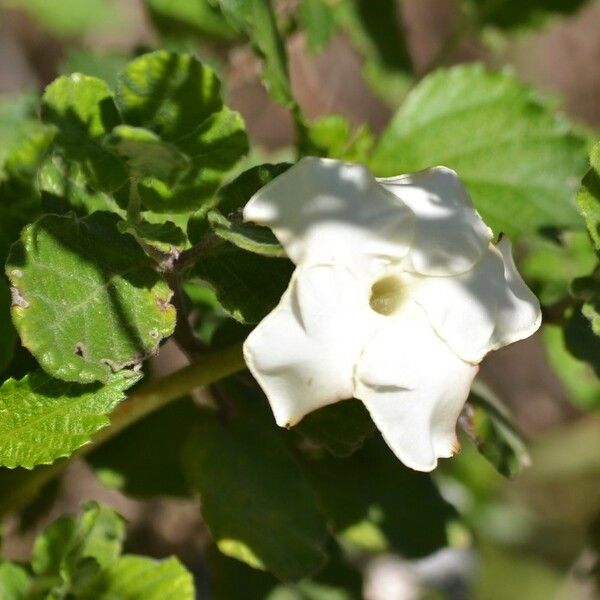
Plant Overview
Often whispered about as the "Long-tube Trumpet" or "Rock Trumpet," Mandevilla macrosiphon is a desert gem that looks like a tropical escapee. Native to the rugged landscapes of the Southwestern United States and Northern Mexico, this plant specializes in surviving where others wilt. It is beloved by night-gardeners for its luminous white flowers that seem to glow under the moonlight, releasing a soft fragrance to guide its desert pollinators.
🔍 How to Identify
- 🎺 The Bloom: Features striking, star-shaped white flowers with an incredibly long, slender "neck" or tube that can reach up to 4 or 5 inches in length.
- 🍃 The Foliage: Small, oval-to-lance-shaped leaves that are often covered in fine, velvety hairs—a clever adaptation to reflect intense desert heat and trap moisture.
- 🪴 Growth Habit: Unlike its aggressive climbing cousins, this species is a more modest, woody sub-shrub or a low-growing vine that gently scrambles over rocks rather than suffocating fences.
🏡 In Your Garden
- 🏜️ The Drainage Rule: This plant is a "rock specialist." It will struggle in heavy, potting-store soil; it thrives best in gravelly, sandy, or extremely well-draining mixes that mimic its limestone-heavy native habitat.
- 💧 Watering Nuance: It is exceptionally drought-tolerant once established. In fact, more Mandevilla macrosiphon are killed by "kindness" (overwatering) than by neglect. Let the soil dry out completely between drinks.
⚠️ Safety & Toxicity
- 🚫 Status: Mildly toxic and skin-irritant.
- 🧴 Details: Like most members of the Dogbane family, the stems contain a sticky, milky white latex sap. This sap can cause contact dermatitis (itchy skin) for sensitive individuals. If ingested, it may cause stomach upset in curious pets or small children.
✨ Fun Fact
The "macrosiphon" in its name literally translates to "large tube." These long floral tubes are a perfect example of co-evolution; they are designed specifically for Hawkmoths, which use their incredibly long, straw-like tongues to reach the nectar at the very bottom of the flower.

Detailed Care Instructions
To grow Mandevilla macrosiphon plant, you can follow these steps:
- Choose a suitable location: Mandevilla macrosiphon is a climbing vine that loves sunlight. Select a spot that receives full to partial sun for at least 6 hours a day.
- Prepare the soil: The plant thrives in well-draining soil. Amend the soil with compost or well-rotted manure to improve its fertility and drainage.
- Planting: Dig a hole slightly larger than the root ball of the plant. Place the plant in the hole and backfill with soil, gently firming it around the plant. Ensure that the root ball is level with the soil surface.
- Watering: After planting, water the plant thoroughly to settle the soil around the roots. Water regularly, keeping the soil moist but not waterlogged. During hotter months, watering may be required more frequently.
- Support: Since Mandevilla macrosiphon is a climbing vine, provide a trellis or support for it to climb. This will allow the plant to grow and spread its branches.
- Fertilizing: Apply a balanced, slow-release fertilizer to the plant in early spring. Follow the package instructions to determine the correct amount to use. Additionally, you can supplement with liquid fertilizer every four to six weeks during the growing season.
- Pruning: Regularly prune the plant to control its size and shape. Pruning also encourages new growth and more flowers. Remove any dead, damaged, or weak branches. Cut back the vines in early spring before new growth begins.
- Pests and diseases: Monitor the plant for common pests like aphids, mealybugs, and spider mites. Treat them with organic insecticides or insecticidal soap if necessary. Watch for signs of diseases such as powdery mildew or leaf spot, and take appropriate action to prevent their spread.
Remember to cater to your specific climate and growing conditions when caring for Mandevilla macrosiphon plants.

Place in a bright room that is sun drenched almost all day. Or directly in a south-facing window.

To keep the tropical plant healthy, it is important to water it consistently. One way to do this is to monitor the soil and only water the plant when the top few inches of the soil feel dry to the touch. When watering, be sure to saturate the soil thoroughly, but avoid flooding the plant or leaving the roots sitting in water. It is also important to avoid getting water on the flowers and leaves, which can cause damage or disease. Watering in the early morning or late afternoon is ideal, as the heat of the day can cause water to evaporate before it reaches the roots.
To fertilize this particular plant, use a balanced fertilizer with a nutrient ratio of 10-10-10 or 20-20-20. Apply the fertilizer every two weeks during the growing season (spring and summer) and reduce to once a month during the dormant season (fall and winter). When applying the fertilizer, carefully follow the manufacturer's instructions and dilute it in water to avoid the risk of burning the plant's roots. Additionally, make sure the soil is moist before fertilizing and water the plant thoroughly afterwards. Overall, proper fertilization will ensure healthy growth and abundant blooms.
Mandevilla Macrosiphon plant prefers a well-draining soil with a pH level of 6.0 to 7.0. The soil should be rich in organic matter and nutrients such as nitrogen, phosphorus, and potassium. It is recommended to use a mix of garden soil, sand, and organic compost or peat moss to ensure adequate drainage and nutrition retention. The plant also benefits from regular fertilization with a balanced, slow-release fertilizer. Additionally, it is important to avoid overwatering, as the plant is sensitive to waterlogged soil.
To propagate this particular plant, you will need to choose a healthy stem cutting that is at least 4-6 inches long and has a few sets of leaves. Use a sharp and clean pair of gardening shears to make a clean cut just below a node (where the leaves attach to the stem). Remove any leaves that will be below the soil level.
Next, prepare a pot with well-draining soil and create a hole in the center. Dip the cut end of the stem into rooting hormone powder and gently place it into the hole. Firm the soil around the stem to hold it in place.
Water the cutting thoroughly and place a clear plastic bag or dome over the pot, creating a mini greenhouse. This will help to retain moisture and create a humid environment for the cutting to thrive in.
Place the pot in a warm and bright location, but not in direct sunlight. After a few weeks, you should start to see new growth and roots forming. When the cutting has established a good root system, you can remove the plastic bag and treat it like a mature plant.








