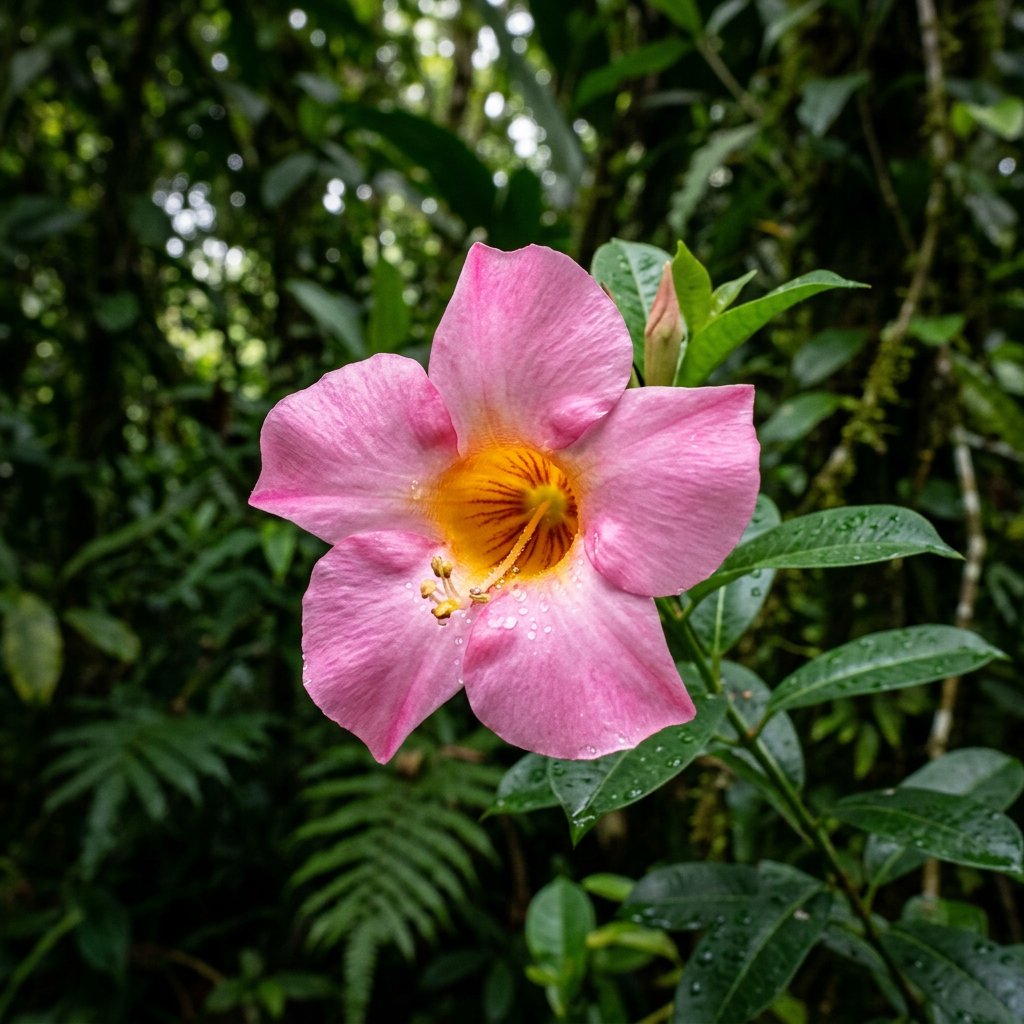
Plant Overview
Often called the Brazilian Jasmine or Rocktrumpet, Mandevilla sanderi is a tropical showstopper that brings the vibrant energy of Rio de Janeiro to your patio. These vigorous climbers are beloved for their trumpet-shaped blooms that appear in a constant parade of color throughout the warm months. Whether they are scaling a trellis or cascading from a hanging basket, they offer an unmistakable "vacation vibe" to any sunny spot.
🔍 How to Identify
- 🌸 Floral Trumpets: Large, five-petaled flowers shaped like flared trumpets, most commonly seen in shades of rose-pink, crimson, or white, often featuring a contrasting yellow "throat."
- 🍃 Glossy Foliage: Small, leathery, dark green leaves that are oval-shaped with a polished, waxy shine that helps the plant retain moisture.
- 🧗 Twining Stems: Woody, flexible vines that naturally spiral and reach upward, seeking out any vertical structure or neighboring plant to grab onto.
🏡 In Your Garden
- 🏗️ Support Systems: Because they are natural climbers, they thrive best when given a trellis, obelisk, or fence to navigate; without support, they will grow into a messy, sprawling mound.
- ☀️ The Light Balance: They crave high light to fuel their heavy blooming cycle, but in extremely hot climates, they appreciate "dappled" afternoon shade to prevent their glossy leaves from scorching.
- 💧 Avoid "Wet Feet": These plants are susceptible to root rot if kept in heavy, waterlogged soil. They prefer a chunky, well-draining mix and like their soil to dry out slightly between deep waterings.
⚠️ Safety & Toxicity
- 🥛 Irritating Sap: The stems contain a milky white latex sap that can cause skin irritation or contact dermatitis in some people. It is wise to wear gloves when pruning.
- 🐾 Mildly Toxic: If ingested, the plant can cause nausea, vomiting, or mouth irritation in cats, dogs, and small children. It is best kept out of reach of curious nibblers.
✨ Fun Fact
The genus was named in honor of Henry Mandeville, a 19th-century British diplomat and gardener who fell in love with the plant while stationed in Argentina and sent the first specimens back to Europe.

Detailed Care Instructions
| Color | Pink, Red, White |
| Soil Ph | 6.6 To 7.8 |
| Humidity | High |
| Lighting | Full Sun |
| Soil Type | Loamy |
| Bloom Time | Spring |
| Difficulty | Medium |
| Plant Type | Annual Flower |
| Mature Size | Vines Can Reach 20 Feet |
| Native Area | Southwestern United States, Mexico, Brazil, South America |
| Temperature | 18°C - 24°C |
| Sun Exposure | Full Sun |
| Hardiness Zones | 9-10 Usda |
To grow a Mandevilla Sanderi plant, also known as a Dipladenia, you can follow these steps:
- Choose the right location: Mandevilla Sanderi plants thrive in full sun, so choose a location with at least 6 hours of direct sunlight per day. They also prefer well-draining soil.
- Planting: Dig a hole that is twice as wide and deep as the plant's root ball. Place the plant in the hole and backfill with soil, firmly pressing it down around the roots. Leave a small depression around the plant to create a water well.
- Watering: Water the plant regularly, especially during the growing season. Keep the soil evenly moist but not soggy. Avoid over-watering as it can lead to root rot.
- Fertilizing: Feed your Mandevilla Sanderi plant with a balanced fertilizer, such as a 10-10-10 formula, every 2-3 weeks during the growing season. Follow the instructions on the fertilizer packaging for proper application.
- Training and Pruning: Mandevillas are vines that can climb, so provide a trellis or support for them to grow upwards. You can train the vines by tying them to the support structure. Prune the plant in early spring to control its shape and remove dead or damaged growth.
- Pests and Diseases: Monitor your plant regularly for common pests such as aphids, mealybugs, and spider mites. Treat any infestations promptly using insecticidal soap or other suitable methods. Additionally, watch out for fungal diseases like powdery mildew and treat them with fungicides if necessary.
- Winter Care: If you live in a region with freezing temperatures, Mandevilla Sanderi plants are typically not cold hardy. Before the first frost, move them indoors to a bright, cool location, ideally with temperatures around 50-60°F (10-15°C). Reduce watering during this period to let the plant go dormant.
By following these steps and providing proper care, your Mandevilla Sanderi plant should thrive and produce beautiful flowers.

Place in a bright room that is sun drenched almost all day. Or directly in a south-facing window.

To water this plant, first make sure that the topsoil is dry to the touch before watering. When watering, apply the water slowly and evenly to the base of the plant until the soil is moist but not waterlogged. Avoid getting water on the foliage, as this can lead to fungal diseases. During hot summers, this plant may require more frequent watering, but be careful not to overwater as this can cause root rot. In winter, reduce watering as the plant will enter a dormant period.
To fertilize this plant, apply a balanced fertilizer with equal parts of nitrogen, phosphorus, and potassium every two weeks during the growing season. Make sure to dilute the fertilizer solution as directed on the package. Alternatively, you can use a slow-release fertilizer once every three months for convenience. Be careful not to over-fertilize, as this can result in excessive foliage growth at the expense of flowers.
Mandevilla sanderi plant prefers a well-draining soil that is rich in organic matter and has a slightly acidic to neutral pH. A mixture of peat moss, perlite, and sand can provide the ideal growing medium for this plant. It is important to ensure that the soil is moist but not waterlogged as the plant can be susceptible to root rot. Adding a slow-release fertilizer to the soil can also help provide necessary nutrients for healthy growth. Regularly amending the soil with compost or other organic matter can help maintain soil fertility and improve drainage over time.
To propagate this plant, first select a healthy stem that has not yet bloomed. Cut a 4-6 inch section of the stem just below a leaf node. Remove any leaves from the lower two-thirds of the stem.
Next, dip the cut end of the stem in rooting hormone and insert it into a medium of perlite and peat moss. Water the soil well and cover the container with a plastic bag to create a humid environment.
Place the container in a warm, bright location but out of direct sunlight. Keep the soil moist but not soggy and mist the plant regularly to maintain humidity.
After a few weeks, check for roots by gently tugging on the stem. If there is resistance, roots have formed. Once the plant has rooted, remove the plastic bag and move it to a slightly brighter location.
Once the plant has grown to a sufficient size, it can be transplanted to a larger container or outdoors in a sunny, sheltered location.
Common pests of the brazilian-jasmine include Mealybugs, spider mites, aphids, whiteflies. Make a habit of checking your brazilian-jasmine frequently for pests so that any infestations can be caught and managed early.








