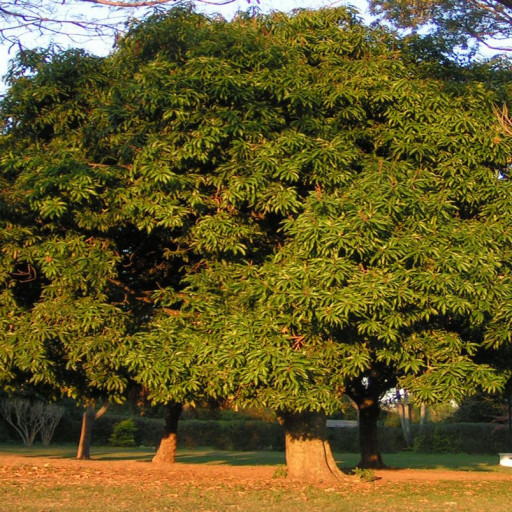
Plant Overview
Often hailed as the "King of Fruits," Mangifera indica is much more than just a source of juicy summer treats. Native to the region between northwestern Myanmar and India, this majestic evergreen has been cultivated for over 4,000 years, appearing in ancient Sanskrit literature as a symbol of love and prosperity. Whether providing a cooling shade or a heavy harvest, the Mango tree is a legendary centerpiece for any tropical landscape.
🔍 How to Identify
- 🍃 Lush Foliage: The leaves are long, leathery, and lance-shaped. A unique trait is their color change: new leaves often emerge in a striking maroon or bronze hue before maturing into a deep, glossy green.
- 🌸 Fragrant Panicles: During the blooming season, the tree produces hundreds of tiny, yellowish-pink flowers clustered on long, branched stems. They emit a mild, honey-like scent that attracts various pollinators.
- 🌳 Umbrella Canopy: It naturally forms a massive, symmetrical, and dense rounded canopy. In the wild, these trees can reach towering heights, creating a perfect natural "umbrella."
🏡 In Your Garden
- 🪴 Deep Root Foundations: Mango trees develop a powerful, long taproot. Because of this, they require deep, well-draining soil and absolutely hate being transplanted once they have established themselves.
- ☀️ The Dry Spell Secret: To encourage a heavy harvest, these trees actually benefit from a distinct dry period in late winter. Constant, heavy watering year-round can result in beautiful green leaves but very little fruit.
- ✂️ Pruning for Size: While they can grow huge, many hobbyists keep them as "condo mangos" by pruning them strictly after harvest, allowing them to fit in smaller suburban backyards.
⚠️ Safety & Toxicity
- 🧪 Sap Sensitivity: The tree belongs to the Anacardiaceae family, the same as poison ivy. The sap, bark, and even the skin of the fruit contain urushiol, which can cause skin irritation or "mango itch" in sensitive individuals.
- 🐾 Pet Precautions: While the ripe fruit flesh is a safe treat for dogs in moderation, the large central pit is a major choking hazard and contains small amounts of cyanide. The leaves should not be ingested by pets or livestock.
✨ Fun Fact
In many South Asian cultures, Mango leaves are considered so auspicious that they are strung across doorways during weddings and festivals to bring good luck and ward off "evil eyes." It is also said that the Buddha often meditated under the cool shade of a mango grove.

Detailed Care Instructions
| Color | White |
| Soil Ph | 5.5 To 7.5 |
| Humidity | High |
| Lighting | Part Sun |
| Soil Type | Rich, Well-Draining |
| Bloom Time | Winter |
| Difficulty | Hard |
| Plant Type | Tropical Fruit Tree |
| Mature Size | 7 To 15 Feet, Depending On Variety |
| Native Area | Tropical Southeast Asia, India |
| Temperature | 18°C - 24°C |
| Sun Exposure | Full Sun |
| Hardiness Zones | 9B To 11, Usda |
Growing a Mangifera indica plant, commonly known as a Mango tree, requires specific conditions and care. Here are steps to help you grow a healthy Mango tree:
- Choose a suitable variety of Mango: There are numerous varieties, so select one that is suitable for your climate and available space. Consult with local nurseries or agricultural extension services for advice.
- Obtain a healthy Mango seed or seedling: You can collect a seed from a ripe Mango fruit, give it a good wash to remove any pulp, and let it dry for a day. Alternatively, purchase a seedling from a reputable nursery.
- Germinate the Mango seed: Plant the seed in a pot or directly in the ground, about an inch (2.5 cm) deep. Ensure the planting medium has good drainage, such as a mix of sand and peat moss. Keep the soil slightly moist and place the pot or seedling in a warm and bright area.
- Provide proper sunlight: Mango trees thrive in full sunlight, so choose a location that receives at least 6-8 hours of direct sunlight per day. Ensure there is enough space around the plant for it to grow unhindered.
- Watering and moisture: Mango trees prefer well-draining soil, so ensure that the soil is moist but not waterlogged. Water the plant deeply and regularly, allowing the top few inches of soil to dry out between waterings.
- Fertilize regularly: Mango trees benefit from regular feeding. Apply a balanced organic fertilizer during the growing season, following the manufacturer's instructions. Avoid over-fertilization, as it can lead to weak growth.
- Pruning: Prune the tree during its dormant season, removing any dead, diseased, or crossing branches. Training the tree to a single stem or a desired shape is also beneficial.
- Protect from frost: Mango trees are sensitive to cold temperatures, so if you live in a region with frosts or freezes, consider growing the Mango tree in a large pot that can be moved indoors during winter.
- Pest and disease control: Monitor the tree regularly for pests such as aphids, scales, or mites, and use appropriate organic insecticides if necessary. Educate yourself about common Mango tree diseases and take preventive measures.
- Be patient: Mango trees can take several years to bear fruit. Continue providing proper care and maintenance, and eventually, you will be rewarded with delicious Mangoes.
Remember to consult local resources and experienced gardeners for more specific advice tailored to your region and climate.

Place in a bright room that is sun drenched almost all day. Or directly in a south-facing window.

To properly water this plant, it is important to consider its soil moisture level and environmental conditions. The plant should be watered deeply and thoroughly but not excessively when the top inch of soil is dry. In addition, it prefers well-draining soil and should never have standing water around its roots. When watering, it is recommended to water around the base of the plant rather than from overhead to avoid damage to its delicate leaves and branches. In hot, dry climates, the plant may need to be watered more frequently, especially if it is in direct sunlight for extended periods of time. Overall, it is important to monitor the plant's moisture level and adjust watering accordingly to promote healthy growth and prevent water-related issues such as root rot.
To fertilize this plant, apply a balanced fertilizer with equal amounts of nitrogen, phosphorus, and potassium every two to three months during the growing season. Use a slow-release fertilizer granule or liquid fertilizer solution, following the package instructions for dosing and application frequency. Avoid fertilizing during colder months when the plant is dormant and reduce feeding rates for young plants or those growing in nutrient-rich soils. Always water the plant thoroughly before and after fertilizer application to avoid root burn or nutrient deficiency.
The ideal soil for Mangifera Indica plant should be well-draining and rich in organic matter. It should have a pH level between 5.5 and 7.5. Sandy loam soils are preferred, but the plant can also grow in clay soils. The soil should retain moisture but not be excessively waterlogged. It is recommended to amend the soil with compost and garden soil to enrich it before planting the Mangifera Indica plant. The soil should be kept consistently moist, but not soaked, to ensure healthy growth and fruit production. The plant also prefers full sun and warm temperatures.
There are a few methods to propagate Mangifera Indica plants. One way is through grafting, where a bud or twig from the desired cultivar is grafted onto a rootstock. Another method is through air layering, which involves making a cut in the stem of the plant and wrapping it with moist soil or moss to encourage roots to form.
However, a simpler way to propagate the plant is through seed germination. Choose a ripe fruit that has fallen from the tree and remove the seed inside. Clean the seed thoroughly and then soak it in water for several hours or overnight. Plant the seed in a pot with well-draining soil, burying it about 1-2 inches deep. Keep the pot in a warm and humid location and water the seed regularly. Germination can take several weeks to a few months.
Once the seed has germinated and the plant has grown a few inches tall, you can transplant it into a larger pot or into the ground. Keep in mind that Mangifera Indica plants require a warm and humid environment to thrive and may take several years to start producing fruit.
Common pests of the mango include Scale insect, mealybugs, spider mites. Make a habit of checking your mango frequently for pests so that any infestations can be caught and managed early.








