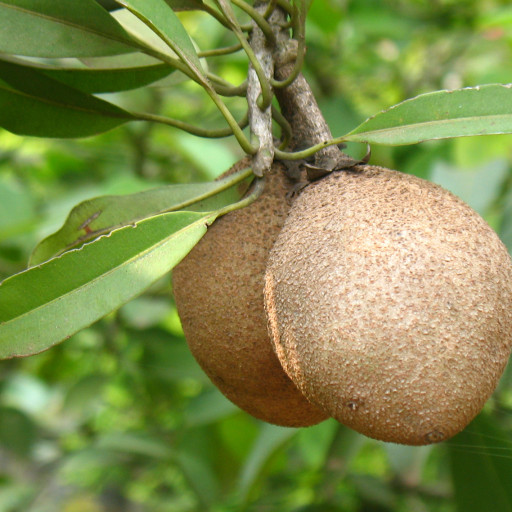
Plant Overview
Often called the "Sapodilla" or "Chico," this tropical evergreen is a treasure of the Americas. It is most famous for its "brown sugar fruit," which tastes like a pear soaked in maple syrup and malty caramel. Beyond its delicious harvest, this tree holds a secret history as the original source of chicle—the natural latex used to make the world's first chewing gums.
🔍 How to Identify
- 🍃 Foliage: The leaves are highly ornamental—glossy, dark green, and leathery. They usually grow in beautiful, spiral-like clusters at the very tips of the branches.
- 🥔 The Fruit: At first glance, the fruit looks like a fuzzy brown potato or a kiwi. The skin is rough and "scruffy," but the flesh inside is soft, grainy, and yellowish-brown.
- 🪵 Bark and Sap: The trunk is dark and deeply fissured. If the bark is nicked, it "bleeds" a thick, milky white latex that is sticky to the touch.
🏡 In Your Garden
- 🌬️ Storm Resistance: This is one of the toughest fruit trees you can plant. It is incredibly wind-resistant and can withstand salty coastal breezes that would wither other tropical plants.
- ⏳ Patience is Key: The Sapodilla is a slow grower. Because it puts so much energy into its dense, heavy wood, it may take several years to reach a significant height, but it requires very little pruning once established.
- 💧 Drainage Nuance: While it loves a tropical downpour, it hates "wet feet." It thrives in sandy or well-draining soil because its deep taproot is prone to rot if kept in standing water.
⚠️ Safety & Toxicity
- ✅ Edible Fruit: The ripe fruit is safe and delicious for humans. However, never eat the fruit while it is still hard; unripe fruit contains high levels of saponins that dry out the mouth and taste extremely bitter.
- 🪝 Seed Danger: Each fruit contains 2–5 shiny black seeds. These seeds have a tiny, sharp hook on one end that can easily get stuck in the throat. Always deseed the fruit before serving it to children or pets.
- 🧪 Latex Sensitivity: People with latex allergies should be cautious when pruning the tree, as the milky sap can cause skin irritation (dermatitis).
✨ Fun Fact
🏛️ Ancient Durability: Sapodilla wood is so incredibly dense and rot-resistant that archaeologists have discovered carved Sapodilla lintels in ancient Mayan ruins that are still structurally sound after more than 1,000 years in the humid jungle!

Detailed Care Instructions
| Lighting | Full Sun |
| Hardiness Zones | 9B - 12 |
To grow a Manilkara Zapota plant, also known as sapodilla or chikoo, follow these steps:
- Obtain a sapodilla fruit or seeds: You can find fresh sapodilla fruits in local fruit markets or purchase seeds from a reputable seed supplier. Make sure the fruits or seeds are ripe and undamaged.
- Prepare the seeds: If you have bought seeds, soak them in water for 24 hours to soften the hard outer shell. Gently scrape away the husk to expose the inner seed.
- Choose a suitable location: Manilkara Zapota is a tropical plant that requires full sun and a warm climate. Ensure that the planting location receives at least 6-8 hours of direct sunlight daily. The plant prefers well-draining soil.
- Plant the seeds: Select a pot or prepare a planting bed with well-draining soil. Plant the seeds about 1 inch deep into the soil. Space the seeds at least 4-6 inches apart.
- Water the seeds: After planting, water the seeds thoroughly until the soil is evenly moist. Avoid overwatering, as this may cause root rot. Allow the topsoil to dry out slightly before watering again. Monitor the moisture levels regularly.
- Provide the right temperature: Manilkara Zapota thrives in warm temperatures between 70-90°F (21-32°C). Maintain a warm environment, and if necessary, use a heating pad or germination chamber to provide warmth during germination.
- Nurture the plant: Once the seeds sprout, continue to water them regularly, keeping the soil slightly moist. Fertilize the plant every 2-3 months with a balanced organic fertilizer to promote healthy growth. Prune the plant to shape it and remove dead or diseased branches.
- Transplanting: When the sapodilla plant becomes too large for its pot, transplant it into a larger container or into the ground. Ensure the soil in the new location has good drainage. Be careful not to disturb the roots during transplantation.
- Pests and diseases: Monitor the plant for common pests like aphids, mealybugs, or scale insects. Treat any infestations promptly using organic pest control methods. Ensure proper air circulation around the plant to prevent fungal diseases.
- Patience: Growing a sapodilla tree from seed can take a few years before it starts bearing fruit. Be patient, as it requires time for the plant to mature and develop the ability to produce fruit.
By following these steps, you can successfully grow your own Manilkara Zapota plant and enjoy its delightful fruits.

Place in a bright room that is sun drenched almost all day. Or directly in a south-facing window.

Manilkara Zapota is a plant that requires regular watering to thrive. Before watering, it is important to check the moisture level of the soil. To do this, insert your finger about two inches deep into the soil and check if it feels dry or moist. If it feels dry, it is time to water the plant.
When watering, make sure to water the soil evenly and avoid getting water on the leaves or flowers. It is best to water early in the morning or late in the evening when the temperature is cooler to prevent evaporation.
The amount of water required will depend on factors such as the temperature, humidity levels, and the size of the plant. As a general rule, water the plant once or twice a week, ensuring that the soil is moist, but not waterlogged.
During the winter months, reduce the frequency of watering to prevent overwatering. Manilkara Zapota is sensitive to overwatering, so it is important to monitor the soil moisture levels carefully.
In summary, water Manilkara Zapota plant regularly, ensuring that the soil is moist but not waterlogged, and avoid getting water on the leaves and flowers. Monitor the soil moisture level carefully and adjust the frequency of watering accordingly.
To fertilize the Manilkara zapota plant, use a balanced fertilizer with equal amounts of nitrogen, phosphorus, and potassium, such as a 10-10-10 formula. Apply the fertilizer evenly around the plant, taking care not to let the fertilizer come into direct contact with the trunk or foliage. Water the plant immediately after fertilizing to help dissolve the fertilizer and distribute it to the roots. Fertilize the plant every two to three months during the growing season, which is typically spring and summer. Avoid fertilizing the plant during the dormant winter months.
For optimal growth and development of Manilkara Zapota plants, a specific type of soil is required. The ideal soil for this plant should have a neutral pH or slightly acidic ranging from 6.0 to 7.0. It should be well-draining and should not hold water for a long time, which can lead to root rot.
The soil should be rich in organic matter, have good nutrient content, and be able to retain moisture. Sandy or loamy soil is ideal for this plant as it allows for good water drainage and root development.
It is recommended to fertilize the soil before planting the Manilkara Zapota plant to ensure it has sufficient nutrients. A slow-release fertilizer can be used that provides balanced nutrients to the plant over an extended period of time.
It is also essential to ensure the soil is free from contaminants, pests, and diseases that can harm the plant. Regular soil testing, pest management, and disease control practices should be implemented to maintain the health of the Manilkara Zapota plant and ensure its continued growth and productivity.
Propagation of this plant can be done through various methods such as seed propagation, cutting propagation, grafting, and air layering. The most commonly used method is seed propagation, which involves removing the seeds from the fruit and allowing them to dry for a few days before planting them in a mixture of sand and peat moss. The seeds should be kept moist but not too wet, and germination can take up to several weeks.
Cutting propagation involves taking a cutting from a healthy, mature plant and placing it in a rooting hormone before planting it in a well-draining soil mixture. Grafting is a more advanced method that involves joining the stem of the desired plant to the rootstock of another plant to create a stronger, more disease-resistant plant. Air layering involves wrapping a stem with moist sphagnum moss and plastic wrap to encourage root growth before separating the rooted section from the parent plant.
Regardless of the propagation method used, it is important to maintain a consistent level of moisture, temperature, and light to promote healthy growth. With proper care, the propagated plant should begin to establish itself within a few weeks to a few months.
Common pests of the chiku include Scale insect, mealybugs, spider mites. Make a habit of checking your chiku frequently for pests so that any infestations can be caught and managed early.








