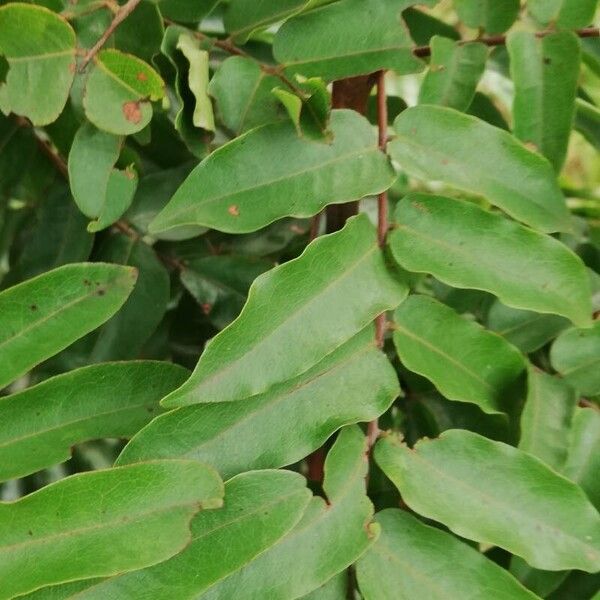
Plant Overview
Known as a vigorous climber from the lush rainforests of Central Africa, Manotes expansa is a master of the vertical world. Often found weaving through the dense understory, it adds a complex, emerald architecture to the forest landscape. While it remains a rare find for the average home gardener, it is a botanical treasure for those interested in the diverse flora of the Congo Basin.
🔍 How to Identify
- 🌿 Pinnate Foliage: The leaves are compound, meaning several smaller leaflets are arranged along a central stalk, giving the vine a soft, feathered appearance.
- 🧗 Woody Liana: As it matures, the stems become thick, rope-like, and incredibly strong, allowing the plant to "crawl" its way up toward the canopy sunlight.
- 🍒 Striking Fruit: It produces small, leathery pods (follicles) that turn a vibrant red or orange-red when ripe, often splitting open to reveal dark, glossy seeds.
🏡 In Your Garden
- ☁️ Tropical Temperament: This plant is native to high-rainfall areas, meaning it craves high humidity and consistent moisture; it will struggle in dry, air-conditioned indoor spaces.
- 🏗️ Need for Height: Because of its natural "expanding" habit, it requires a very sturdy trellis or a "sacrificial" tree to climb, otherwise, it will quickly scramble over neighboring plants.
⚠️ Safety & Toxicity
- 🐾 General Caution: While not widely listed as a major poison, most wild tropical climbers contain tannins or alkaloids that can cause stomach upset if leaves are ingested.
- 🧤 Skin Protection: The woody sap can be slightly sticky or irritating to those with sensitive skin; wearing gloves during heavy pruning is recommended.
✨ Fun Fact
In various parts of Central Africa, Manotes expansa is more than just a vine; it is part of the local pharmacy! Traditional healers have historically used extracts from its roots and leaves to treat various ailments, ranging from digestive issues to skin conditions.

Detailed Care Instructions







