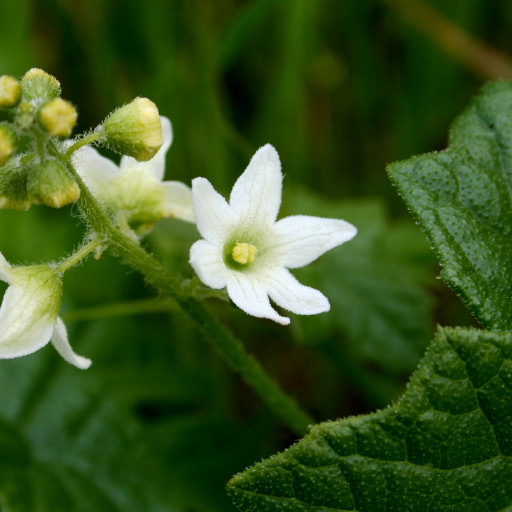
Plant Overview
Known as the California Manroot or Old Man in the Ground, Marah fabacea is a persistent, fast-growing climber native to the golden hills and woodlands of California. It earned its quirky nicknames from its legendary underground tuber, which can grow to the size of a human torso and weigh over 100 pounds. This vine is often one of the first signs of life in late winter, racing to drape itself over shrubs and fences before the summer heat arrives.
🔍 How to Identify
- 🍃 Lobed Leaves: Features large, hand-shaped (palmate) leaves with five to seven distinct lobes, creating a lush, ivy-like curtain of green.
- 🌼 Starry Blooms: Produces small, delicate, star-shaped flowers that are typically creamy white or pale yellowish-green.
- 🌵 Prickly Fruit: Its most recognizable feature is the fruit—a round, green seed pod covered in soft, flexible spines that look like tiny, prehistoric maces.
🏡 In Your Garden
- 🧗 The Great Climber: This vine uses specialized coiled tendrils to "hitchhike" onto neighboring plants. In a garden setting, it needs a sturdy trellis or a sacrificial shrub to scramble over, as it can grow up to 20 feet in a single season.
- 🍠 The Hidden Giant: Because of its massive "manroot" tuber, this plant is nearly impossible to relocate once established. It stores immense amounts of water and energy underground, allowing it to survive intense droughts and even wildfires.
- 💤 Summer Dormancy: Don’t panic when the plant turns brown and dies back in mid-summer. This is its natural defense mechanism; it retreats into its giant root to sleep through the dry months, waiting for the first winter rains to trigger new growth.
⚠️ Safety & Toxicity
- 🚫 Toxic Status: All parts of the California Manroot are considered toxic if ingested. The plant contains bitter compounds called saponins.
- 🐕 Pets and Kids: The spiky fruits are often tempting for children to pick, but they (along with the seeds and roots) can cause severe stomach upset, vomiting, and diarrhea if eaten.
- 🧤 Skin Sensitivity: While not as notorious as Poison Oak, the juice from crushed stems or roots can cause mild skin irritation for those with sensitive skin. It is best to wear gloves if you are pruning it.
✨ Fun Fact
Indigenous tribes in California once used the crushed roots of Marah fabacea to catch dinner. They would throw the mashed root into small, still pools of water; the saponins would temporarily stun the fish, causing them to float to the surface for easy collection without making the meat toxic to eat!

Detailed Care Instructions
To grow Marah fabacea (also known as California manroot or wild cucumber), you can follow these steps:
- Choose the right location: Marah fabacea grows best in a sunny spot with well-draining soil. Ensure the area has enough space for the plant to spread, as it can grow up to 25 feet long.
- Prepare the soil: Amend the soil by adding organic matter, such as compost, to improve drainage and fertility. Incorporate it into the top few inches of soil.
- Planting: Sow the seeds directly into the ground in early spring after the last frost. Place the seeds about an inch deep and 6-8 inches apart. If you're growing Marah fabacea from seedlings, space them at least 3-5 feet apart.
- Watering: Keep the soil consistently moist but not waterlogged. Water deeply and regularly, especially during dry periods.
- Provide support: As Marah fabacea is a vine, you may need to provide a trellis, fence, or other support structure for it to climb on. Secure the tendrils to the support as they grow.
- Mulching: Apply a layer of organic mulch around the plant to help conserve moisture and suppress weed growth.
- Fertilizing: Marah fabacea generally does not require heavy fertilization. However, you can apply a balanced organic fertilizer in early spring and mid-summer to support healthy growth.
- Pruning: You can prune the plant in early spring to remove any dead or weak growth. It can also help control the size and shape of the plant.
- Controlling pests: Watch out for potential pests like aphids or cucumber beetles. If the infestation is severe, you can use organic insecticidal soap or neem oil to control them.
- Harvesting: You can harvest the immature fruit, which resembles a small cucumber, in the late summer or early fall. However, it's important to note that the fruit may cause stomach upset if consumed raw.

Place in a bright room that is sun drenched almost all day. Or directly in a south-facing window.

To properly water this plant, it is important to first check the soil moisture level. This can be done by sticking your finger about an inch into the soil and feeling for moisture. If the soil feels dry, it is time to water. When watering, it is best to use room temperature water and pour it slowly into the soil around the base of the plant until it begins to drain out of the bottom of the pot. It is important not to overwater the plant, as this can cause root rot. Allow the soil to dry out a bit between waterings, but do not let it completely dry out. The frequency of watering may vary depending on environmental conditions such as temperature and humidity.
To fertilize this plant, use a balanced fertilizer with a ratio of 10-10-10 or 20-20-20, applied at half-strength every two weeks during the growing season. Make sure to water the plant thoroughly before and after fertilizing to prevent burn and ensure the nutrients are absorbed properly. Avoid fertilizing during the dormant season.
The best type of soil to use for the Marah Fabacea plant is a well-draining soil that has a medium texture. The soil should be rich in nutrients and organic matter, with a pH of 6.0 to 7.5. It is important that the soil is not too compacted, as this can restrict root growth and cause drainage problems. Adding compost or organic matter to the soil can help improve its texture and nutrient content. Additionally, the plant prefers full sunlight and moderate water levels, so make sure to plant it in an area that receives plenty of sunlight and water it regularly but not excessively.
To propagate this plant, you will need to collect the seeds from the mature plant. Wait until the fruits have turned brown and the seeds are mature before collecting them. Clean the seeds and soak them in water for 24 hours. After the seeds have soaked, plant them in well-draining soil in a pot or directly into the ground outdoors. Keep the soil moist, but not too wet, and in a warm location with filtered sunlight. The seeds should germinate in about two weeks.








