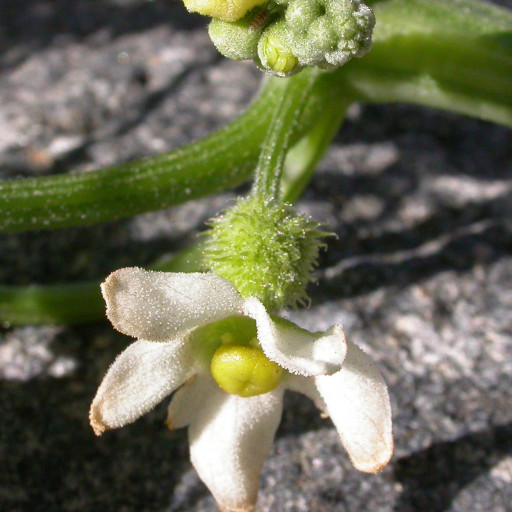
Plant Overview
Known as the Wild Cucumber or the Manroot, this rugged California native is a master of survival in the scrubby chaparral. Often seen draping over shrubs like a green waterfall, it conceals a massive secret underground: a tuberous root that can grow to the size of a human torso. While its fruit looks like a miniature, prickly melon, this plant is a wild character that prefers the rugged hillsides over the vegetable patch.
🔍 How to Identify
- 🌿 The Foliage: Large, bright green leaves that are deeply lobed, resembling a hand with five to seven "fingers."
- 🌼 The Flowers: Clusters of tiny, star-shaped white or creamy blossoms that emerge in late winter, standing out against the dark green vines.
- 🥒 The Fruit: Distinctive round or oval green pods covered in soft, flexible spines; they look like a "medieval" cucumber but are hollow and fibrous inside.
🏡 In Your Garden
- 🧗 The Climber: It uses thin, curly tendrils to "hitchhike" onto fences or neighboring plants, allowing it to grow several feet in a single season once the rains hit.
- 💤 Dormancy Master: Don’t be alarmed when the plant turns brown and shrivels in the summer heat; it is a drought-deciduous species that retreats to its giant root to sleep until the next winter rain.
- 🏜️ Soil Preference: It thrives in well-draining, rocky soil and actually prefers being left alone once established, making it a "set it and forget it" plant for native gardens.
⚠️ Safety & Toxicity
- 🚫 Non-Edible: Despite the "cucumber" nickname, the fruit, seeds, and roots are toxic and should never be eaten.
- 🤢 Saponins: The plant contains bitter compounds called saponins. If ingested by humans or pets, it can cause severe stomach upset, vomiting, and diarrhea.
- 🐕 Pet Warning: Keep curious dogs away from the spiny seed pods, as the internal seeds can be a choking hazard and are chemically irritating if chewed.
✨ Fun Fact
The "Manroot" nickname comes from the fact that its massive, ancient tubers can weigh over 100 pounds and occasionally grow into shapes that look vaguely like a human body!

Detailed Care Instructions
To grow Marah Macrocarpa plant, also known as Wild Cucumber, you can follow these steps:
- Obtain seeds or seedlings: You can purchase Marah Macrocarpa seeds online or at a local nursery. Alternatively, you can propagate the plant from cuttings or root division if you have an existing plant.
- Choose a suitable location: Wild Cucumber plants thrive in full sun to partial shade. Select a spot in your garden that receives at least 6 hours of sunlight per day.
- Prepare the soil: Marah Macrocarpa prefers well-draining soil. Add organic matter like compost or well-rotted manure to improve soil fertility and drainage. Remove any weeds or grass from the planting area.
- Sow the seeds or transplant seedlings: If starting from seeds, sow them directly in the garden after the last frost date. Plant the seeds about 1 inch deep and space them about 6-12 inches apart. If using seedlings, dig a hole slightly larger than the root ball, place the seedling in, and gently fill around it with soil.
- Watering: Keep the soil evenly moist but not waterlogged during the germination and establishment period. Once the plant is established, it can tolerate some drought, although regular watering during dry spells is beneficial.
- Support: Wild Cucumber is a vine plant, and it requires support for climbing. Install trellises, arbors, or other structures for the plant to grow on.
- Mulching: Apply a layer of organic mulch, such as wood chips or straw, around the base of the plant to retain moisture and suppress weed growth.
- Pruning: Regularly prune the plant to control its size and shape. Pruning also helps promote air circulation, reducing the risk of diseases.
- Fertilization: Apply a balanced fertilizer or compost in spring to provide extra nutrients to the plant.
- Pest and disease control: Monitor the plant for any pests or diseases, such as aphids or powdery mildew. Use appropriate pest control methods or consult a professional for advice.
Remember that Marah Macrocarpa is a fast-growing and vigorous vine, so ensure you provide enough space for it to spread and climb. Regularly check on the plant's growth and adjust support structures as needed.

Place in a bright room that is sun drenched almost all day. Or directly in a south-facing window.

When watering this plant, it is important to ensure that the soil is consistently moist but not waterlogged. Allow the top inch of soil to dry out slightly before watering again, and be sure to provide good drainage to prevent water from pooling around the roots. Water deeply and thoroughly, but avoid getting water on the leaves or flowers as this can lead to disease. During periods of high heat or low humidity, it may be necessary to water more frequently.
To fertilize this plant, use a balanced fertilizer, such as a 10-10-10 or 20-20-20 blend. Apply the fertilizer at the base of the plant, avoiding the leaves and stems. Water the plant thoroughly after fertilizing. Fertilize every four to six weeks during the growing season, reducing the frequency as the plant enters dormancy.
Marah Macrocarpa is a plant that prefers a well-draining soil mix that is rich in nutrients, organic matter, and has a slightly acidic pH. It should be planted in full to partial sun in an area that is protected from strong winds. The soil should be kept moist, but not waterlogged. It is recommended to fertilize the soil every two to three weeks during the growing season with a balanced fertilizer. The plant can be propagated from seeds planted directly in the soil or by transplanting established seedlings. When planting, the soil should be loosened to encourage healthy root growth. Overall, the ideal soil for Marah Macrocarpa should provide a healthy growing environment that supports root development, nutrient uptake, and moisture retention.
Marah Macrocarpa plant can be propagated by collecting and preparing the seeds from mature fruits. The seeds can be planted directly into a well-draining soil mix or started indoors in pots. To plant the seeds, create a small hole in the soil and place one or two seeds into the hole. Cover the seeds with soil and water the planting area.
Seeds can be collected by harvesting the mature fruit and scraping out the seeds. The seeds should be cleaned and dried before being planted or stored. If storing seeds, they should be kept in a cool, dry place until ready to use.
Another method of propagation is through root cuttings. Use a sterilized cutting tool to remove a section of the plant's root. Plant the root cutting in a well-draining soil mix and keep the soil moist until roots form.
Propagation through stem cuttings is possible, although it is not as successful as other methods. Take a stem cutting and remove the lower leaves. Plant the cutting in a well-draining soil mix and keep the soil moist until roots form.
Propagation can take time and patience, as not all seeds or cuttings will successfully grow into mature plants. However, once propagated, Marah Macrocarpa plant can be a beautiful addition to any garden.








