Plant Overview
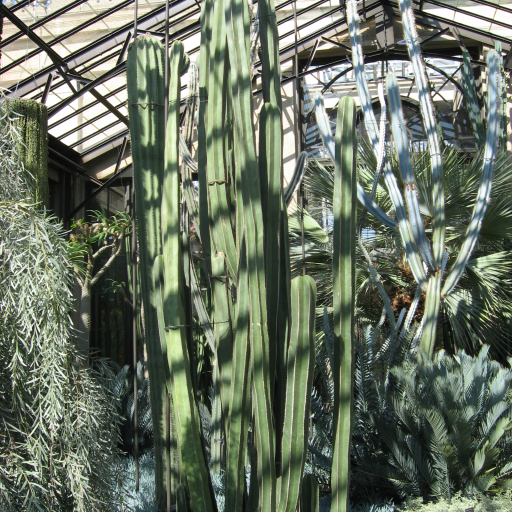
Known famously as the Mexican Fence Post, this cactus is the minimalist architect of the desert. Native to the arid landscapes of Central Mexico, it has been used for centuries as a literal "living wall" to mark property lines and keep livestock contained. Its clean, deep-green columns and white "stitched" edges make it a top choice for modern, structural landscaping.
🔍 How to Identify
- 🌵 The "Stitched" Ribs: Each of the 5 to 7 ribs is outlined with a continuous, white fuzzy line of tiny, short spines, looking as though a meticulous seamstress worked on the edges.
- 🏗️ Architectural Habit: Unlike sprawling or branching cacti, this species grows in perfectly vertical, unbranched columns that can reach over 15 feet in height.
- 🌸 Nighttime Blooms: Mature specimens produce small, funnel-shaped pinkish-red flowers that sprout directly from the white "seams" of the ribs, usually appearing in the spring.
🏡 In Your Garden
- 🧱 The Living Fence: If you plant several of these in a row, their straight-up growth pattern creates a dense, impenetrable barrier that looks like a structural wall. They are perfect for narrow spaces where you need height but don't have much horizontal room.
- 💧 The "Why" of Watering: This cactus is more "thirsty" than many of its desert cousins. Because it grows relatively quickly for a cactus, it needs consistent watering in the summer to prevent the skin from shriveling, but it requires a strictly dry "sleep" during the winter months to avoid root rot.
- 🪴 Potting Stability: Because they grow tall and heavy, they can become "top-heavy." If growing in a container, use a heavy terracotta or ceramic pot to prevent the wind from toppling your green skyscraper.
⚠️ Safety & Toxicity
- 🛡️ Physical Hazard: While not chemically toxic to cats, dogs, or humans, the spines are short, stiff, and very sharp. They can easily puncture skin or paws if someone brushes against the "fence."
- 🧤 Safe Handling: When transplanting, do not be fooled by the small size of the spines. Always use thick leather gloves or wrap the column in a thick rug or carpet scrap to move it safely.
✨ Fun Fact
In many parts of rural Mexico, these cacti are still used as "green rebar." Farmers will cut a piece, stick it in the ground, and it will take root and grow, creating a permanent, self-repairing fence that never needs painting or termite protection!

Detailed Care Instructions
| Humidity | Normal |
| Lighting | Part Sun |
| Difficulty | Medium |
| Hibernation | Cold Period |
| Hardiness Zones | 9 - 11 |
To grow Marginatocereus Marginatus plant, also known as the Mexican fence post cactus, follow these steps:
- Choose a suitable location: Marginatocereus Marginatus prefers a sunny spot with at least six hours of direct sunlight each day. Ensure that the area has well-draining soil.
- Prepare the soil: The cactus thrives in sandy or rocky soil. Amend the soil with sand, gravel, or small rocks if necessary to improve drainage. Avoid overwatering, as this can cause root rot.
- Choose the right container: If you plan to grow the cactus in a container, select a pot with good drainage holes. Ensure that the pot is large enough to accommodate the plant's growth.
- Water sparingly: Marginatocereus Marginatus is a drought-tolerant plant and prefers infrequent watering. Allow the soil to dry out completely between waterings, and remember to water less during the colder months.
- Fertilize occasionally: Use a low-nitrogen cactus fertilizer during the growing season (spring and summer) to provide the necessary nutrients. Follow the instructions on the fertilizer packaging for proper dosage.
- Prune as needed: If your Marginatocereus Marginatus plant becomes too tall or unruly, you can prune it. Use clean and sharp pruning shears to remove any unwanted growth. Be cautious while handling the cactus, as it has spines that can cause injury.
- Protect from extreme temperatures: Marginatocereus Marginatus can tolerate high temperatures but may suffer damage from frost. If you live in an area with cold winters, protect the plant by moving it indoors or covering it with a frost cloth during freezing temperatures.
- Propagate if desired: You can propagate Marginatocereus Marginatus through stem cuttings. Cut a healthy stem from the main plant and let it dry for a few days. Once calloused, plant the cutting in well-draining soil and provide indirect sunlight.
Remember that Marginatocereus Marginatus is a slow-growing cactus, so be patient while waiting for growth and maturity. Regularly monitor the plant for signs of pests or diseases and take appropriate action if necessary.

Place in a bright room that is sun drenched almost all day. Or directly in a south-facing window.

Marginatocereus Marginatus plant requires watering on a regular basis. Before watering the plant, it's essential to make sure that the soil is completely dry. Overwatering the plant can lead to root rot, which can be dangerous for the plant's growth.
To water the plant, prepare a watering can. Fill it with the required amount of water. Pour the water slowly over the soil until it starts to drain out from the bottom. Be sure to avoid getting the water on the plant itself as it can cause damage.
It's also important to note that the frequency of watering depends on the climate and the location of the plant. In general, the plant should be watered once a week during the summer and once every two to three weeks during the winter.
In addition to watering, it's also important to ensure that the plant is receiving enough sunlight and nutrients to support its growth. Regular fertilization can help ensure that the plant is receiving the necessary micronutrients to thrive.
To properly fertilize this plant, first determine the type of fertilizer needed based on the soil composition and the plant's growth stage. Use a balanced, slow-release fertilizer with equal amounts of nitrogen, phosphorus, and potassium during the growing season. Dissolve the fertilizer in water and apply it around the base of the plant, making sure not to allow it to come into contact with the stems or leaves. The frequency of fertilization will depend on the plant's growth rate and the type of fertilizer used, but generally, fertilize every two to four weeks during the growing season and reduce frequency during the dormant season. Observe the plant regularly for signs of nutrient deficiencies and adjust fertilization accordingly.
Marginatocereus Marginatus is a succulent plant that is commonly grown for ornamental purposes. When choosing soil for this plant, it is recommended to use a well-draining soil mix that is specifically formulated for cacti and other succulent plants.
A suitable soil mix for Marginatocereus Marginatus should be composed of a mixture of coarse sand, perlite, and peat moss. The sand and perlite provide necessary drainage, while the peat moss helps hold moisture and nutrients for the plant.
It is important to avoid using regular potting soil or garden soil, as they tend to retain too much water and can lead to root rot in succulent plants. Additionally, it is important to use a pot with drainage holes to ensure excess water can drain away from the roots of the plant.
Overall, using a well-draining soil mix and a properly-draining pot are essential for the health and growth of Marginatocereus Marginatus.
The Marginatocereus Marginatus plant can be propagated through stem cuttings. First, select a healthy stem with no signs of damage or disease. Using a sharp, clean knife, cut a section of stem approximately 6-8 inches long. Let the cutting dry out for a few days in a dry and shaded place. Once the cut end has calloused over, it is ready to be planted.
Fill a pot with well-draining soil mix and make a small hole in the center. Plant the stem cutting in the hole and gently press the soil around the stem. Place the pot in a warm and well-lit area but avoid direct sunlight. Water the cutting sparingly and make sure the soil is only slightly damp.
After a few weeks, the cutting should start to show signs of new growth. At this point, you can gradually increase the amount of water you give it and move it to a brighter spot. When the cutting has grown new roots and established itself, it can be transplanted to its permanent location.
Common pests of the mexican fence post cactus include Scale insect, mealybugs, spider mites. Make a habit of checking your mexican fence post cactus frequently for pests so that any infestations can be caught and managed early.








