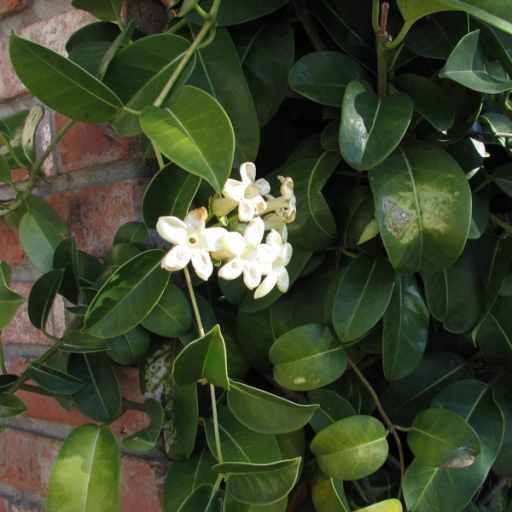
Plant Overview
Often called the "Bridal Veil" or "Madagascar Jasmine," Marsdenia floribunda (formerly Stephanotis floribunda) is a botanical symbol of marital happiness. Native to the lush forests of Madagascar, this woody climber is prized for its intoxicating, lily-like scent and porcelain-white blossoms that look as if they were carved from wax. It is a favorite for high-end floral arrangements and indoor gardeners who enjoy a challenge.
🔍 How to Identify
- 🌿 The Foliage: Features thick, leathery, oval-shaped leaves. They are a deep, glossy emerald green and grow in pairs along a twinning woody stem.
- 🌸 The Blooms: Star-shaped, tubular flowers that grow in clusters (umbels). They are pure white with a heavy, waxy texture and a perfume that can fill an entire room.
- 🌱 Growth Habit: A vigorous "twiner" that uses its stems to wrap around trellises or hoops. In its natural habitat, it can reach lengths of over 10 feet.
🏡 In Your Garden
- 🌡️ The Temperamental Beauty: This plant is famous for "bud drop." If you move the pot or change the temperature drastically once the flower buds have formed, it may drop them all in protest. Consistency is the secret to its success.
- 💧 Humidity and Light: It thrives in bright, indirect light—direct midday sun can scorch the waxy leaves. It craves high humidity, making it a perfect candidate for a bright bathroom or a gravel tray filled with water.
⚠️ Safety & Toxicity
- 🐾 Pet Safety: While not considered highly toxic like true jasmines or lilies, the milky sap found in the stems can cause mild skin irritation or digestive upset if chewed by curious cats or dogs.
- 👶 Child Safety: Generally safe to have in the home, but the waxy flowers are a choking hazard for toddlers, and the sap can be sticky and irritating to sensitive skin.
✨ Fun Fact
In the language of flowers, Marsdenia floribunda represents "marital bliss." Because of this, it has been a staple in royal wedding bouquets for decades, including the bouquet of Princess Diana.

Detailed Care Instructions
To grow Marsdenia Floribunda, also known as milkweed vine or climbing milkweed, follow these steps:
- Start with seeds: Purchase fresh Marsdenia Floribunda seeds from a reputable supplier. Seeds can be sown directly in the ground or started indoors.
- Choose the right location: Marsdenia Floribunda thrives in full sun to partial shade. Select a location in your garden where the plant will receive at least 6 hours of direct sunlight per day.
- Prepare the soil: The soil should be well-draining and rich in organic matter. Amend the soil with compost or well-rotted manure before planting to improve its fertility.
- Sow the seeds: If starting seeds indoors, sow them in pots or trays filled with seed starting mix. Plant the seeds at a depth of about 1/4 inch. If planting directly in the ground, sow the seeds at a depth of about 1/2 inch.
- Watering: Keep the soil moist but not overly saturated. Water the newly planted seeds regularly to ensure consistent moisture until the plants are established.
- Provide support: Marsdenia Floribunda is a climbing vine and requires support to grow vertically. Install a trellis, fence, or other supporting structure near the plant to allow it to climb.
- Fertilization: Apply a balanced slow-release fertilizer once a month during the growing season. This will provide the necessary nutrients for healthy growth.
- Pruning: Marsdenia Floribunda can become quite invasive if not properly maintained. Prune back the plant after flowering or as needed to control its growth and shape.
- Pest and disease management: Monitor the plant for common pests like aphids or spider mites. Treat any infestations promptly to prevent damage. Additionally, keep an eye out for diseases like powdery mildew or leaf spot and take appropriate measures to manage them.
- Harvesting seeds: If you want to collect the seeds for propagation or to share with others, allow the seed pods to dry on the plant. Harvest the pods once they turn brown and burst open, revealing the seeds.
By following these steps, you can successfully grow and enjoy the beautiful Marsdenia Floribunda plant in your garden.

Place in a bright room that is sun drenched almost all day. Or directly in a south-facing window.

To water this particular plant, it is important to ensure that the soil is evenly moist at all times. This can be achieved by watering thoroughly, allowing the excess water to drain out of the pot or container. It is recommended to avoid letting the plant sit in standing water as this can lead to root rot. The frequency of watering will depend on factors such as the temperature, humidity, and amount of sunlight the plant receives. It is important to monitor the soil moisture level regularly to prevent under or over watering. Additionally, using water that has been allowed to sit for at least 24 hours can help to reduce the amount of chemicals and minerals that could potentially harm the plant.
To fertilize this plant, use a slow-release fertilizer with a balanced NPK ratio. Apply the fertilizer once every 3-4 months during spring and summer. Be careful not to over-fertilize, as this can result in burning of the roots and leaves. Water the plant thoroughly before and after fertilization.
The recommended soil for the Marsdenia Floribunda plant is a well-draining soil mix that is rich in nutrients. This plant does not do well in heavy, clay soils or soils that are prone to waterlogging. It prefers a slightly acidic to neutral pH range of 6.0-7.0. A blend of potting soil, perlite, and sand can be used to create a well-draining mix. It is also recommended to incorporate organic matter, such as compost or peat moss, to increase the soil's fertility and improve water retention. When potting the Marsdenia Floribunda, ensure that the container has adequate drainage holes to prevent waterlogging. Additionally, this plant prefers a moist but not overly wet soil, so water as needed, but do not allow the soil to completely dry out between waterings.
To propagate this plant, first select a healthy stem that is at least 6 inches (15 cm) long and has a few leaves. Using a sharp, sterilized knife or scissors, cut the stem just below a leaf node. Remove all the leaves from the lower half of the stem.
Dip the bottom end of the stem in rooting hormone powder and shake off any excess. Place the stem in a small container filled with moist, well-draining soil. Cover the container with a plastic bag or clear plastic wrap to create a greenhouse-like environment.
Place the container in a warm, bright spot but out of direct sunlight. Make sure the soil stays moist but not waterlogged. After a few weeks, check for signs of new growth, which indicates rooting has occurred.
Once the new plant reaches a sufficient size, it can be transplanted into a larger pot or planted in the ground.
Common pests of the madagascar stephanotis include Mealybugs, spider mites, aphids, thrips. Make a habit of checking your madagascar stephanotis frequently for pests so that any infestations can be caught and managed early.








