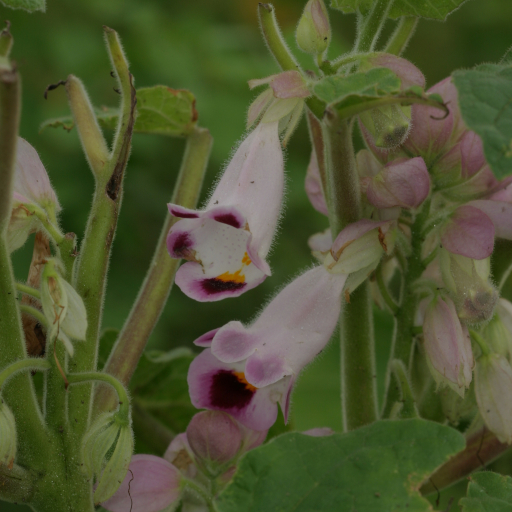
Plant Overview
Commonly known as the Tiger’s Claw or Devil’s Claw, Martynia annua is a plant that looks like it stepped straight out of a gothic fairytale. Native to Mexico and Central America but now found across the globe, it is famous for its bizarre, woody seed pods that resemble the curved talons of a predator. While it produces delicate, orchid-like flowers, this plant is a master of "hitchhiking," using its hooks to latch onto passing animals to spread its seeds.
🔍 How to Identify
- 🌸 Orchid-like Blooms: The flowers are tubular and bell-shaped, usually appearing in shades of creamy white or pale pink with striking purple blotches and yellow spots inside the throat.
- 🍃 Sticky Foliage: The broad, heart-shaped leaves are covered in dense, glandular hairs. If you touch them, they feel incredibly sticky—a defense mechanism that often traps small gnats.
- 🦅 The "Claw" Pod: The most distinct feature is the fruit. It starts as a green, fleshy pod but dries into a hard, black, woody capsule with two sharp, curved "tusks" at the end.
🏡 In Your Garden
- 🌱 A Hardy Pioneer: This plant is often considered a weed because it thrives in "disturbed" soil—think roadsides, empty lots, or the edges of a garden. It loves full sun and heat, growing rapidly into a bushy herb.
- 🕷️ Protocarnivorous Nature: Because its sticky leaves trap small insects, scientists categorize it as "protocarnivorous." While it doesn't "digest" the bugs like a Venus Flytrap, the trapped insects might provide nutrients to the soil as they decay, or simply act as a deterrent to larger pests.
⚠️ Safety & Toxicity
- 🐾 Physical Hazard: The "claws" are the primary safety concern. They are incredibly sharp and designed to hook into fur or skin. They can cause painful injuries to the paws of dogs or the mouths of grazing livestock.
- 👶 Keep Out of Reach: While not known for being highly systemic-toxic if touched, the stickiness can be an irritant to sensitive skin. It is best to keep the dried pods away from children and curious pets to avoid accidental punctures.
✨ Fun Fact
The Martynia annua is a master of "Epizoochory." This is a scientific term for plants that move by sticking to animals. Its hooks are so strong that they have been known to stay attached to a cow’s hoof or a hiker’s boot for miles before finally breaking open to release the seeds!

Detailed Care Instructions
To grow Martynia annua, also known as the "devil's claw" or "tiger's claw" plant, you can follow these steps:
- Climate and Sunlight: Martynia annua thrives in warm and sunny climates. Choose a location in your garden that receives full sun for at least 6-8 hours a day.
- Soil: This plant prefers well-draining soil with a pH between 6.5 and 7.5. Prepare the soil by adding compost or well-rotted manure to improve its fertility and drainage.
- Planting: Start seeds indoors about 6-8 weeks before the last expected frost date in your area. Sow the seeds directly into small pots or seed trays filled with seed-starting mix, placing them about ¼ inch deep. Keep the soil moist but not saturated.
- Transplanting: Once the seedlings have grown 2-3 sets of true leaves and all frost threats have passed, transplant them outdoors. Space the plants about 18-24 inches apart to allow enough room for their sprawling growth.
- Watering: Martynia annua requires regular watering to keep the soil consistently moist. However, avoid overwatering, as excessive moisture can lead to root rot. Water deeply during dry spells or when the top inch of soil feels dry.
- Support: As the plant grows, it will develop long, sprawling vines. Provide support by setting up trellises or stakes to prevent the vines from sprawling on the ground.
- Fertilization: Apply a balanced, slow-release fertilizer according to the manufacturer's instructions once every month during the growing season to provide the necessary nutrients for healthy growth.
- Pruning: Trim back any dead or damaged branches as needed. Regular pruning can help maintain the plant's shape and vigor.
- Pest and Disease Control: Martynia annua is relatively resistant to pests and diseases. However, keep an eye out for common garden pests like aphids or spider mites. Use organic insecticides or beneficial insects to control infestations if needed.
- Harvesting: The seed pods, or "claws," of Martynia annua are typically harvested when they are green but starting to turn brown. The pods should be firm but slightly pliable. Gently twist or cut the pods from the plant when harvesting.
By following these steps, you should be able to successfully grow Martynia annua in your garden. Enjoy the unique and intriguing devil's claw pods this plant produces!

Place in a bright room that is sun drenched almost all day. Or directly in a south-facing window.

Martynia Annua is a plant that needs to be watered regularly to maintain healthy growth. To water this plant, you should first check the soil to make sure it needs watering. You can do this by sticking your finger about an inch into the soil and feeling if it is dry or moist. If the soil is dry, it is time to water the plant.
To water Martynia Annua, you should use a watering can or hose with a gentle flow to avoid damaging the soil or the plant's roots. You should water the plant until the soil is evenly moist, but not waterlogged. It is important to avoid getting water on the leaves as this can cause fungal diseases.
The frequency of watering Martynia Annua will depend on various factors such as temperature, humidity, and soil type. Generally, it is recommended to water the plant once or twice a week in warm weather and less frequently in cooler weather. Overwatering can lead to root rot and other issues, so it is important to monitor the soil moisture levels.
In summary, to water Martynia Annua, you should check the soil moisture level, water until the soil is evenly moist, avoid watering the leaves, and monitor the frequency of watering to avoid overwatering.
- Choose a well-draining soil: Martynia Annua thrives in slightly acidic to neutral soil with good drainage. Ensure the soil is loose and crumbly, as compacted soil can hinder root development.
- Prepare the soil before planting: Before planting Martynia Annua, incorporate organic matter such as compost or well-rotted manure into the soil. This helps improve soil fertility and provides essential nutrients.
- Apply a balanced fertilizer: Use a balanced fertilizer, such as a 10-10-10 NPK (nitrogen, phosphorus, and potassium), to provide a good overall nutrient supply to the plant. Follow the instructions on the fertilizer package for the recommended amount to use.
- Fertilize at appropriate times: Apply the fertilizer when the plant is actively growing, typically during the spring and summer months. Avoid fertilizing during the dormant period or winter.
- Apply the fertilizer evenly: Spread the fertilizer evenly around the base of the plant, ensuring it is not concentrated in one area. Use a handheld spreader or a small garden trowel for precise application.
- Water after fertilization: After applying the fertilizer, water the plant thoroughly to help dissolve the nutrients and promote their absorption by the roots. This also prevents any potential fertilizer burn on the plant.
- Monitor plant response: Over-fertilization can have negative effects, so observe the plant's response to the fertilizer. If the leaves start turning yellow or brown, it may indicate nutrient burn, and you should reduce the amount of fertilizer applied.
- Follow a regular fertilizing schedule: Martynia Annua benefits from regular fertilization. Consider fertilizing every 4-6 weeks during the growing season for optimal growth and performance.
Note: Always refer to the specific fertilizer's instructions and guidelines for application rates and frequency, as well as any safety precautions.
Martynia Annua plant requires well-draining soil that is rich in nutrients and organic matter. The soil pH should be slightly acidic, ranging from 5.5 to 6.5. The plant can tolerate sandy, loamy, and clay soils, as long as they are well-draining. It is recommended to amend the soil with compost, aged manure, or other organic matter before planting. This will help retain moisture and improve soil structure. It is important not to overwater the plant, as this can lead to root rot. The soil should be kept consistently moist but not saturated. A layer of mulch can help conserve moisture in the soil and also suppress weeds. In summary, Martynia Annua plant grows best in well-draining soil that is rich in nutrients, slightly acidic, and amended with organic matter.
Martynia Annua plant can be propagated through its seeds. To propagate the plant using seeds, you should first obtain mature seeds from a mature Martynia Annua plant. Once you have obtained the seeds, you should soak them in warm water for 24 hours. After this, you should bury the seeds in a planting medium, ensuring they are half an inch deep.
The planting medium should be kept moist, and the seeds should be placed in a warm, bright area. Germination of the seeds should occur within 8-10 days. You should ensure the young plants are well-protected from strong winds and direct sunlight. As the young plants grow, you can transplant them to their final location.
To ensure strong growth, ensure that Martynia Annua plants receive adequate sunlight, water, and fertilization as they grow. Additionally, you should regularly prune the plants to encourage branching and bushiness, leading to higher flower and seed production.








