Plant Overview
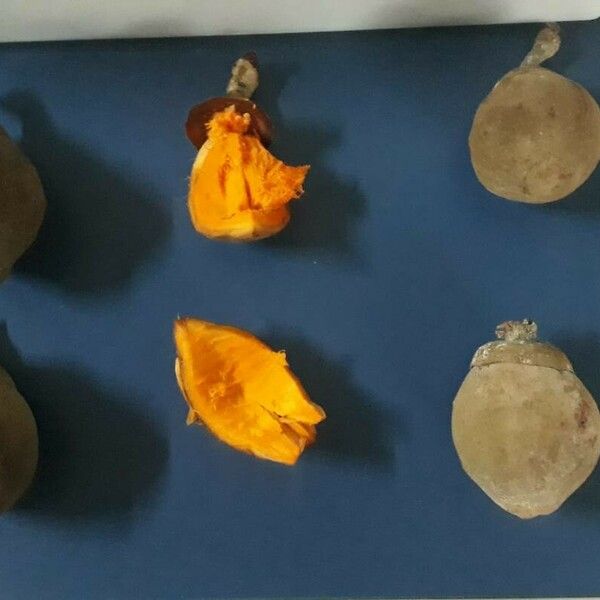
Known affectionately in the Amazon as the "Chupa-chupa," this tropical giant is a hidden gem of the fruit world. While it is often called the South American Sapote, it isn't a true sapote at all; it is actually a distant cousin of the cacao and marshmallow plants. With its massive, prehistoric-looking leaves and sunset-orange fruit that tastes like a creamy blend of mango, apricot, and pumpkin, it brings a lush, "lost world" aesthetic to any tropical collection.
🔍 How to Identify
- 🍃 Grand Foliage: The leaves are impressively large and heart-shaped (cordate), often reaching over 12 inches in length with a soft, velvety texture on the underside.
- 🌳 Pagoda Structure: The tree grows in a very distinct, symmetrical pattern with horizontal branches radiating from the trunk in tiers, similar to a pagoda.
- 🌸 Trunk-Blooms: Like cacao, this tree exhibits "cauliflory," meaning the small, yellowish-white flowers sprout directly from the main trunk and older branches rather than at the tips.
🏡 In Your Garden
- 🌧️ Humidity is Non-Negotiable: As an Amazonian native, the Matisia cordata thrives in "steamy" conditions. If the air is too dry, those magnificent large leaves will quickly develop brown, crispy edges.
- 🛡️ Wind Protection: Because the leaves are so large, they act like sails in the wind. To prevent the foliage from shredding or the tree from leaning, it should be planted in a sheltered spot protected by a windbreak or taller canopy.
- 🥣 Deep Soil Needs: This tree develops a substantial root system to support its fast growth. It dislikes being pot-bound and performs best in deep, well-draining soil rich in organic matter to mimic the rainforest floor.
⚠️ Safety & Toxicity
- ✅ Safe & Edible: The fruit is a celebrated food source in South America. The thick, leathery rind is peeled away to reveal a bright orange, fibrous pulp that is eaten fresh.
- 🐾 Pet Considerations: While the fruit pulp is non-toxic, the large, heavy seeds inside could pose a choking hazard for dogs, and the fallen, fermenting fruit should be cleared away to avoid attracting unwanted pests.
✨ Fun Fact
The name "Chupa-chupa" comes from the Spanish verb chupar (to suck). This refers to the best way to eat the fruit: because the pulp is quite fibrous and clings to the seeds, you have to suck the sweet, nectar-like flesh away!

Detailed Care Instructions
Matisia cordata, commonly known as the "chocolate tree" or "coco de monte," is a tropical tree native to parts of Central and South America. Growing this plant requires specific conditions to thrive. Here are some guidelines to help you grow Matisia cordata:
1. Climate and Location
- Climate: Matisia cordata prefers warm, humid tropical climates. It typically grows in USDA hardiness zones 10-11. Ensure your location can provide the necessary warmth and humidity for growth.
- Sunlight: Place the tree in a location that receives full sun to partial shade. It thrives best with a combination of sun and light shade.
2. Soil Requirements
- Soil Type: Matisia cordata grows well in well-draining, loamy soil that is rich in organic matter. Ensure good drainage to prevent root rot.
- pH Level: A slightly acidic to neutral pH (around 6.0 to 7.0) is ideal for growth.
3. Watering
- Water the plant regularly to keep the soil moist but not waterlogged. During the growing season, you may need to water more frequently, especially in hotter months.
- Reduce watering in the winter months when the plant's growth slows down.
4. Fertilization
- Use a balanced, slow-release fertilizer during the growing season to provide essential nutrients. You can apply a fertilizer high in potassium to promote flowering and fruiting.
5. Propagation
- Matisia cordata can be propagated from seeds. Consider planting seeds in a rich, well-draining potting mix.
- Soak the seeds for a few hours before planting to enhance germination. The seeds should be planted at a depth of about 1 inch.
6. Pruning
- Prune the plant to maintain its shape and remove any dead or damaged branches.
- Pruning can also help improve air circulation and light penetration to the interior of the plant.
7. Pest and Disease Management
- Monitor the plant for common pests such as aphids, spider mites, or scale insects. Use insecticidal soap or neem oil if pests are detected.
- Ensure proper spacing and pruning to promote good air circulation, which helps prevent fungal diseases.
8. Harvesting
- If you are growing Matisia cordata for its fruit, be patient as it may take several years (around 5-10 years) to begin producing. The fruits look similar to small brown coconuts.
9. Container Growing
- If you live in a cooler climate, consider growing Matisia cordata in a container so you can bring it indoors during colder months.
By providing the right conditions and care, you can successfully grow Matisia cordata and enjoy its unique foliage and potential fruit.

Matisia cordata is a tropical plant that requires specific care for optimal growth, particularly regarding watering. Here are detailed guidelines for watering this plant effectively:
1. Soil Moisture Monitoring: Check the moisture level of the soil regularly. It's important to understand that the plant prefers consistently moist, but not soggy, soil. You can test the moisture by sticking your finger about an inch (2.5 cm) into the soil. If it feels dry at this depth, it’s time to water.
2. Watering Technique: When watering, do so thoroughly. Ensure that the water penetrates deep into the soil to encourage root development. Use a watering can with a spout to avoid over-saturating the top layer of soil while ensuring that water reaches the deeper roots.
3. Water Quality: Use room temperature water. Rainwater or distilled water is preferred, as it does not contain chemicals like chlorine, which can be harmful to the plant.
4. Frequency: The frequency of watering will depend on the environmental conditions such as humidity, temperature, and the size of the pot. In warmer months, the plant may require more frequent watering, while in cooler months, you may need to reduce the frequency. As a general guideline, watering once a week during growing seasons is a good starting point, adjusting as necessary.
5. Drainage: Ensure that the pot has adequate drainage holes. This is crucial to prevent waterlogging, which can lead to root rot. If you notice excess water in the saucer beneath the pot after watering, empty it out to prevent the roots from sitting in standing water.
6. Humidity Consideration: Since this plant thrives in humid environments, consider misting the leaves or placing a humidity tray near the plant if the air in your home is particularly dry. This will help maintain the overall moisture level the plant prefers.
7. Signs of Under or Over-Watering: Be observant of the plant's health. Yellowing leaves could indicate overwatering, while wilting and brown leaf tips might suggest underwatering. Adjust your watering routine accordingly.
By following these guidelines, you can ensure that your Matisia cordata receives the right amount of water for healthy growth.
To fertilize Matisia cordata effectively, follow these instructions:
- Timing: Fertilize during the active growing season, typically from spring through early summer. Avoid fertilizing during the dormant winter months.
- Fertilizer Type: Use a balanced, slow-release fertilizer with an N-P-K ratio (nitrogen, phosphorus, potassium) of around 10-10-10 or 14-14-14. Alternatively, you may opt for a liquid fertilizer diluted to half strength.
- Application Rate: Follow the manufacturer’s recommendations regarding the amount to use based on the size of the plant. As a general guideline, use approximately 1-2 tablespoons of granular fertilizer per gallon of soil volume.
- Method of Application:
- For granular fertilizers, evenly distribute the granules around the base of the plant, avoiding direct contact with the stems. Lightly work the granules into the top layer of soil and water thoroughly to help activate the nutrients.
- For liquid fertilizer, apply it while watering the plant, ensuring even distribution around the root zone.
- For granular fertilizers, evenly distribute the granules around the base of the plant, avoiding direct contact with the stems. Lightly work the granules into the top layer of soil and water thoroughly to help activate the nutrients.
- Frequency: Feed every 4-6 weeks throughout the growing season. Monitor plant health and growth to adjust frequency as needed.
- Watering: Ensure the plant is adequately watered before and after fertilizing to prevent root burn and to facilitate nutrient absorption.
- Signs of Nutrient Deficiency: Watch for signs such as yellowing leaves or poor growth, which may indicate a need for additional nutrients.
Always adapt the fertilizing routine based on the specific environmental conditions and growth response of your plant.
Matisia cordata thrives in well-draining soil that retains some moisture but does not become waterlogged. Ideally, the substrate should be rich in organic matter, which can be achieved by incorporating compost or well-rotted leaf mold. A combination of loamy soil mixed with sand or perlite is beneficial for promoting drainage while providing adequate nutrients. The soil pH should be slightly acidic to neutral, ranging from 6.0 to 7.0. Regularly check for drainage to prevent root rot and ensure that the soil remains moist but not overly saturated. Amendments such as sphagnum moss or coconut coir can also be beneficial in enhancing moisture retention without compromising aeration.
Matisia cordata, a tropical plant, can be propagated through several methods, each with its own specific procedures. Here are some detailed methods for propagation:
1. Seed Propagation:
- Seed Collection: Collect ripe seeds from the fruit. Ensure that the seeds are mature and healthy.
- Seed Preparation: Clean the seeds thoroughly to remove any pulp and contaminants. This may involve soaking the seeds in water for a day and then rinsing them.
- Sowing: Plant the seeds in a well-draining seed-starting mix, burying them at a depth of about 1-2 cm. Ensure that the mix is kept slightly moist.
- Germination Conditions: Place the container in a warm location with indirect sunlight. Maintain high humidity by covering the container with a clear plastic cover or plastic wrap until germination occurs. This can take several weeks.
- Transplanting: Once the seedlings develop a few true leaves, they can be transplanted into individual pots for further growth.
2. Cutting Propagation:
- Selection of Cuttings: Choose healthy stems from a mature plant. Semi-hardwood cuttings taken in late spring or early summer are most effective.
- Cutting Preparation: Cut sections that are 10-15 cm long, ensuring there are at least two or three leaf nodes on each cutting. Remove the lower leaves to prevent rotting.
- Rooting Hormone: For better success rates, dip the cut end of the stem in rooting hormone.
- Planting Cuttings: Insert the cuttings into a suitable growing medium, such as a mix of perlite and peat, ensuring that at least one node is buried in the soil.
- Watering and Care: Water the cuttings lightly and cover them with a plastic bag or a humidity dome to maintain moisture levels. Keep them in a warm, brightly lit area but out of direct sunlight.
- Root Development: After a few weeks, check for root development by gently tugging on the cuttings. Once well-rooted, they can be potted up into individual containers.
3. Air Layering:
- Choosing a Stem: Select a healthy, mature branch of the plant that has a good amount of foliage.
- Preparing the Layer: Make an upward 2-3 cm cut on a portion of the stem, about one-third of the way through. Alternatively, you can remove a ring of bark (girdling).
- Applying Rooting Medium: Moisten sphagnum moss and wrap it around the cut area. Ensure it covers the cut completely.
- Securing the Moss: Use plastic wrap to secure the moss in place, and then cover it with aluminum foil to protect it from light and drying out.
- Monitoring Growth: Over a few weeks to a couple of months, roots should begin to grow into the moss. Keep the moss damp during this period.
- Severing and Planting: Once a healthy root system has developed, cut the stem below the rooted area and pot it up in a suitable growing medium.
Care After Propagation:
After propagation via any method, ensure that the new plants are kept in a warm environment with indirect light. Gradually acclimatize them to full light exposure, and maintain consistent watering, allowing the substrate to dry slightly between waterings to prevent root rot.
By following these methods, successful propagation of Matisia cordata can be achieved, leading to the growth of healthy new plants.








