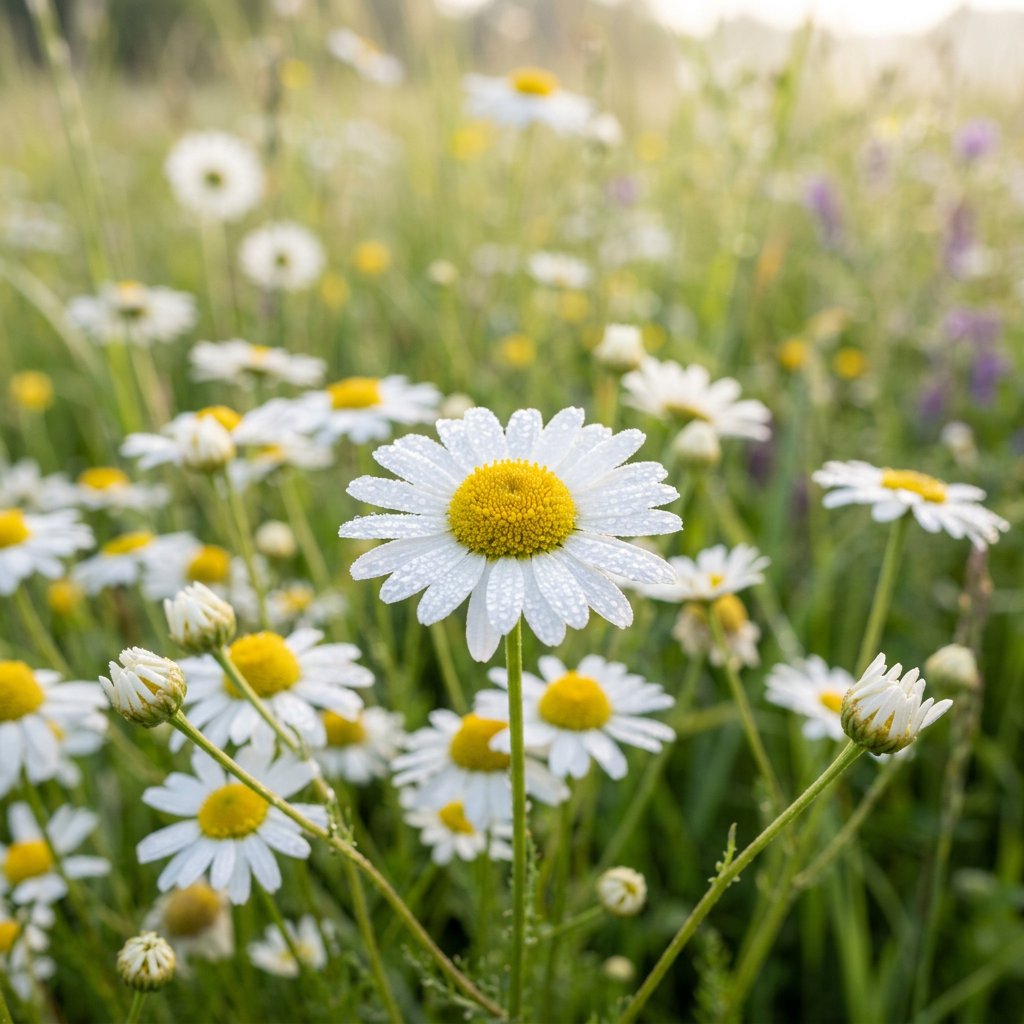
Plant Overview
Known as the "Plant's Physician" for its legendary ability to improve the health of surrounding flora, German Chamomile is much more than a sleepy-time tea ingredient. Often called "Wild Chamomile" or "Earth Apple," this ancient herb has been cultivated since the time of the Pharaohs. Its cheerful, daisy-like faces and sweet, fruity fragrance make it a staple in both medicinal gardens and wild meadows.
🔍 How to Identify
- 🌼 The Flower: Features classic white petals surrounding a bright yellow, button-like center. Unlike its look-alikes, the yellow center becomes distinctly conical as it matures.
- 🌿 The Foliage: The leaves are light green, feathery, and almost lace-like, resembling carrot tops or dill.
- 🍏 The Scent: When crushed, both the flowers and the leaves emit a powerful, calming aroma reminiscent of fresh Granny Smith apples.
- 🎈 The Hollow Heart: If you slice a flower head in half vertically, German Chamomile is distinguished by its completely hollow yellow receptacle.
🏡 In Your Garden
- 🌱 Direct Sowing: This plant is an annual with a sensitive root system. It prefers to be sown directly into the soil rather than transplanted, as it hates having its "toes" disturbed.
- ☀️ Sun Seeker: While it can tolerate a bit of afternoon shade in scorching climates, it needs plenty of sunlight to produce the essential oils that give it its famous fragrance.
- 🌾 Self-Seeding: Though it lives for only one season, it is a prolific self-sower. Once you plant it, you will likely see "volunteer" chamomile popping up in the same spot year after year.
⚠️ Safety & Toxicity
- 🐱 Pet Warning: While safe for human consumption in teas, German Chamomile is considered mildly toxic to cats, dogs, and horses. Ingestion can lead to vomiting, diarrhea, or "bleeding tendencies" if eaten in very large quantities over time.
- 🤧 Allergy Alert: People with severe allergies to the Asteraceae family (like Ragweed, Daisies, or Marigolds) should use caution, as cross-sensitivity can occur, leading to skin rashes or respiratory upset.
✨ Fun Fact
The name "Chamomile" comes from the Ancient Greek words chamos (ground) and melos (apple), literally meaning "ground apple." This refers to the plant’s low growth habit and its distinctively fruity scent.

Detailed Care Instructions
To grow Matricaria Chamomilla (also known as German chamomile), follow these steps:
- Select a suitable location: Choose a sunny spot, preferably with well-draining soil.
- Prepare the soil: Ensure the soil is loose, fertile, and well-draining. If the soil is heavy, amend it with organic matter like compost.
- Sow the seeds: Sow the chamomile seeds directly into the soil. Scatter the seeds lightly and cover them with a thin layer of soil.
- Watering: Keep the soil evenly moist but not waterlogged. Water the area regularly, especially during dry periods or when the soil becomes dry.
- Thinning: As the seedlings emerge and grow, thin them to allow proper spacing. Matricaria Chamomilla plants should be spaced around 6 to 8 inches apart.
- Maintenance: Regularly remove any weeds around the chamomile plants to prevent competition for nutrients and water. Mulching can also help suppress weed growth.
- Harvesting: Harvest the flowers when they fully bloom. Cut the flower heads near the stem once they are open.
- Drying: Dry the harvested flowers in a well-ventilated area away from direct sunlight. Spread them on a clean surface, like a paper towel or mesh tray, and allow them to dry completely. This usually takes a few days to a week.
- Storage: Once the flowers are completely dry, store them in airtight containers away from moisture and sunlight. Label the containers with the date of harvest.
- Repeat: Chamomile is an annual plant, so you will need to repeat the process each year to grow new plants.
Remember to consult your local gardening resources or nurseries for specific growing instructions based on your climate and location.

Place in a bright room that is sun drenched almost all day. Or directly in a south-facing window.

Matricaria Chamomilla is a type of plant that requires a certain level of care when it comes to watering it. To ensure that the plant thrives and remains healthy, it is important to provide it with optimal moisture levels. To water the plant, it is recommended that you first check the soil’s moisture level by inserting your finger into the soil. If the soil is dry up to your second knuckle, it is time to water the plant. Avoid overwatering the plant as it can lead to root rot and other issues. When watering the plant, try to water it evenly and thoroughly, making sure that the soil is moist but not waterlogged. It is recommended that you water the plant in the morning or evening, as this helps to minimize water loss due to evaporation. Additionally, you should avoid getting water on the leaves of the plant, as this can lead to fungal diseases.
To fertilize this plant, begin by selecting a balanced, water-soluble fertilizer. Dilute as directed on the package and apply to the soil around the base of the plant, taking care not to get any on the leaves. Fertilize once a month during the growing season, tapering off as the plant goes into dormancy. Be sure to provide plenty of water throughout the growing season to promote healthy growth.
The ideal soil for this plant is one that is well-draining, nutrient-rich and has a slightly alkaline pH. It should also be able to retain moisture without becoming waterlogged. A mixture of sandy loam and compost is recommended, with the addition of perlite or vermiculite to aid with drainage and aeration. It is important to avoid using heavy clay soils or those that are too acidic, as this can lead to poor growth and development. It may also be beneficial to add some organic matter such as leaf mold or well-rotted manure to the soil before planting to ensure adequate nutrition.
Matricaria Chamomilla plant can be propagated through two methods:
- Seed Propagation: Collect mature seed heads from the plant and allow them to dry completely. Then, separate the seeds from the seed heads and sow them directly into the soil. Keep the soil moist but not waterlogged and ensure the pots or trays have good drainage. Germination usually takes 7-14 days, and the seedlings can be transplanted into larger pots or into the garden after a few weeks.
- Division Propagation: In spring or autumn, carefully dig up the plant and separate it into smaller sections. Each section should have a healthy root system and several stems. Replant the sections into well-draining soil and keep them moist until established.
Both methods of propagation require regular watering, protection from extreme temperatures, and fertilization to promote healthy growth. It is also important to avoid overcrowding when planting the seedlings or divisions.
Common pests of the hungarian chamomile include Spider mites, aphids. Make a habit of checking your hungarian chamomile frequently for pests so that any infestations can be caught and managed early.








